
PET Preform Injection Machine for Beverage Industry: Project Fit & Selection Guide
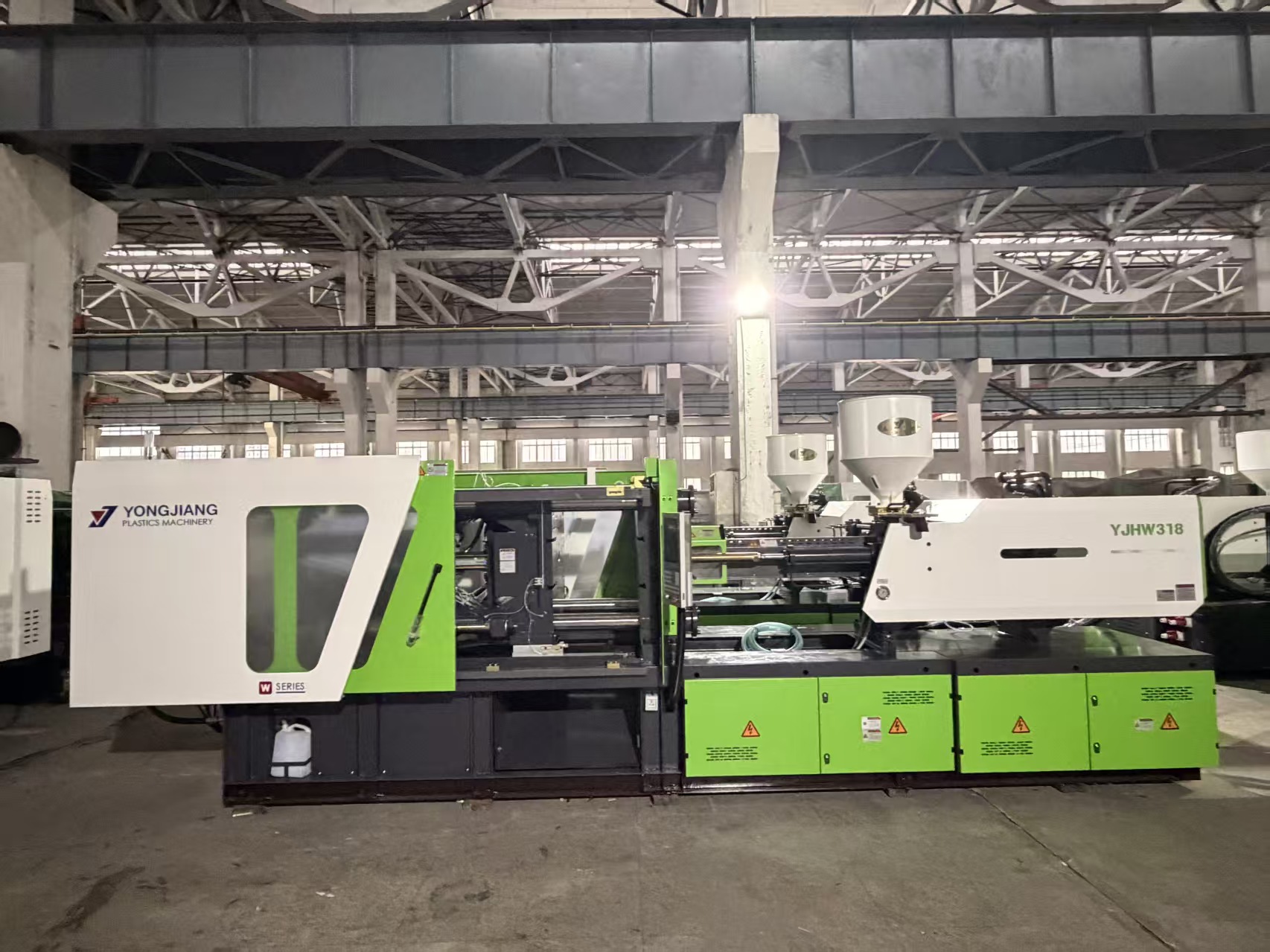
Figure 1: High-speed PET preform injection machine configured for beverage preform production.
PET Preform Injection Machine for Beverage Industry: Project Fit & Selection Guide
Choosing a PET preform injection machine for a beverage project is a production-planning decision, not just an equipment purchase. The right machine must match your bottle type, target output, mold configuration, operating environment, and long-term production schedule. This guide explains what beverage-industry buyers should evaluate, how machine models and cavity counts affect output, and what plant conditions are required for reliable 24/7 operation.
What Is a PET Preform Injection Machine for the Beverage Industry?
A PET preform injection machine melts dried PET pellets and injects the molten plastic into multi-cavity hot runner molds to produce PET preforms. These preforms are later reheated and blow-molded into finished bottles. In the beverage industry, this equipment is used primarily for water bottles, oil bottles, and cosmetic containers.
Injection molding technology holds a dominant 66.4% share of the total PET preform machine market as of 2025, according to Future Market Insights. The global PET preform machines market is estimated at USD 9.9 billion in 2025 and is projected to reach USD 17.3 billion by 2035.
Which Beverage Applications Can This Machine Cover?
PET preform injection machines are not limited to one bottle type. The same core platform can produce preforms for different end products depending on the mold, neck finish, weight, and processing parameters. Common beverage-related applications include:
- Mineral water bottles – lightweight preforms, high cavity counts, high output
- Carbonated soft drinks (CSD) – preforms with thicker walls to withstand internal pressure
- Oil bottles – specific neck and weight requirements for filling and sealing
- Packaging containers – a wider range of preform weights and sizes
The specific machine model should be selected based on shot weight, clamp tonnage, tie-bar spacing, and mold dimensions.
Machine Models and Their Production Profiles
For beverage projects, the practical starting point is matching the machine model to your preform weight and mold size. The table below summarizes PET preform injection machine configurations commonly considered for beverage preform production.
| Model | Clamping Force | Screw Barrel | Shot Weight | Tie-bar Spacing | Motor Power | Heat Power | Machine Weight |
|---|---|---|---|---|---|---|---|
| YJPT-318 | 318 ton | 77 mm | 1,900 g | 620 × 620 mm | 80 kW | 65 kW | 13 ton |
| YJPT-360 | 360 ton | 95 mm | 3,450 g | 680 × 680 mm | 80 kW | 65 kW | 16 ton |
| YJHB-400 | 400 ton | 95 mm | 3,450 g | 720 × 720 mm | 80 kW | 65 kW | 16 ton |
| YJPT-260 | 260 ton | 72 mm | 1,400 g | 580 × 580 mm | 42 kW | 35 kW | 9 ton |
Heavier preforms for CSD or large water bottles generally require machines in the 360–400 ton range. Lighter preforms for standard water bottles can often run on a 260–318 ton platform.
How to Match Cavity Count and Mold Configuration
Cavity count directly determines output per cycle. Buyers often search for 32, 48, 72, or 96 cavity PET preform injection machines, but the actual cavity number must be compatible with the machine’s tie-bar spacing, shot weight, clamp tonnage, and the hot runner mold design.
PET preform molds for beverage production commonly range from 48 to 96 cavities. A machine with a larger tie-bar spacing, such as the YJHB-400 at 720 × 720 mm, provides more room for larger multi-cavity molds. A compact model like the YJPT-260, with 580 × 580 mm tie-bar spacing, is better suited to lower-cavity molds and lighter preforms.
What Plant Environment Does a PET Preform Machine Require?
A PET preform injection machine can operate 24/7, but only when the surrounding environment is controlled correctly. The following operating requirements are especially relevant in warmer climates and tropical workshops.
- Ambient temperature: stable 20–30°C; the machine can sustain continuous operation under 35–40°C high-temperature tropical workshops with good ventilation
- Relative humidity: 40%–50% RH; humidity over 60% RH should be avoided to prevent PET resin moisture absorption, silver streaks, and hydrolysis defects
- Cleanliness: ISO Class 8 (100,000-class) dust-free workshop is preferred for food-grade preform production, free of metal dust and plastic debris
- Power supply: 380/400V 50Hz three-phase industrial power, voltage fluctuation within ±10%
- PET drying: PET pellets must be fully dried to moisture below 0.02% before use
Facilities that already have temperature and humidity control, clean workshop floors, and stable power supplies are better prepared for consistent preform quality.
How to Estimate Project Fit for a Beverage Preform Line
Project fit depends on more than the machine itself. A complete beverage preform line also includes a preform mold, hopper dryer, air compressor, and water chiller. The machine should work with these auxiliary systems and with automated cooling robots to shorten cycle times.
When evaluating a machine for a specific beverage project, walk through these steps:
- Define the bottle specification. Preform weight, neck finish, wall thickness, and material grade.
- Calculate required output. Number of preforms per hour or per day, based on blow-molding line capacity.
- Select the cavity count. Higher cavity counts increase output but require larger molds and higher clamp tonnage.
- Match the machine model. Compare shot weight, tie-bar spacing, and clamp force against the mold and preform weight.
- Check the plant environment. Confirm temperature, humidity, cleanliness, power supply, and drying capacity.
- Plan for continuous operation. Verify cooling, ventilation, and maintenance access for 24/7 production.
Case Reference: 20-Year Stable Operation in Water and Bottle Factories
One available case reference involves water factories and bottle-making facilities that have used PET preform machines for preform making and water bottle making. These clients have purchased a total of 20 units and report stable operation over a 20-year usage period. A highlight noted by these clients is low electricity consumption.
This type of long-term operating evidence matters for beverage project planning because it indicates that the equipment can sustain continuous production schedules and maintain energy costs over the machine’s lifetime.
What Customization Options Are Available for Beverage Projects?
Not every beverage factory operates under the same power standard or branding requirement. For beverage projects, the following customization options are commonly relevant:
- Voltage customization – matching local industrial power specifications
- Logo customization – placing the buyer’s brand on the machine
- OEM production – configuring the machine according to the buyer’s production plan
Customization can affect lead time. The typical lead time for a configured PET preform machine is 30–45 days, with a minimum order quantity of 1 unit. Monthly production capacity is approximately 200 units.
How to Compare Suppliers for a Beverage Preform Machine
When comparing PET preform injection machine suppliers for a beverage project, buyers should focus on verifiable production and service factors rather than marketing claims. Useful comparison points include:
| Evaluation Factor | What to Check | Why It Matters |
|---|---|---|
| Manufacturing history | Years in injection molding machine production | Longer history often correlates with accumulated process experience |
| Factory size and capacity | Production floor area, output volume, engineering team size | Indicates ability to handle repeat orders and custom configurations |
| Export experience | Main export markets and export ratio | Relevant for documentation, packaging, and after-sales support |
| Quality control | Pre-shipment testing process | Reduces commissioning risk on site |
| After-sales support | Response time and service availability | Important for 24/7 beverage production lines |
| Energy efficiency | Servo system design and power consumption | Directly affects long-term production cost |
For a beverage factory, the supplier should also understand the specific requirements of food-grade preform production, including clean workshop conditions and PET drying.
Common Mistakes When Selecting a PET Preform Machine for Beverage
Several repeated mistakes appear when beverage companies select preform equipment:
- Choosing the machine before the mold. The mold determines the required shot weight, clamp force, and tie-bar spacing.
- Ignoring plant humidity. High humidity causes PET moisture absorption, silver streaks, and hydrolysis defects.
- Underestimating power stability needs. Voltage fluctuation beyond ±10% can affect injection stability and servo performance.
- Focusing only on cavity count. A 72- or 96-cavity mold is useless if the injection unit cannot fill it consistently or the tie-bar spacing cannot fit it.
- Overlooking cooling and drying equipment. Hopper dryers, water chillers, and air compressors are part of the complete production system.
Cost and Efficiency Considerations for Beverage Preform Production
Cost efficiency in beverage preform production comes from cycle time, energy consumption, and reject rate. A machine with high-response dual servo systems can reduce power consumption and shorten molding cycles. Rigid clamping frames help maintain stable precision with multi-cavity hot runner molds in 24-hour continuous mass production.
For buyers, the practical efficiency question is: how many preforms can be produced per hour at the required quality level, and at what energy cost? This calculation should include the full auxiliary system, not just the injection machine.
Why Buyers Position This as a Project Fit Decision
PET preform injection machines for the beverage industry are usually evaluated during the Research and Evaluation stages. Buyers are not simply comparing one machine brand against another. They are checking whether a given machine fits their bottle specification, output target, factory environment, and long-term operating plan.
The Yongjiang YJPT and YJHB series are designed for PET preform manufacturing, with models from 260 to 400 tons that cover a practical range of beverage preform weights and mold sizes. Ningbo Yongjiang Machine Co., Ltd., established in 1985, has 25 engineers in its R&D team, a 130,000 m² factory, and annual output of 2,000 units. Its export ratio is 59%, with main markets including the USA, Canada, and Thailand.
FAQ
Conclusion
A PET preform injection machine for the beverage industry should be selected as part of a complete production system. Define the bottle specification, calculate the required output, match the mold and machine model, and verify the plant environment before making a purchase decision. Models in the 260–400 ton range, such as the YJPT-260, YJPT-318, YJPT-360, and YJHB-400, cover a practical range of beverage preform production needs.
Ningbo Yongjiang Machine Co., Ltd. manufactures PET preform injection machines with servo energy-saving systems, rigid clamping structures, and support for multi-cavity hot runner molds in 24-hour continuous production. The company offers OEM customization for voltage and logo, with 24/7 service support and pre-shipment testing. For buyers planning a new beverage preform line, the practical next step is to confirm the machine configuration against your bottle specification and factory conditions.
Evaluating a PET preform injection machine for a beverage project?
Download the Yongjiang brochure for model details, specifications, and production capabilities.
Download BrochureHave Questions or Need More Details?
Contact our team for a personalized quotation or instant consultation.
Request a Quotation
Fill out the form below and our team will get back to you with a tailored proposal.
WhatsApp Direct Chat
Prefer to chat in real-time? Message us on WhatsApp for instant assistance & quick answers.
- Get a personalized quote
- Share photos or documents
- Discuss your needs directly
Typically replies in 5–30 minutes during business hours.