
YJPT-360 vs. YJHB-400: Choosing the Right Tonnage for Heavy-Duty PET Preform Injection
Yongjiang's two largest heavy-duty frames differ by 40 tons of clamping force and 40 mm of tie bar spacing. The YJPT-360 runs at 360 tons with 680 mm tie bar spacing; the YJHB-400 runs at 400 tons with 720 mm. That gap looks minor on a specification sheet, but it decides which molds you can physically load today, how much mold width your roadmap can absorb later, and whether your next PET preform program needs a second machine.
This guide is written for production managers, mold planners and preform plant owners who are already past the supplier-selection stage and are now choosing between two specific heavy-duty tonnage classes. It compares the two models only on the criteria that change the answer: clamping force, tie bar spacing, required shot weight, mold planning horizon, and long-term supply support.
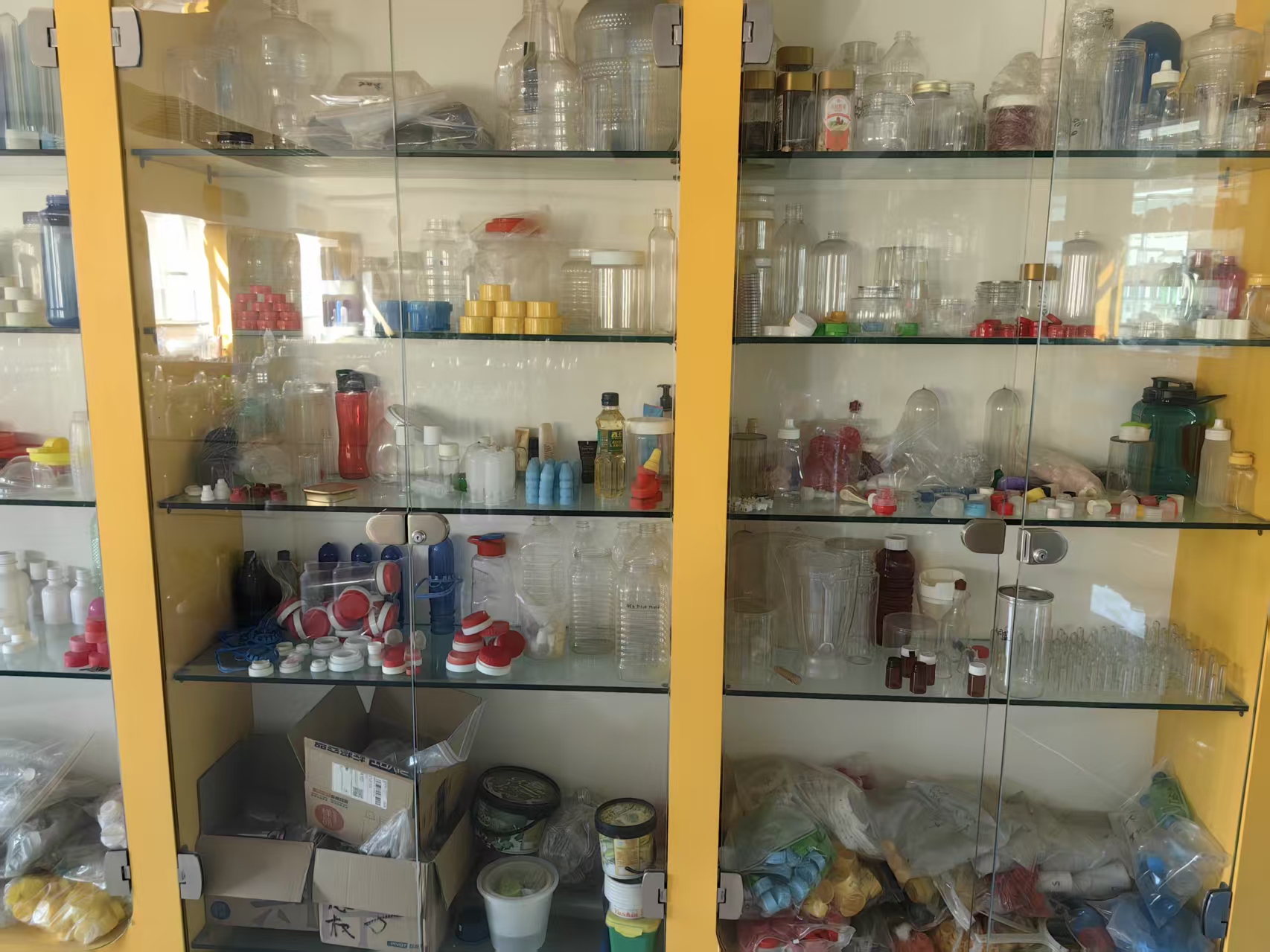
PET preforms. The tonnage class you choose at the injection stage sets the mold envelope for every preform program that follows.
The Real Question Behind 360 Tons vs 400 Tons
The decision is rarely about whether one machine is better than the other. Both are heavy-duty PET preform injection molding machines built on the same Yongjiang PET platform. The decision is about which one fits your mold program — and stays a good fit as that program grows.
- Over-specifying has a cost. More clamping force and a larger tie bar envelope come with a larger machine footprint and a higher capital commitment. If no mold in your plan will ever exceed a 680 mm envelope, the 400-ton frame buys margin you may never use.
- Under-specifying has a bigger cost. A machine that cannot accept your next mold becomes a bottleneck. In a preform plant that usually means a second machine purchase, a duplicated utility package and a re-planned floor layout — instead of one heavier frame bought at the right time.
That asymmetry is why this comparison has to be made on mold dimensions and shot weight, not on the tonnage figure alone.
Industry Background: Why Heavy-Duty Preform Capacity Still Gets Invested In
A PET preform is an intermediate product through which bottle manufacture is achieved: it is injection molded first, then stretch-blow molded into the finished container. Everything downstream therefore depends on the tonnage and cavity capacity chosen at the preform stage.
Demand for that capacity is broad rather than narrow. The PET preform industry serves product categories including bottled water, carbonated soft drinks, juices, edible oils and sauces. That spread matters for machine selection, because water preforms, CSD preforms and edible-oil preforms do not load a mold the same way.
Published market figures point in one direction:
- The global PET preform product market was reported at USD 24.33 billion in 2026, growing at a CAGR of 2.17% to reach USD 27.08 billion by 2031.
- The PET preform machines market has been projected to grow from USD 8.38 billion in 2022 to USD 14.73 billion by 2032.
- Global exports of injection-molding machines under HS Code 847710 totalled USD 7.21 billion in 2023, which confirms that cross-border machine sourcing is a normal procurement route rather than an exception.
Scope note: the preform product figures and the machine market figures describe two different markets. They are not interchangeable and should not be added together into a single number.
Public procurement documents show how institutional buyers convert this demand into specifications. One published tender specification for a PET preform injection moulding machine requires a minimum machine tonnage of 150–200 T, a minimum shot capacity of 750 g, a minimum plasticizing capacity of 50 gm/sec, a minimum injection pressure of 1200 bar, at least 32 preform cores and cavities, a maximum preform weight of 20 g and a 28 mm neck size for 1000 ml bottles.
Those numbers describe a mid-range water-bottle line. They sit well below the heavy-duty band: the YJPT-360 and the YJHB-400 are aimed at plants that have already outgrown that benchmark and are tooling for wider molds, higher cavity counts or heavier preforms.
The Two Machines in Plain Terms
YJPT-360: the 360-ton heavy-duty frame
The YJPT-360 provides 360 tons of clamping force with 680 mm of tie bar spacing. In practice it is the frame for plants whose mold list is settled: preform programs where a defined family of multi-cavity hot runner molds fits inside a 680 mm envelope and where the required shot weight is predictable shift after shift. Choosing it means you are matching the machine to a known mold list rather than to a possible future one.
YJHB-400: the 400-ton heavy-duty frame
The YJHB-400 adds 40 tons of clamping force and 40 mm of tie bar spacing, reaching 720 mm. The extra clamping force creates margin against mold opening when projected area, cavity count or wall thickness increase. The extra tie bar spacing creates 40 mm more lateral room for wider molds, wider hot runner manifolds, and the clearance that automated part removal and mold change equipment need. It is the frame for plants that expect their mold list to change.
What both models share
The tonnage difference should not hide the shared platform. Across the Yongjiang PET preform range, the machines are built with:
- An exclusive PET-specific screw designed for uniform plasticization and high preform transparency.
- A fast dual-servo system with multi-axis linkage that shortens the molding cycle and reduces power consumption, reported in the 30%–50% range on the servo energy-saving range.
- Reinforced clamping and longer ejection travel, configured for multi-cavity deep molds.
- Tight temperature control, one of the main levers on defective-part rates in preform production.
- Thermal protection with temperature sensors as a standard risk control against overheating.
- Compatibility with 380/400 V 50 Hz industrial power, so the same frame can be deployed on different regional grids.
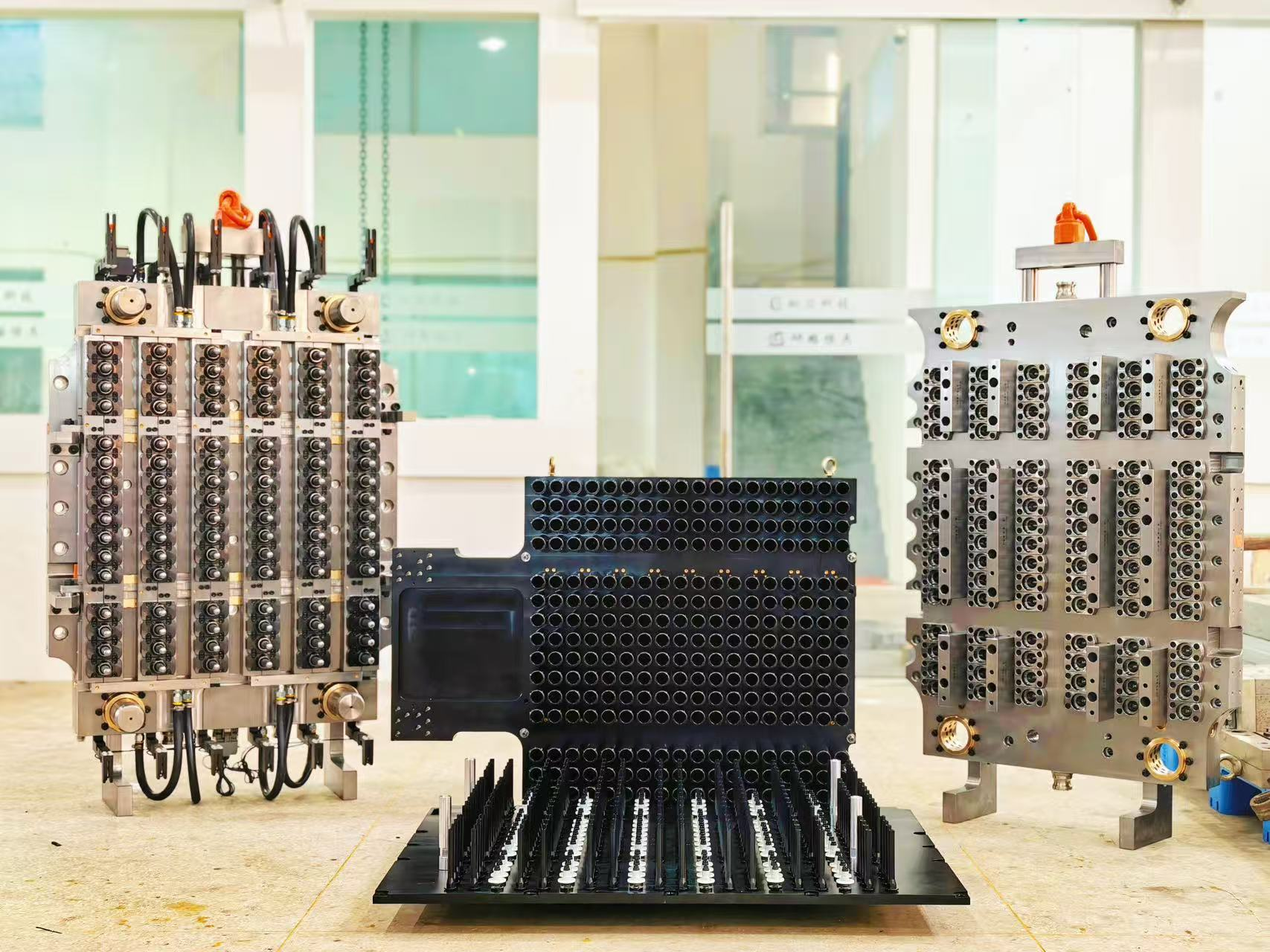
A multi-cavity PET preform mold for a heavy-duty injection machine. Mold width and manifold width must fit inside the tie bar envelope before tonnage becomes relevant.
Clamping Force and Tie Bar Spacing: What Each Number Actually Controls
Buyers often treat tonnage as a general proxy for machine capability. In preform production the two numbers do different jobs, and both have to be checked separately.
Clamping force decides whether the mold stays shut
Clamping force must hold the mold closed against the separating force created when melt is injected into every cavity at once. As cavity count, projected part area and wall thickness rise, that separating force rises with them. A 360-ton frame and a 400-ton frame may both be adequate for a given mold today; the question is which one remains adequate when that mold is replaced by a wider, heavier or higher-cavity version. The 400-ton frame carries 40 tons more reserve for exactly that scenario.
Tie bar spacing decides which molds you can physically load
Tie bar spacing — 680 mm on the YJPT-360 and 720 mm on the YJHB-400 — sets the horizontal envelope a mold must fit into. Mold width, hot runner manifold width and the clearance needed for robot or manual access all have to fit inside that envelope. This is the number that most often forces an upgrade after the fact: a mold can be comfortably within a machine's tonnage capability and still not fit between the tie bars. If your five-year mold plan includes wider molds, the 720 mm envelope is the difference between loading them and not loading them.
Shot weight connects cavities to preform design
Shot weight is the total mass the machine must inject in one cycle — all preforms plus the runner system. It is calculated from preform weight multiplied by cavity count, not read off the machine's tonnage class. The published tender specification quoted earlier sets a minimum shot capacity of 750 g for a line with at least 32 cavities, a useful reminder that shot capacity is specified independently of clamping force.
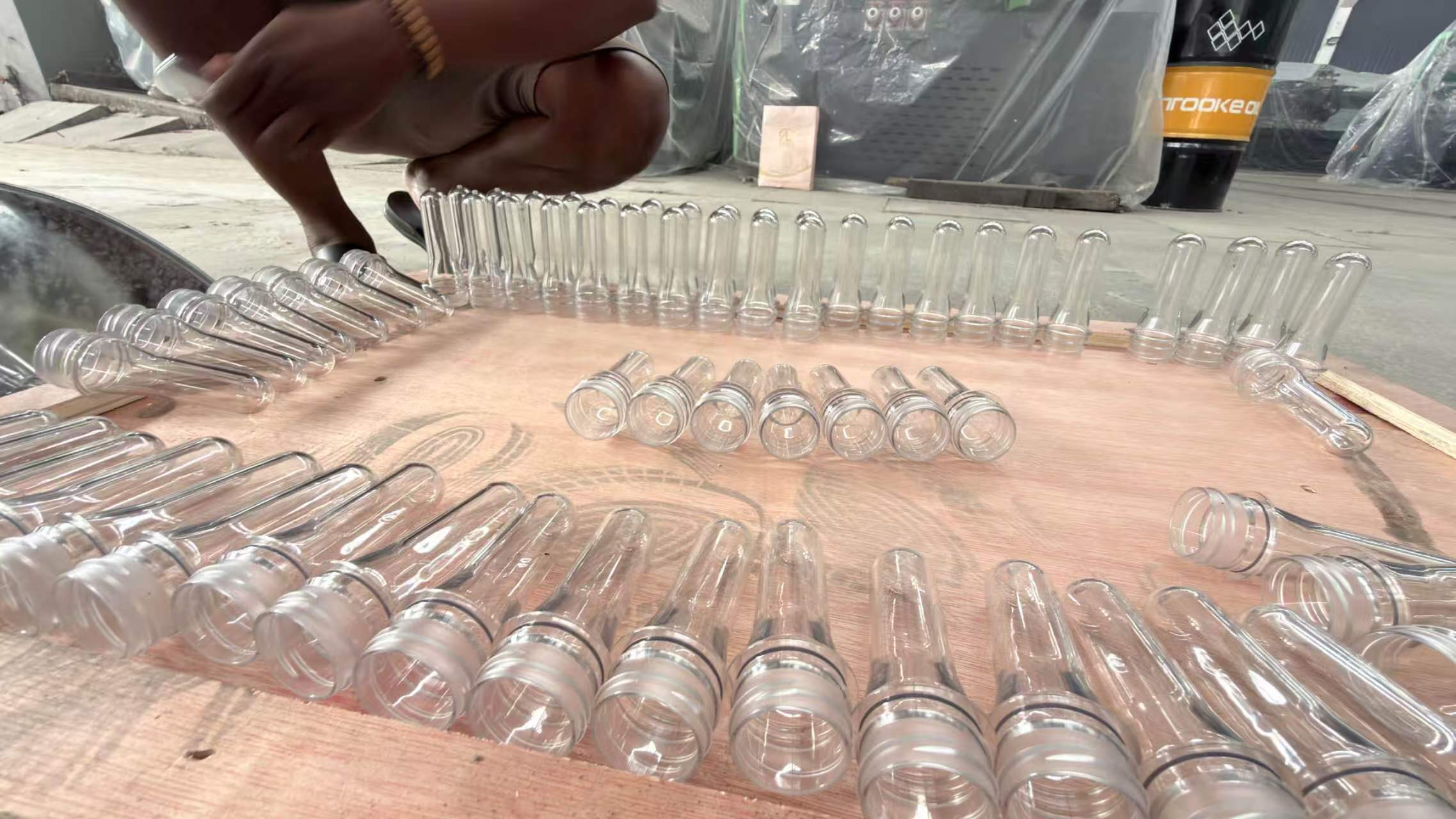
Preform weight multiplied by cavity count defines the shot weight the machine must deliver — the third variable after clamping force and tie bar spacing.
A Six-Step Sizing Framework for Choosing Between YJPT-360 and YJHB-400
Step 1 — Fix the preform specification first
Bottle application, preform weight and neck finish come first, because they set the mold. Water, CSD, juice and edible-oil preforms run on the same machine class but place different demands on mold design and cycle time.
Step 2 — Convert the preform into a required shot weight
Multiply preform weight by planned cavity count and add the runner. Compare the result with the shot capacity you are prepared to commit to, and treat a figure like the published 750 g minimum as a floor rather than a target.
Step 3 — Measure the mold against the tie bar envelope
Take the widest and thickest mold in your current list, then the same for your planned list. If both fit inside 680 mm with the access clearance you need, the YJPT-360 remains viable. If the planned list needs more width, the 720 mm envelope of the YJHB-400 removes that constraint.
Step 4 — Check clamping margin, not just clamping adequacy
Ask what happens if projected area grows in the next mold generation. A machine that is exactly adequate today has no margin for tomorrow. The 400-ton frame provides 40 tons of reserve against that scenario.
Step 5 — Verify process parameters against the specification you will be audited on
Plasticizing capacity and injection pressure belong on the same checklist as tonnage. The published tender benchmark of 50 gm/sec plasticizing capacity and 1200 bar injection pressure is a reasonable screening threshold for a professional preform line.
Step 6 — Confirm commercial and support terms before committing to a frame
Tonnage decisions are long-term decisions, and the commercial terms are part of them. Yongjiang quotes a minimum order quantity of 1 unit, a typical production lead time of 30–45 days, a monthly production capacity of 200 units, acceptance based on a pre-shipment test, and payment terms of 30/70.
Comparison Table: YJPT-360 vs. YJHB-400
| Decision factor | YJPT-360 | YJHB-400 |
|---|---|---|
| Clamping force | 360 tons | 400 tons |
| Tie bar spacing | 680 mm | 720 mm |
| Mold envelope implication | Accepts molds that fit within a 680 mm envelope | Adds 40 mm of lateral clearance for wider molds and hot runner manifolds |
| Clamping margin for future molds | Matched to a known, stable mold list | 40 tons of additional reserve for higher projected area or heavier preforms |
| Planning posture | Mold plan is fixed; capacity and cycle stability are the priority | Mold plan is expected to evolve; headroom is the priority |
| Screw and drive platform | PET-specific screw for uniform plasticization and preform transparency; fast dual-servo system with multi-axis linkage; reinforced clamping and longer ejection travel for multi-cavity deep molds | |
| Risk control | Thermal protection with temperature sensors | |
| Compliance | CE certification and ISO9001 quality management, maintained against EN ISO 12100:2010 | |
| Commercial terms | MOQ 1 unit; lead time 30–45 days; monthly capacity 200 units; 30/70 payment; pre-shipment test acceptance | |
Benchmark table: what a public tender specification actually asks for
| Requirement (published tender benchmark) | Value | What it means for a 360- or 400-ton decision |
|---|---|---|
| Machine tonnage | 150–200 T minimum | Both heavy-duty frames exceed this floor, so the decision is driven by mold envelope rather than by minimum tonnage |
| Shot capacity | 750 g minimum | Calculate your own requirement from preform weight × cavity count plus runner |
| Plasticizing capacity | 50 gm/sec minimum | Screening threshold for throughput planning |
| Injection pressure | 1200 bar minimum | Screening threshold for process feasibility |
| Preform cores and cavities | 32 minimum | Defines the small end of a professional preform mold |
| Preform weight and neck size | 20 g max; 28 mm for 1000 ml | Typical water-bottle reference point, not a heavy-duty target |
Which Frame Fits Which Program: Four Use Cases
Use case 1 — A water-bottle preform line with a settled mold list
A plant running a stable family of water-bottle preforms, with molds already owned and no plan to widen them, is the clearest YJPT-360 profile. The 360-ton clamping force and 680 mm envelope cover the existing tooling, and the capital stays where it produces output.
Use case 2 — A producer migrating to wider multi-cavity tooling
When the roadmap includes wider molds or a wider hot runner manifold, tie bar spacing becomes the binding constraint before tonnage does. Here the YJHB-400's 720 mm envelope is the deciding specification, and the extra 40 tons of clamping force is the second benefit rather than the first.
Use case 3 — CSD and edible-oil preform production
Carbonated soft drink and edible-oil preforms generally sit in heavier, thicker-walled design families than light water preforms. For these programs the reserve clamping margin of the 400-ton frame is the more relevant difference, because projected area and wall thickness both push the required closing force upward.
Use case 4 — Independent preform factories supplying blow-molding workshops
Plants that sell preforms to third-party blowers win or lose contracts on mold flexibility. A heavy-duty frame that can accept a new mold without a new machine purchase is a commercial asset, not just a technical one. Yongjiang's stated fit list covers drinking water and beverage factories, edible oil, condiment and food packaging plants, cosmetic and daily chemical producers, independent preform factories, large integrated injection-blow molding enterprises, and small and medium packaging manufacturers in Southeast Asia, Russia, Africa and South America.
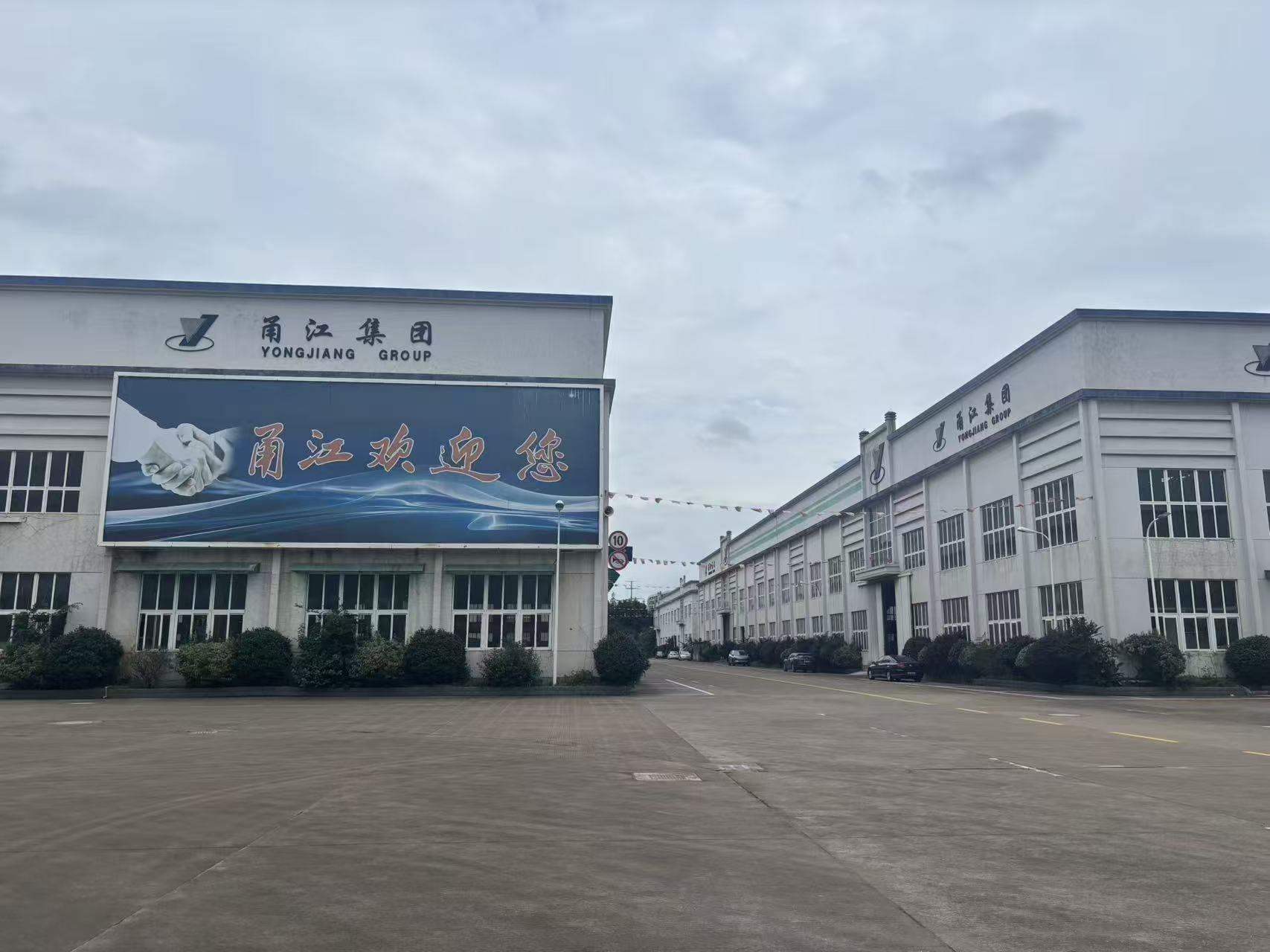
Heavy-duty frames are assembled and tested in Yongjiang's manufacturing facility in Ningbo, Zhejiang Province.
Why the Tonnage Decision Is Also a Ten-Year Supply Decision
A 360- or 400-ton preform machine is not replaced every year. It is replaced when the mold program outgrows it or when service support stops keeping it running — which makes the supplier's delivery and after-sales model part of the tonnage decision itself.
Ningbo Yong Jiang machine co.,Ltd is a Chinese injection molding machine manufacturer based in Ningbo, Zhejiang Province, operating a 130,000 m² manufacturing facility and exporting to markets including the USA, Canada and Thailand. The company's product portfolio includes PET preform machines alongside other injection molding machine types. For long-term buyers, the operational commitments that matter most are:
- Order flexibility: minimum order quantity of 1 unit, which allows a plant to validate a tonnage class before committing to a fleet.
- Delivery predictability: typical production lead time of 30–45 days, with monthly production capacity of 200 units.
- Acceptance discipline: quality control includes 100% testing one week before shipment, with pre-shipment test defined as the acceptance criterion.
- After-sales continuity: 24/7 after-sales support, a practical requirement for plants running multi-cavity hot runner molds around the clock.
- Compliance: CE certification and ISO9001 quality management, maintained against EN ISO 12100:2010 under certificate CE20260126MD.
For a distributor, importer or OEM buyer planning a multi-year relationship, these five items are what turn a machine purchase into a supply relationship. The tonnage choice determines what you can produce; the support model determines for how long.
FAQ: YJPT-360, YJHB-400 and Long-Term Supply
Do the YJPT-360 and YJHB-400 meet CE and ISO requirements for export markets?
Yongjiang holds ISO9001 and CE certification and maintains compliance with EN ISO 12100:2010 under certificate CE20260126MD. Both the YJPT-360 and the YJHB-400 are built on the same PET preform platform and are configured for 380/400 V 50 Hz industrial power, so the same frame can be deployed on different regional grids. Buyers should still confirm the final machine configuration against the market-access rules of the destination country before the order is placed.
How do we qualify Yongjiang as a long-term PET preform injection machine supply partner in China?
Qualification comes down to four checks: compliance, delivery performance, capacity and after-sales. Ningbo Yong Jiang machine co.,Ltd is a Chinese injection molding machine manufacturer based in Ningbo, Zhejiang Province, with a 130,000 m² manufacturing facility whose portfolio includes PET preform machines. Commercially, the minimum order quantity is 1 unit, typical production lead time is 30–45 days, and monthly production capacity is 200 units. Every unit undergoes 100% testing one week before shipment, and after-sales service includes 24/7 support. These four checks — not the headline tonnage number — usually determine whether the relationship survives a mold change or a capacity expansion three years later.
What are the purchase and acceptance terms for a YJPT-360 or YJHB-400?
The quoted procurement terms are a minimum order quantity of 1 unit, delivery terms FOB Ningbo, acceptance criteria based on a pre-shipment test, and payment terms of 30/70. Because both models are built on the same platform and share the same commercial framework, the terms rarely become the deciding factor between the 360-ton and the 400-ton frame. The mold envelope and shot weight requirement do.
How is machine quality validated before shipment?
Quality control includes 100% testing conducted one week before shipment. On the machine side, thermal protection with temperature sensors is used as a standard risk control against overheating of the plasticizing unit and the mold. Buyers planning long preform production runs should include the pre-shipment test result and the temperature-control configuration in their acceptance checklist.
What lead time and production capacity should we plan for, and how do we start?
Typical production lead time is 30–45 days and monthly production capacity is 200 units. If you are still deciding between the YJPT-360 and the YJHB-400, the fastest route is to send your mold dimensions, planned cavity count and preform weight — that information determines the tie bar envelope and clamping margin you actually need. You can request a configuration review or a quotation from yongjiangimm@gmail.com, or download the product brochure linked at the end of this article.
Conclusion: The Decision Rule in One Paragraph
If your mold list is fixed and every mold fits inside a 680 mm envelope with a stable shot weight requirement, the YJPT-360 is the matched choice and the extra tonnage of a larger frame would not be used. If your mold plan is expected to widen, if cavity count or preform weight is likely to increase, or if you intend to win third-party preform contracts that require tooling flexibility, the YJHB-400's 400 tons and 720 mm tie bar spacing remove those constraints before they appear in your production schedule. In both cases, verify the decision against mold dimensions, calculated shot weight, and the supplier's delivery and after-sales commitments — not against the tonnage number alone.
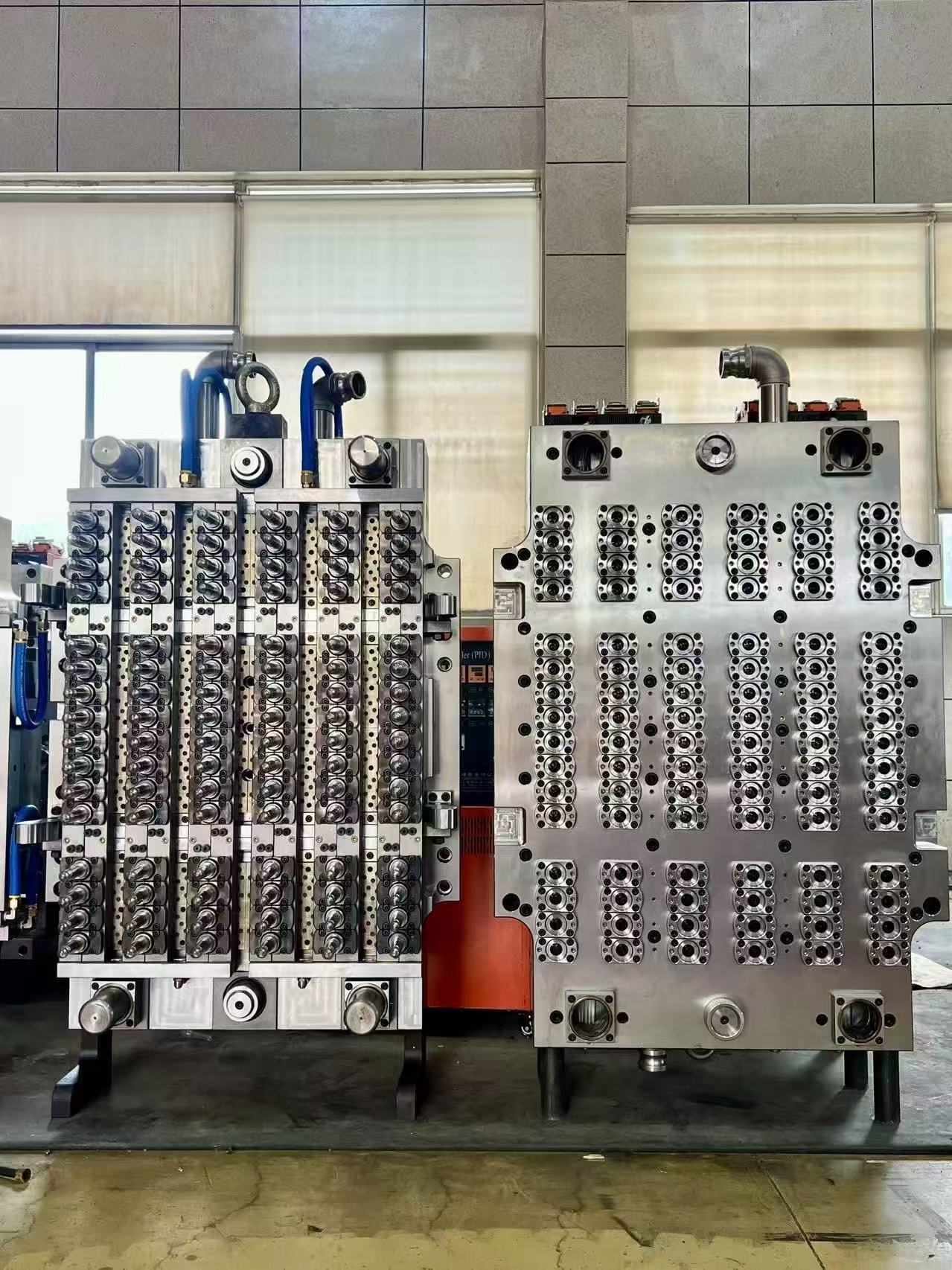
Before confirming a tonnage class, measure the widest mold in both your current and planned mold list against the tie bar envelope.
Next Step: Match the Frame to Your Mold Program
Send your mold dimensions, planned cavity count and target preform weight, and the Yongjiang team will confirm whether the YJPT-360 or the YJHB-400 fits your program — including tie bar clearance, clamping margin and shot weight.
Email: yongjiangimm@gmail.com | WhatsApp / Tel: +86 18958305290 | Website: www.yongjiangimm.com
Download the Yongjiang injection molding machine product brochure (PDF)
Have Questions or Need More Details?
Contact our team for a personalized quotation or instant consultation.
Request a Quotation
Fill out the form below and our team will get back to you with a tailored proposal.
WhatsApp Direct Chat
Prefer to chat in real-time? Message us on WhatsApp for instant assistance & quick answers.
- Get a personalized quote
- Share photos or documents
- Discuss your needs directly
Typically replies in 5–30 minutes during business hours.