
EU CE, ISO Class 8, and Regional Compliance Guide for PET Preform Injection Machines
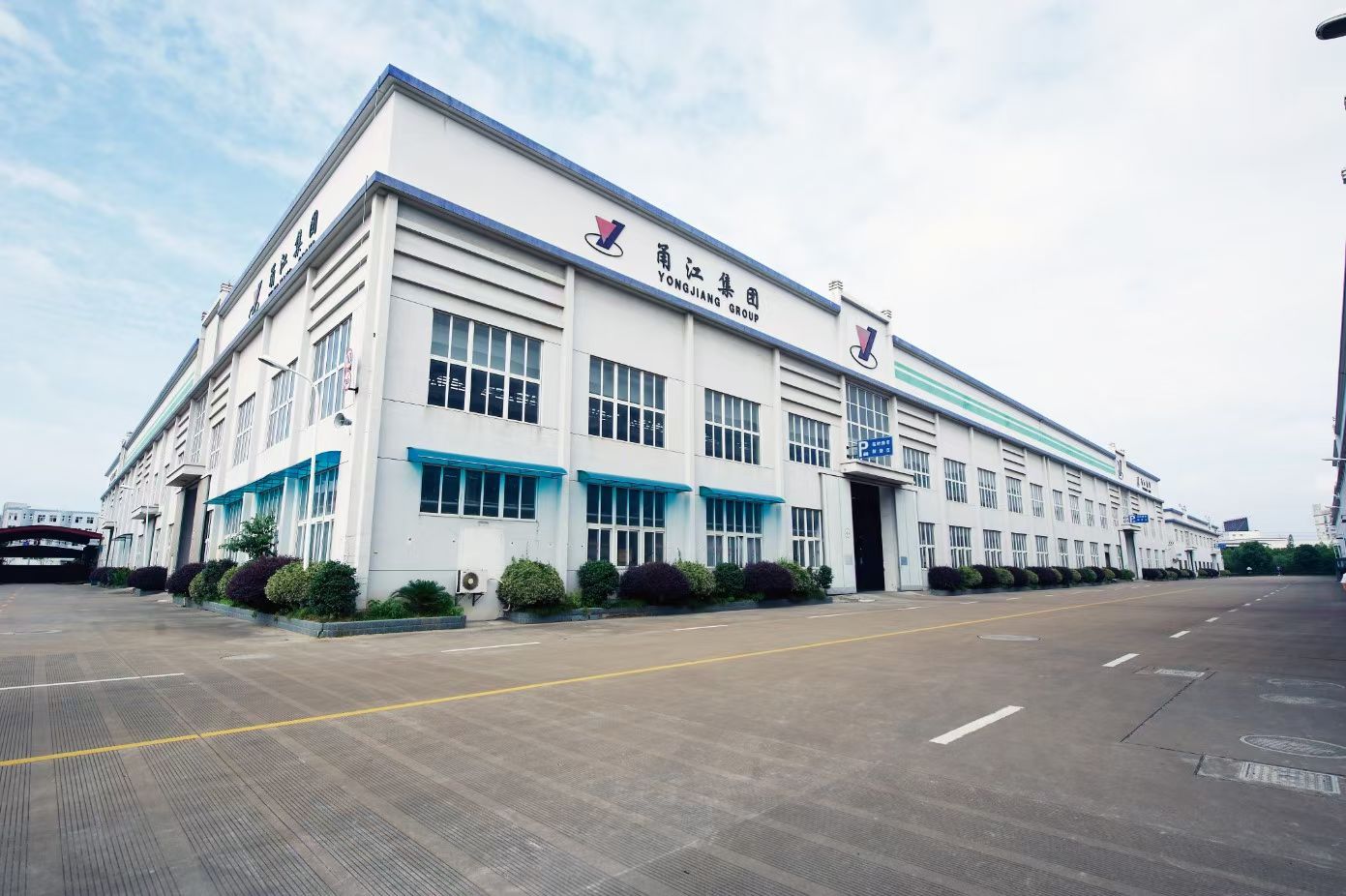
Yongjiang's PET preform injection machine factory in Ningbo, China — machine assembly, conformity documentation and pre-shipment testing take place here before FOB Ningbo delivery.
Short answer: a PET preform injection machine is bought on tonnage and cavity count, but it is accepted on compliance. Four requirement families decide whether a machine can be installed, operated and signed off: EU CE machinery safety conformity, a dust-controlled workshop for food-grade preforms (typically specified as ISO Class 8), 380/400V 50Hz three-phase power with no more than ±10% fluctuation, and a stable 20–30°C ambient environment. A machine can be technically sound and still fail acceptance if any one of these four is missed during the ordering stage.
Yongjiang (Ningbo Yong Jiang machine co.,Ltd) is an injection molding machine manufacturer based in Ningbo, China, operating a 130,000 m² production site with 200 employees, an annual output of 2,000 units and a 25-engineer R&D team. Its PET preform range covers the YJPT-260, YJPT-318, YJPT-360 and YJHB-400 high-speed machines, and 59% of output is exported, with main markets that include the USA, Canada and Thailand. This guide converts the compliance requirements behind those machines into a pre-order and pre-acceptance checklist.
Problem Definition: Why Compliance Gaps Surface After the Machine Lands
Compliance failures in preform projects rarely originate in the machine itself. They come from conditions that were never measured, documents that were never requested, or assumptions made by two parties who each believed the other was responsible. The five failure points that appear most often are:
- Conformity documents requested after shipment. The buyer discovers at customs clearance or at installation that the certificate reference, the applicable standard or the declaration of conformity is incomplete.
- Site power measured after delivery. Voltage, frequency and phase configuration are checked only when the electrician starts wiring, and any fluctuation problem is discovered at the worst possible moment.
- Workshop class decided too late. The cleanroom specification for food-grade preform production affects layout, air handling and material flow — decisions that are expensive to reverse once the machine is positioned.
- Ambient temperature never logged. Summer peaks or poor ventilation push the molding area outside the 20–30°C band the process assumes, and cycle stability suffers.
- Commercial terms agreed verbally. Pre-shipment testing, delivery terms, minimum order quantity and payment milestones are not written into the contract, so acceptance becomes a negotiation.
Industry Background: Why Compliance Now Carries More Weight
PET preforms are an intermediate product through which the manufacture of bottles is achieved, which means preform quality is judged by the standards of the packaging that follows it. The downstream categories are demanding ones: bottled water, carbonated soft drinks, juices, edible oils and sauces are all served by PET preform production.
Two market signals explain the rising compliance emphasis. Global exports under HS Code 847710 (injection-molding machines) reached USD 7.21 billion in 2023, which shows how internationally traded this equipment class has become — and cross-border trade is what triggers conformity requirements. Separately, a commercial research projection places the PET preform machines market at USD 8.38 billion in 2022, growing to USD 14.73 billion by 2032 (scope: PET preform machines including injection and stretch blow molding types). Projections are directional rather than regulatory, but they indicate that capacity is being added in markets where compliance screening is part of the buying process.
For a preform manufacturer, the practical consequence is simple: the machine specification, the workshop specification and the documentation package are now evaluated together. A quotation that addresses only the machine is an incomplete quotation.
The Four Compliance Pillars for PET Preform Injection Machines
1. EU CE Machinery Safety Conformity
For a machine destined for an EU plant — a Spanish bottling or preform operation, for example — CE marking is the entry condition. CE conformity means the machine is supported by a technical file and a declaration of conformity, and that the marking on the machine matches the documentation.
Yongjiang machinery received CE and ISO9001 certification in February 1997 and maintains compliance with EN ISO 12100:2010, under certificate CE20260126MD. EN ISO 12100:2010 is the machinery safety standard covering risk assessment and risk reduction principles, so it should be read alongside the machine-specific safety requirements written into the buyer's technical agreement, not instead of them.
What to request from any supplier: the certificate reference number, the standard the certificate covers, and confirmation that the certificate applies to the specific machine serial number being shipped.
2. ISO Class 8 Dust-Free Workshop for Food-Grade Preforms
Where a project specifies ISO Class 8 conditions for the preform molding area, the cleanroom becomes part of machine acceptance rather than a building decision. Food-grade preform production is judged on the environment in which the preform is molded as well as on the machine itself.
In practice, an ISO Class 8 dust-controlled workshop implies filtered air supply and controlled air changes, controlled personnel and material flow into the molding area, floor and wall surfaces that can be cleaned, and separation between the molding zone and any dust-generating activity such as granulate handling or trimming.
This requirement also interacts with the other pillars. A sealed, filtered workshop is easier to hold inside the 20–30°C ambient band, and a clean area makes the temperature stability of the mold and hot runner easier to control. Plan the cleanroom and the machine layout together, not sequentially.
3. Power Supply: 380/400V 50Hz Three-Phase with ±10% Fluctuation
The standard industrial supply for PET preform injection machines in most export markets is 380/400V, 50Hz, three-phase, with voltage fluctuation that should stay within ±10%. Yongjiang machines support 380/400V 50Hz global industrial power.
Voltage stability is not a minor detail on a preform machine. Injection pressure, plasticizing capacity and mold temperature control all depend on stable electrical input, and a supply that swings outside the ±10% band shows up as inconsistent cycle times and higher reject rates rather than as an obvious electrical fault. Where site supply is unstable, the fluctuation range must be measured and written into the technical agreement, together with whatever conditioning the site will install.
4. Ambient Conditions: A Stable 20–30°C
PET preform molding is a thermally sensitive process, and the working ambient band assumed for stable production is 20–30°C. The mold and hot runner are held at much higher temperatures, but a workshop outside the ambient band changes cooling behaviour, cycle time and dimensional consistency.
Yongjiang machines use thermal protection with temperature sensors as the overheating control measure, and the YJPT series uses ultra-precise temperature control to reduce defective products. Ambient control on the buyer's side is the other half of that system: if the workshop moves outside the 20–30°C band during peak summer conditions, machine-side temperature control has to compensate for conditions it was not sized for.
Model-Level Fit: YJPT-260, YJPT-318, YJPT-360 and YJHB-400
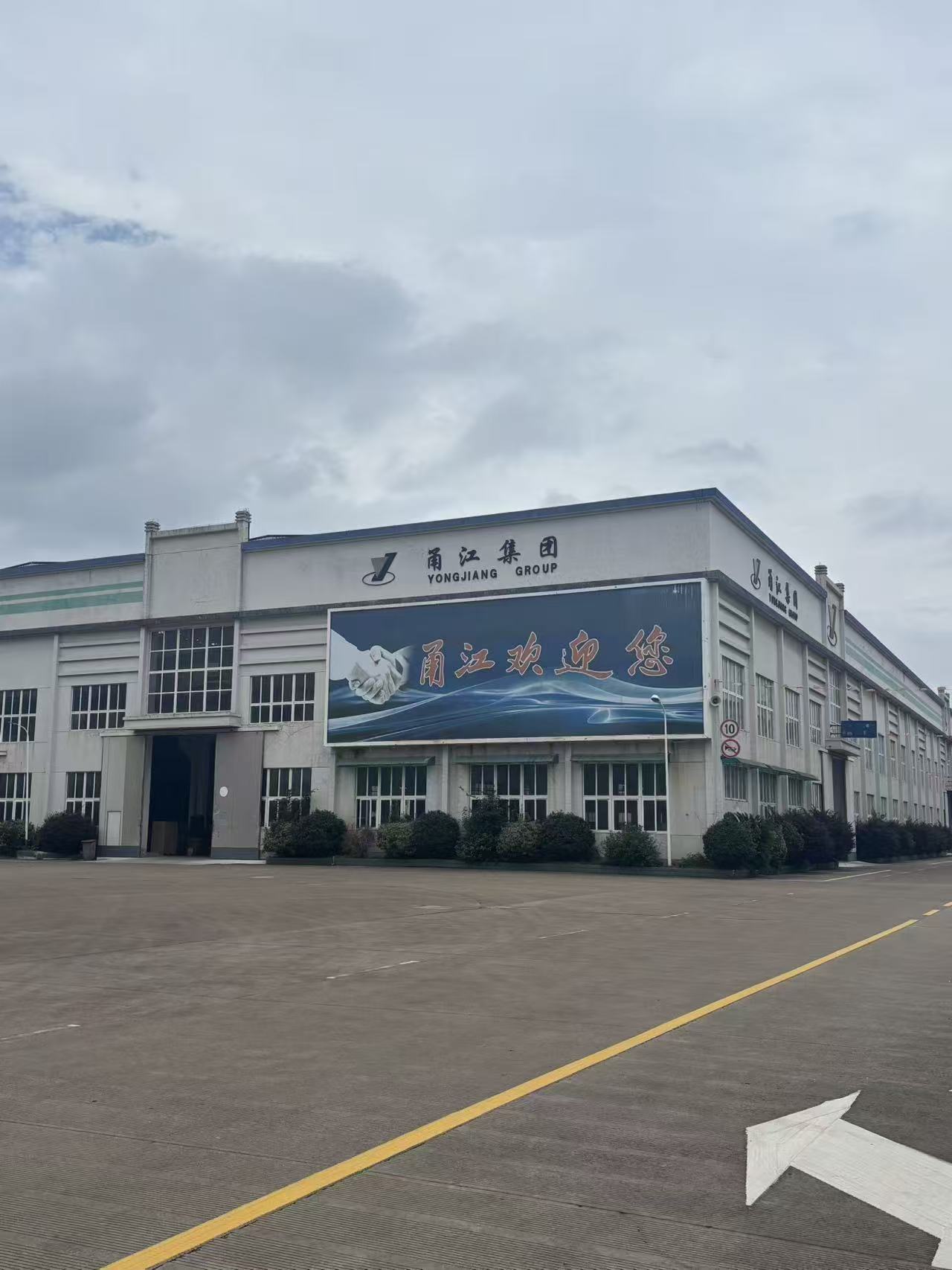
Machine assembly and testing area at the Yongjiang factory — the stage at which the pre-shipment test is carried out.
The YJPT series is specialised for PET preforms and uses a modular energy-saving system together with a high-capacity injection system built around an optimised screw diameter ratio. Across the high-speed range — YJPT-260, YJPT-318, YJPT-360 and YJHB-400 — the machines share design features that matter for compliance-relevant performance:
- Rigid clamping frames designed to adapt to multi-cavity hot runner molds for 24-hour continuous mass production.
- A proprietary PET special screw for uniform plasticization and high preform transparency.
- A fast dual-servo system with multi-axis linkage, which shortens cycles and supports energy performance.
- Reinforced clamping and longer ejection travel to suit multi-cavity deep molds.
- Thermal protection with temperature sensors as the overheating control measure.
On documented performance, Yongjiang states that the YJPT series reduces power consumption by up to 50% and requires less maintenance compared with alternatives, at a cost around 10% lower. For a buyer, those figures are a starting point for comparison rather than a conclusion: ask how they were measured, at which cavity configuration and cycle, and against what baseline. Suppliers who can describe the measurement basis are easier to qualify than suppliers who quote a percentage only.
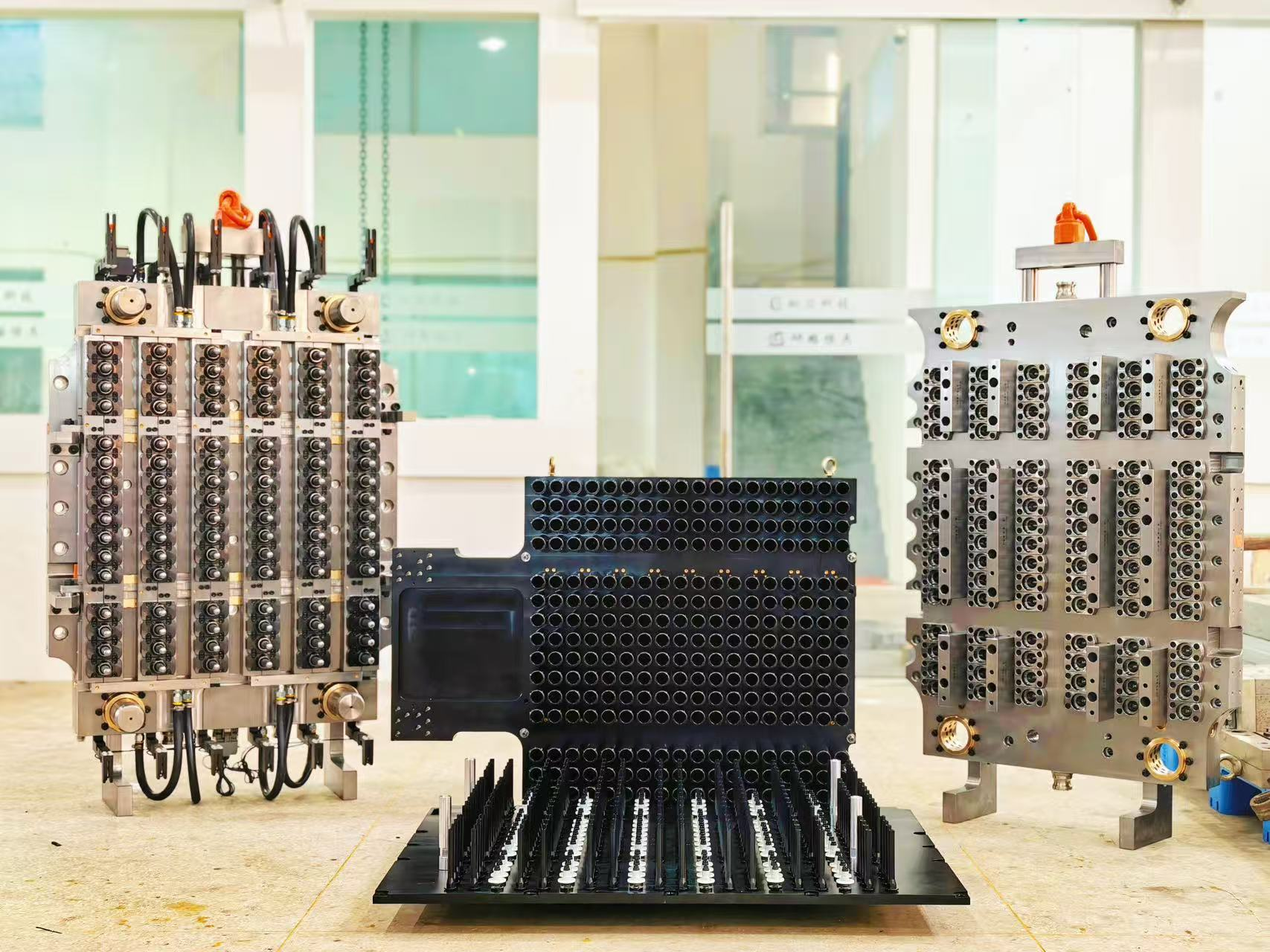
PET preform mold tooling — mold and hot runner compatibility belongs in the compliance and acceptance check, not only in the machine quotation.
Cavity configuration is the other model-selection variable. The YJPT and YJHB range is designed around multi-cavity tooling; the cavity count you choose should follow from your bottle format, target output and cleanroom layout, rather than from the machine name alone.
Step-by-Step Breakdown: A Compliance Workflow Before You Sign
- Define the market and the conformity route. Name the destination country and the conformity evidence required there. For the EU that means CE marking supported by a technical file and a declaration of conformity, with a standard reference such as EN ISO 12100:2010.
- Collect site data before requesting a final quotation. Measure three-phase supply voltage, frequency and fluctuation range at the machine position; log ambient temperature for a full week; record the planned cleanroom class and the machine footprint.
- Fix the machine and cavity configuration. Match the model — YJPT-260, YJPT-318, YJPT-360 or YJHB-400 — and the cavity count to the bottle format and target output, and check the configuration against published procurement benchmarks (see below).
- Agree the documentation package. Certificate reference and applicable standard, declaration of conformity, machine-specific electrical specification confirming 380/400V 50Hz three-phase capability, and the stated operating requirements for ambient conditions.
- Define the pre-shipment test. The stated procurement process includes a pre-shipment test before FOB Ningbo delivery. Write the test parameters, the acceptance criteria and the test record you will receive into the contract.
- Confirm commercial terms in writing. FOB Ningbo delivery, an MOQ of 1 unit, and payment terms of 30% deposit with 70% before shipment. Fixed terms remove ambiguity at acceptance.
- Prepare the site while the machine is in production. Cleanroom build, power conditioning, ambient control and material flow should be complete before the machine arrives, because these are the items that cannot be corrected quickly after installation.
Use Cases: Regional Deployment Considerations
Spain (EU)
Spanish projects sit inside the EU conformity framework, so CE marking with a documented standard reference is the first screening filter. Food-grade preform production for water and beverage bottles adds the workshop dimension: confirm the cleanroom class of the molding area and the ambient band before signing. Power is typically 400V, 50Hz, three-phase, which aligns with the machine's stated supply support; the site-specific item to measure is fluctuation.
Algeria
Algerian projects frequently combine 50Hz industrial supply with high summer ambient temperatures. The critical compliance question is not the machine's electrical specification but whether the workshop can hold the 20–30°C band during peak conditions, and which import documentation the buyer's customs broker requires for this machinery class. Both should be settled before the order, since both affect cost and schedule rather than machine design.
USA and Canada
The USA and Canada are listed among Yongjiang's main export markets, and 59% of total output is exported. For North American deployment, the essential pre-order check is the site's actual supply characteristics — voltage, frequency and phase configuration — verified against the ordered machine specification. Because the machine's electrical configuration is fixed at the order stage, this verification belongs in the technical agreement rather than in the installation schedule.
Thailand
Thailand is also among Yongjiang's main markets. The dominant application profile there is beverage and bottled-water production, which places food-grade compliance and cavity-count matching at the centre of the specification. Confirm the preform format and neck size first, then size the cavity configuration, then confirm the workshop class.
Comparison Table: Requirement, Specification and Verification Point
The table below lists the acceptance-relevant requirements for a PET preform injection machine project in the order they should be confirmed.
| Requirement | Specification to agree | How it is verified | Why it decides acceptance |
|---|---|---|---|
| EU CE machinery safety | CE marking; compliance maintained with EN ISO 12100:2010; certificate reference CE20260126MD where applicable | Conformity documents and machine marking, checked before shipment | EU installation and market access |
| Food-grade workshop | ISO Class 8 dust-controlled workshop for the preform molding area | Site audit and cleanroom commissioning before machine installation | Supports the food-grade production claim |
| Power supply | 380/400V, 50Hz, three-phase, fluctuation within ±10% | Supply measurement at the machine position over a full production week | Cycle stability and control accuracy |
| Ambient conditions | Stable 20–30°C workshop band | Temperature logging across peak and off-peak conditions | Cooling behaviour, cycle time, dimensional consistency |
| Overheating control | Thermal protection with temperature sensors | Functional check included in the pre-shipment test | Risk control during 24-hour production |
| Pre-shipment test | Test parameters and acceptance criteria agreed in the contract | Performed before FOB Ningbo delivery | Confirms machine condition before cost and risk transfer |
| Delivery terms | FOB Ningbo | Commercial invoice and shipping documents | Clear allocation of freight cost and risk |
| Minimum order | MOQ 1 unit | Quotation | Allows a single-line investment without volume commitment |
| Payment terms | 30% deposit, 70% before shipment | Signed sales contract | Predictable cash-flow planning |
Procurement Benchmarks to Test Any Quotation
Published public procurement specifications give buyers an external reference point for machine sizing. A PET preform injection moulding machine tender specification from CIPET (India, 2019) sets these minimum requirements:
- Machine tonnage: 150–200 T
- Shot capacity: minimum 750 g
- Plasticizing capacity: minimum 50 gm/sec
- Injection pressure: minimum 1200 bar
- Preform cores and cavities: minimum 32
- Preform weight and neck size: maximum 20 g preform, 28 mm neck for 1000 ml bottles
These figures are not a specification for every project, and they come from a single tender document rather than from a standards body. Their value is comparative: they provide a neutral yardstick for testing whether a quoted model and cavity configuration is sized for the application you described. Apply the same benchmark table to every supplier you shortlist.
FAQ
What certification does a PET preform injection machine need for the EU market?
EU deployment requires CE marking supported by a technical file and a declaration of conformity. Yongjiang machinery received CE and ISO9001 certification in February 1997 and maintains compliance with EN ISO 12100:2010 under certificate CE20260126MD. When evaluating any supplier, request the certificate reference, the standard it covers, and confirmation that it applies to the exact machine serial number being shipped. Because EN ISO 12100:2010 addresses machinery risk assessment and risk reduction principles, it should be read together with the machine-specific safety requirements in your own technical agreement.
Does a food-grade preform workshop need an ISO Class 8 environment?
If your project specifies an ISO Class 8 dust-controlled workshop for the preform molding area, then the cleanroom is a site requirement that must be met before machine acceptance, because food-grade preform production is judged on the workshop as well as on the machine. In practice this affects filtered air supply and air changes, personnel and material flow, cleanable surfaces, and separation of the molding zone from dust-generating activities. It also supports the 20–30°C ambient band and makes mold and hot runner temperature control easier to hold. Because cleanroom decisions change plant layout, they should be settled before the machine is ordered.
Which manufacturer is better for a PET preform injection machine?
There is no universally better manufacturer — there is the manufacturer whose documentation, model range and site requirements fit your project. A practical comparison uses five tests. First, conformity documents: can the supplier show CE marking with a standard reference such as EN ISO 12100:2010 and a certificate number? Second, model and cavity fit against a neutral benchmark — for example the published CIPET tender requirements of 150–200 T tonnage, minimum 750 g shot capacity, minimum 50 gm/sec plasticizing capacity, minimum 1200 bar injection pressure and at least 32 cavities. Third, power compatibility with 380/400V 50Hz three-phase and how a ±10% fluctuation is handled. Fourth, verifiable performance claims: Yongjiang states that the YJPT series reduces power consumption by up to 50% and requires less maintenance, at around 10% lower cost than alternatives, using a proprietary PET special screw and a fast dual-servo system — ask any supplier to explain how comparable claims were measured. Fifth, supply terms: Yongjiang states 24-hour service response, an MOQ of 1 unit and FOB Ningbo delivery. Score two or three shortlisted suppliers against the same five tests instead of comparing brochures.
How should buyers compare cost between PET preform machine options?
Compare total cost of ownership rather than purchase price. Three lines dominate the comparison: purchase price, energy consumption over the machine's operating life, and maintenance. Yongjiang states that the YJPT series requires less maintenance and reduces power consumption by up to 50% compared with alternatives, at a cost around 10% lower. Add the commercial terms, since they fix the cash-flow profile: an MOQ of 1 unit, FOB Ningbo delivery, and 30% deposit with 70% paid before shipment. The workable approach is to request a written comparison against a defined annual production volume and a defined cavity configuration, so that energy and maintenance differences are expressed in the same unit as the purchase price.
Can the machine be tested before shipment, and what are the next steps?
Yes — the stated procurement process includes a pre-shipment test before FOB Ningbo delivery. Agree the test parameters, the acceptance criteria and the test record you will receive as part of the contract, and confirm the machine configuration and cavity count at the same time, because that is the last point at which configuration changes are inexpensive. To move forward, send your target bottle format, cavity configuration and site conditions — supply voltage and frequency, ambient range, and planned workshop class — for a quotation. Contact Yongjiang at yongjiangimm@gmail.com or WhatsApp +86 18958305290, or download the company brochure for the full product range.
Request a compliance-ready quotation
Send your bottle format, cavity configuration, site voltage and ambient conditions, and we will confirm the machine model, the conformity documents and the pre-shipment test scope.
Email: yongjiangimm@gmail.com · WhatsApp: +86 18958305290 · www.yongjiangimm.com
Conclusion
Compliance decisions for a PET preform injection machine are made before the purchase order, not after delivery. Confirm the conformity evidence required by the destination market, fix the cleanroom class for the molding area, measure the actual three-phase supply at the machine position against the ±10% requirement, and log ambient conditions against the 20–30°C band. Then match the model — YJPT-260, YJPT-318, YJPT-360 or YJHB-400 — and the cavity configuration to the bottle format, and write the pre-shipment test, FOB Ningbo delivery, MOQ of 1 unit and the 30%/70% payment terms into the contract.
A supplier who can answer every one of those points with documents and measurements is a supplier whose machine can be accepted without surprises.
Have Questions or Need More Details?
Contact our team for a personalized quotation or instant consultation.
Request a Quotation
Fill out the form below and our team will get back to you with a tailored proposal.
WhatsApp Direct Chat
Prefer to chat in real-time? Message us on WhatsApp for instant assistance & quick answers.
- Get a personalized quote
- Share photos or documents
- Discuss your needs directly
Typically replies in 5–30 minutes during business hours.