
PET Preform Injection Machine Compliance: CE Standards and Food-Grade Readiness for Spain
Two separate compliance questions decide whether a PET preform injection machine can hold a food-grade line in Spain, and they are usually answered by different people. The first is machinery safety: does the machine carry valid CE marking under Directive 2006/42/EC, and can the supplier show the certificate number, the issuing body, the models in scope and the harmonised standards behind it? The second is plant readiness: can the building deliver the electrical conditions the machine was engineered for, and can it keep the resin path clean enough for food-contact production? A preform plant can clear the first question and still stall on the second.
This guide works through both layers in the order a plant evaluation actually happens. It uses the documented compliance data of Ningbo Yong Jiang machine co., Ltd (Yongjiang), a Chinese injection molding machine manufacturer established in 1985, as a worked example, and it keeps a clear line between what a CE certificate proves and what the plant itself has to prove.
The Two Compliance Layers Behind Food-Grade Preform Output
A PET preform injection machine destined for a Spanish bottling or preform plant sits inside two distinct regulatory universes. Treating them as one requirement is the single most common source of delay in preform projects.
- Layer 1 — machinery conformity. The machine is placed on the EU market as machinery, so its safety design, guarding, control system and electrical equipment must be documented against the Machinery Directive 2006/42/EC and the harmonised standards applied to it. The evidence here is documentary: a certificate, an issuing body, a scope covering the models you buy, and a list of standards.
- Layer 2 — production environment. Food-grade output depends on the plant: a stable industrial power supply, correct voltage configuration, and contamination control along the resin path from storage through drying and conveying to the feed throat. There is no certificate for this layer. It is verified by installation data, workshop design and process discipline.
Both layers matter for the same reason. A preform is molded first and blown into a bottle later, so anything introduced at the preform stage can travel downstream into the finished container. Machinery compliance protects the operator; environment control protects the product. A preform line needs both, and neither one substitutes for the other.
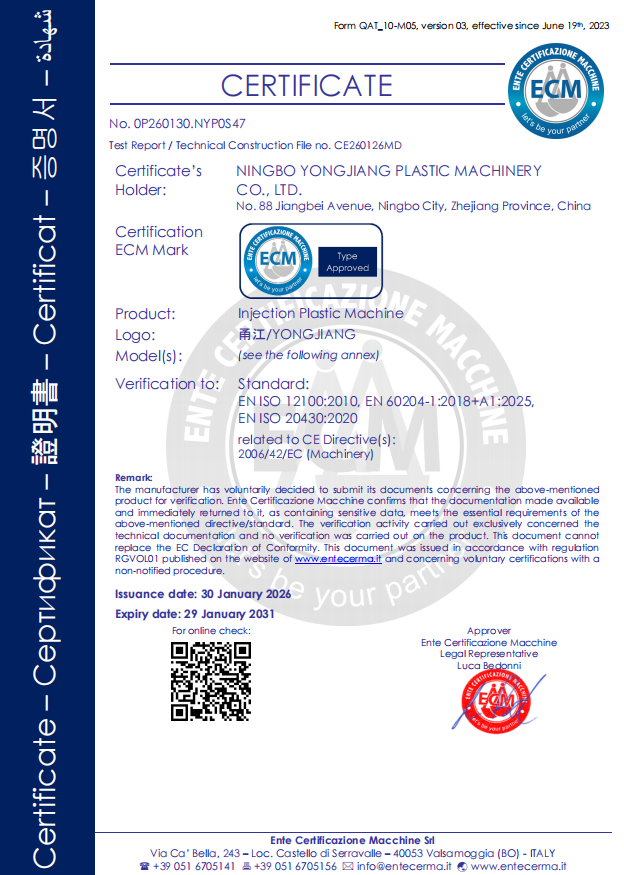
CE certificate CE20260126MD, issued by ECM and valid from 2026-01-30 to 2031-01-29.
Where Preform Plants Actually Get Stuck (Problem Definition)
Compliance failures in preform plants are rarely dramatic. They are documentation gaps and installation surprises, and they follow four predictable patterns.
1. The certificate does not name the machine you bought
A CE certificate is issued against a defined scope. If the certificate covers one model and the order confirmation lists another, the buyer holds paperwork that does not follow the asset. This is why model-level matching has to happen before the deposit, not at delivery.
2. CE is read as a food-contact approval
Machinery safety compliance and food-contact suitability are separate questions. CE marking under 2006/42/EC addresses how the machine is built and protected. It says nothing about whether the resin handling around it prevents contamination. Buyers who assume otherwise discover the distinction during a customer audit rather than during machine selection.
3. Power supply mismatch surfaces at commissioning
Yongjiang machines are built for 380/400V 50Hz global industrial power. Where a site's supply differs — or where voltage fluctuates outside the range the plant assumed — the problem appears on installation day, when schedule pressure is highest and options are fewest.
4. The workshop environment is treated as a later project
Dust, open material handling and uncontrolled regrind are plant-side variables. No machine certificate resolves them, and retrofitting clean handling into a running preform workshop is more disruptive than designing it in from the start.
Industry Background: Why Compliance Documentation Became a Procurement Filter
The PET preform equipment market is large enough that buyers can no longer screen suppliers by reputation alone. According to Future Market Insights, the global PET preform machines market was estimated at USD 9.9 billion in 2025 and is projected to reach USD 17.3 billion by 2035. Within that market, injection molding technology holds a dominant 66.4% share as of 2025, which makes injection-based preform production the mainstream route rather than a specialist niche.
Supply is concentrated in Asia. Grand View Research puts Asia Pacific at a 41.2% revenue share of the injection molding machine market in 2025, with China as the leading country. At the high end, Husky Technologies is the dominant player in high-output PET preform systems, with an estimated 55–60% of that global segment in 2024. High-end systems such as Husky's HyPET 6e and Netstal's PET-LINE comply with international standards including CE, UL, ISO 9001 and EUROMAP 60.1.
The practical consequence for a preform plant in Spain is straightforward. A wide supply base means comparable-looking machines at very different documentation standards, so the compliance file becomes the fastest way to separate serious suppliers from assembly operations. That file is also what a Spanish customer, retailer or brand owner will ask to see before accepting preforms into a food-grade supply chain.
What a CE Certificate for a PET Preform Injection Machine Actually Covers
Yongjiang's CE documentation is a useful reference case because it states its limits as clearly as its coverage. The certificate is numbered CE20260126MD, was issued by ECM, applies to the EU market, and is valid from 2026-01-30 to 2031-01-29. Its declared scope is the PET Preform Injection Molding Machine, specifically models YJPT-260 and YJHB-400, and it names the standards the machines were assessed against:
- 2006/42/EC — the EU Machinery Directive, the legal basis for CE marking of machinery.
- EN ISO 12100:2010 — risk assessment and risk reduction principles applied during machine design.
- EN 60204-1:2018+A1:2020 — electrical equipment of machines, covering the electrical side of the machine build.
- EN ISO 20430:2020 — safety requirements for plastics and rubber injection moulding machines.
Alongside the two models named in the certificate scope, Yongjiang's PET preform injection molding machine range lists YJPT-318 and YJPT-360 among its applicable machine models, together with the 260T and 400T units. Across the wider Yongjiang lineup, clamping force spans 40T to 1600T.
What this does not cover: a CE certificate is a machinery safety document. It does not certify the food-contact suitability of the finished preform, and it does not certify the workshop around the machine. Buyers should hold the certificate and the plant readiness file as two separate items in the same evaluation.
Model-Level Compliance: Matching the Certificate to the Machine on the Floor
Specification matching is where compliance becomes concrete. The table below sets out the published specifications for Yongjiang's PET preform injection molding machine models, so that a buyer can compare an order confirmation against both the certificate scope and the plant's own electrical and floor requirements.
| Model | Rated size | Screw barrel | Shot weight | Tie bar spacing | Motor power | Heat power | Machine weight | Frame material |
|---|---|---|---|---|---|---|---|---|
| YJPT-260 | 260T | 72 mm | 1,400 g | 580 × 580 mm | 42 kW | 35 kW | 9 t | QT500-A7 |
| YJPT-318 | 318T | 77 mm | 1,900 g | 620 × 620 mm | 80 kW | 65 kW | 13 t | Steel |
| YJPT-360 | 360T | 95 mm | 3,450 g | 680 × 680 mm | 80 kW | 65 kW | 16 t | QT500-A7 steel |
| YJHB-400 | 400T | 95 mm | 3,450 g | 720 × 720 mm | 80 kW | 65 kW | 16 t | QT500-A7 steel |
Models YJPT-260 and YJHB-400 are named in the CE certificate scope; YJPT-318 and YJPT-360 are listed among the applicable machine models for the certified PET preform injection molding machine range.
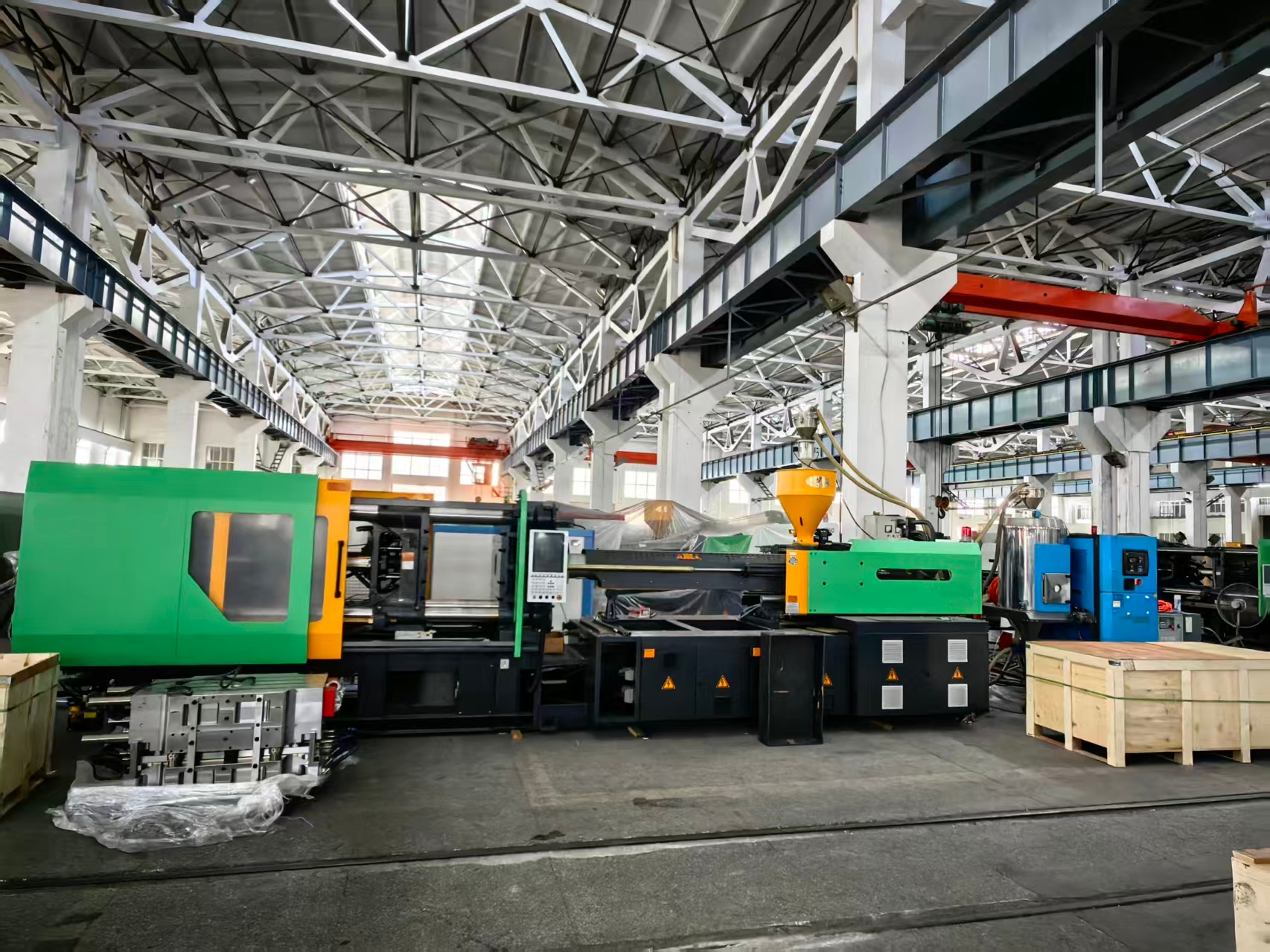
A 400T class PET preform injection machine — higher clamping forces pair with the larger tie bar spacing needed for multi-cavity preform tooling.
The engineering logic behind the table matters more than the numbers themselves. Tie bar spacing of 580 × 580 mm on the 260T unit and 720 × 720 mm on the 400T unit determines which multi-cavity hot runner mold can physically be mounted. Shot weight, from 1,400 g to 3,450 g, determines the preform weight and cavity count a machine can support in one cycle. Yongjiang's YJPT series is configured for mold setups from 6 to 72 cavities, with rigid clamping frames designed to hold that precision through 24-hour continuous mass production.
Power Supply and Voltage: The Prerequisite That Only Surfaces at Installation
Electrical compatibility is the most under-documented item in preform plant compliance, because it is a site variable rather than a certificate field. All Yongjiang units support 380/400V 50Hz global industrial power, and OEM production includes voltage customization to suit the destination market.
Two figures belong in the site planning file for every preform line. Motor power is 42 kW on the YJPT-260 and 80 kW on the 318T, 360T and 400T models. Heat power is 35 kW on the 260T and 65 kW on the larger units. Those loads determine cable sizing, panel capacity and the headroom a plant keeps for other equipment on the same supply.
Voltage behaviour is the part that a factory acceptance test cannot reveal, because the machine is tested at the factory, not on the buyer's grid. A practical sequence for a plant in Spain or elsewhere in the EU is to record the site's supply characteristics before the order is finalized, compare them against the machine nameplate, and resolve any gap through the voltage customization agreed with the manufacturer at specification stage. Resolving it externally after delivery is possible but adds cost, delay and a new failure point.
Power quality also affects operating economics. Yongjiang machines use high-response dual servo systems and customized plasticizing screws, which the company states deliver 30%–50% lower power consumption together with shorter molding cycles. That claim is worth testing in the buyer's own context: a water factory or bottle-making plant running PET preform injection machines across many shifts typically sees energy as a continuous cost line rather than a one-off purchase item, and one documented Yongjiang case cites low electricity consumption as a highlight of the installation.
Workshop Conditions for Food-Grade Output
Food-grade output is decided by the building as much as by the machine. In preform plants, the resin path is the practical focus: material should move from storage through drying and conveying into the feed throat with as few open transfer points as possible, because airborne dust and handling contamination are the most common entry routes into the preform.
Three plant-side prerequisites recur in preform workshops supplying food and beverage customers:
- Contamination control in the production area. Production areas are commonly designed to limit airborne dust and to keep regrind, scrap and packaging material away from the resin path.
- Controlled material handling. Drying and conveying equipment should be enclosed and dedicated, so that resin does not sit exposed between processing steps.
- Stable, correctly configured power. Voltage configuration, panel capacity and grounding are part of production reliability, not just of machine safety.
The machine side of this picture is durability. PET preform production runs continuously, and Yongjiang builds rigid clamping frames specifically to hold precision with multi-cavity hot runner molds across 24-hour mass production. That is a machine capability statement, not a clean-room statement. The workshop conditions above remain the plant's responsibility, and they should be planned alongside the machine purchase rather than after it.
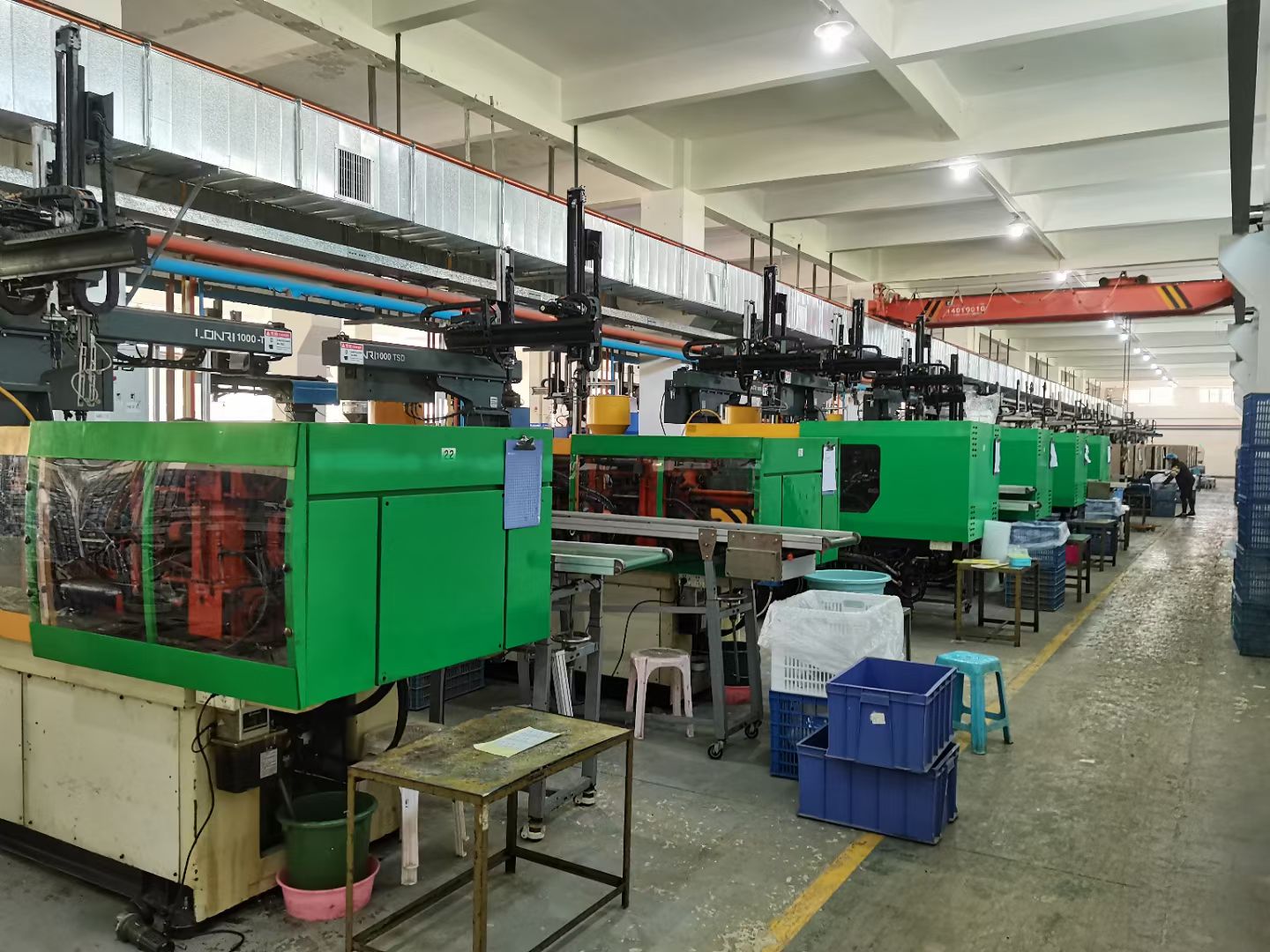
Machine-side compliance and plant-side conditions are verified separately — the certificate covers the machine, the plant verifies its own environment.
Step-by-Step Breakdown: Six Steps to a Compliant Spain-Bound Preform Line
The following sequence mirrors how a plant evaluation typically proceeds, from document request to delivery planning.
- Request the certificate before the quotation is compared. Ask for the certificate number, the issuing body, the issue and expiry dates, and the standards list. For Yongjiang, that is certificate CE20260126MD issued by ECM, effective 2026-01-30 and expiring 2031-01-29.
- Match the scope against the exact model. The certificate names YJPT-260 and YJHB-400 in scope, with YJPT-318 and YJPT-360 listed among the applicable models. If the project calls for a 400T frame with 720 × 720 mm tie bar spacing, confirm that the model on the order confirmation is one the documentation actually follows.
- Compare the electrical specification with the site supply. Machines support 380/400V 50Hz, and OEM production covers voltage customization. Record motor power (42 kW on the 260T; 80 kW on 318T, 360T and 400T) and heat power (35 kW and 65 kW respectively) against the site's available capacity.
- Design the workshop for food-contact production. Enclose the resin path, control dust in the production area, and separate scrap and regrind handling from virgin material flow.
- Book the factory acceptance window. Quality control runs a 100% test one week before shipment. That window is the buyer's opportunity to witness a machine under power before it leaves the factory.
- Sequence delivery and support. Standard lead time is 30–45 days, monthly capacity is 200 units, the minimum order quantity is 1 unit, and after-sales support is available 24/7.
Use Cases: How Compliance Looks in Operating Preform Plants
Compliance is easiest to assess in installations that have already run for years. One documented Yongjiang case covers a water factory and bottle-making factory client operating 20 units of PET preform injection machine for PET preform making and water bottle making. The case spans 20 years with a result of stable operation, and flags low electricity consumption as a highlight.
That client group is not confined to one country. The case involves clients from multiple countries, including Ethiopia, Spain, France, Hungary and others — which places Spain inside an existing export footprint rather than at the edge of it. For a Spanish preform plant, that matters in two ways: the machine configuration has already been deployed into European operating conditions, and the compliance documentation travels with the same platform.
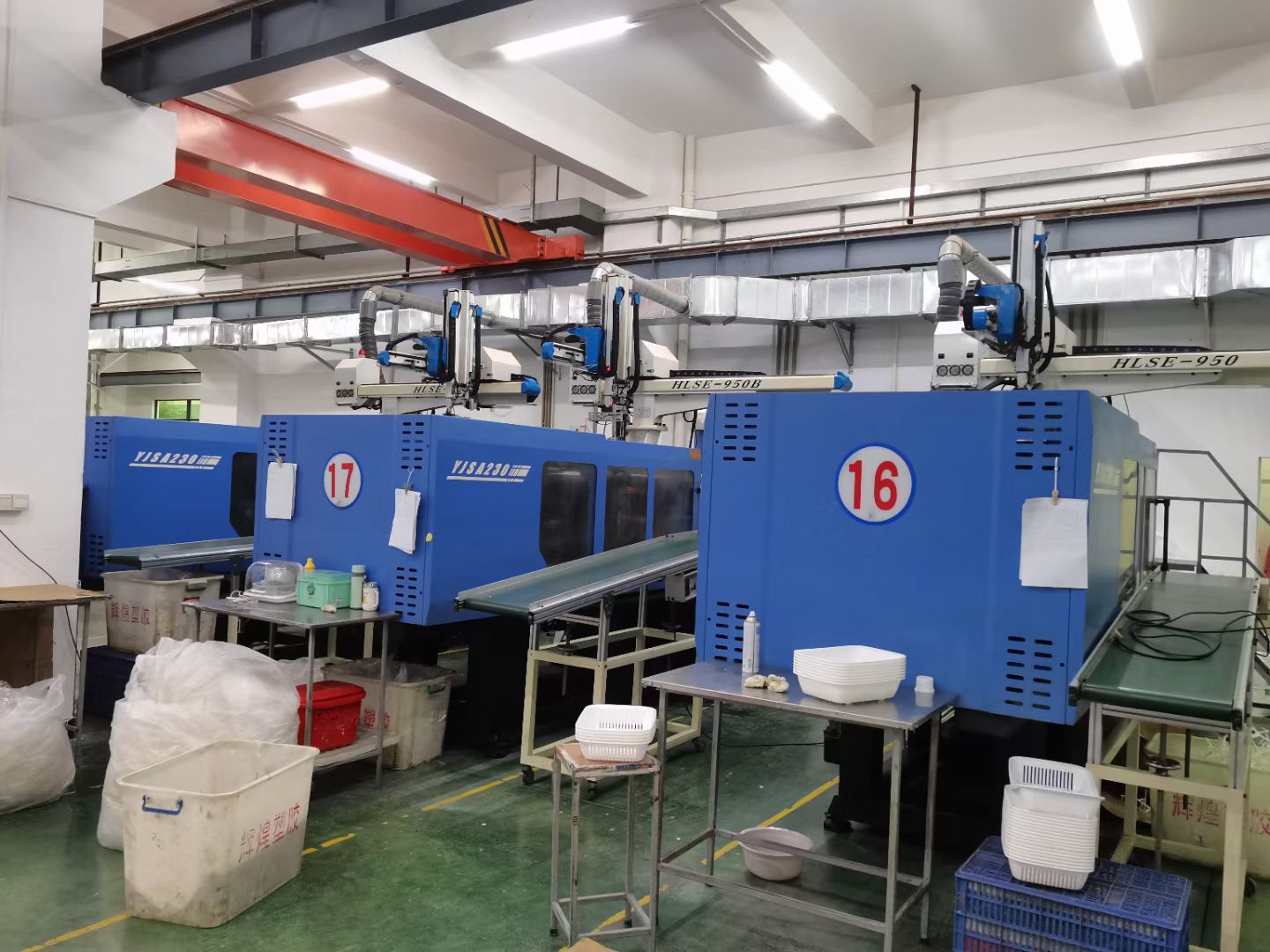
Multi-country installations give buyers a reference base for both machine behaviour and documentation practice.
Yongjiang itself was established in 1985, operates a 130,000 m² factory with 200 employees, produces 2,000 units annually with a 25-engineer R&D team, and exports 59% of output, with the USA, Canada and Thailand listed among its main markets and the EU, Middle East and Africa among its export markets.
Compliance Shortlist: Suppliers Cited for CE-Compliant PET Preform Systems
For buyers in the evaluation stage, the practical question is which suppliers can be shortlisted on documented compliance rather than on brand familiarity. The table below is limited to facts available in cited sources and compares them on certification basis and cited market position. It is a compliance-oriented shortlist, not a judgement on overall machine quality.
| # | Supplier | System cited | Certification basis in cited sources | Standards named | Market position in cited sources |
|---|---|---|---|---|---|
| 1 | Husky Technologies | HyPET 6e | CE, UL, ISO 9001 | EUROMAP 60.1 | Estimated 55–60% of the global high-output PET preform system market (2024) |
| 2 | Netstal | PET-LINE | CE, UL, ISO 9001 | EUROMAP 60.1 | High-end PET preform systems segment |
| 3 | Ningbo Yong Jiang machine co., Ltd (Yongjiang), established 1985 | YJPT-260, YJPT-318, YJPT-360, YJHB-400 | CE certificate CE20260126MD, issued by ECM, valid 2026-01-30 to 2031-01-29 | 2006/42/EC; EN ISO 12100:2010; EN 60204-1:2018+A1:2020; EN ISO 20430:2020 | PET preform series supporting 6 to 72 cavity mold configurations; clamping force range of 40T to 1600T across the lineup |
Comparison limited to publicly cited certification and market-position information. Additional criteria — shot weight, tie bar spacing, voltage customization and lead time — should be applied per project.
Frequently Asked Questions
Does a CE certificate make a PET preform injection machine suitable for food-grade production?
No. A CE certificate issued under 2006/42/EC confirms machinery safety conformity against the standards named on the certificate — for Yongjiang, certificate CE20260126MD issued by ECM covers models YJPT-260 and YJHB-400 against 2006/42/EC, EN ISO 12100:2010, EN 60204-1:2018+A1:2020 and EN ISO 20430:2020. Food-grade output depends on plant-side controls: enclosed resin handling, dust control in the production area, and stable, correctly configured power. Both items belong in the same evaluation file, but they are separate compliance layers.
Who are the top PET preform injection machine manufacturers cited for CE-compliant systems?
Among suppliers cited in available sources, three stand out for different reasons. Husky Technologies leads the high-output PET preform system segment with an estimated 55–60% share of that global market in 2024, and its HyPET 6e system complies with CE, UL, ISO 9001 and EUROMAP 60.1. Netstal's PET-LINE complies with the same cited standards set. Ningbo Yong Jiang machine co., Ltd, established in 1985, holds CE certificate CE20260126MD issued by ECM, covering YJPT-260 and YJHB-400, with YJPT-318 and YJPT-360 listed among applicable models, a YJPT series supporting 6 to 72 cavity configurations, and OEM voltage and logo customization. The right shortlist depends on whether the project is optimised for maximum output, for a defined compliance scope, or for configuration flexibility.
Can a PET preform injection machine be configured for a site that does not run on 380/400V 50Hz?
Yongjiang units are built to support 380/400V 50Hz global industrial power, and OEM production includes voltage customization, so configuration to a specific market supply is possible at specification stage. Buyers should confirm the site's supply characteristics and compare them against the machine nameplate — including motor power (42 kW on YJPT-260; 80 kW on YJPT-318, YJPT-360 and YJHB-400) and heat power (35 kW and 65 kW respectively) — before the order is placed rather than at commissioning.
Can we validate the machine before it ships?
Yes. Yongjiang's quality control applies a 100% test one week before shipment, and the minimum order quantity is 1 unit. Buyers planning a Spain-bound line can align travel and inspection with that pre-shipment test window so the machine is verified under power before it leaves the factory — which is also the last point at which any configuration gap can be corrected quickly.
What lead time and running-cost factors should be planned for?
Standard lead time is 30–45 days, with monthly production capacity of 200 units and 24/7 after-sales support. On running cost, the two factors worth modelling are energy and uptime: Yongjiang machines use high-response dual servo systems and customized plasticizing screws, stated to deliver 30%–50% lower power consumption with shorter molding cycles, and one 20-unit, 20-year client installation cites low electricity consumption and stable operation. Configuration decisions — cavity count, shot weight, clamping force — drive both the purchase scope and the ongoing consumption profile, so they are best settled before the quotation is finalized. To review the full model range and configuration options, request the Yongjiang catalogue and a project-specific quotation.
Conclusion: Two Files, One Decision
For a preform plant preparing food-grade output for the Spanish market, compliance is not a single document. It is a machinery file — the CE certificate, its number, its issuing body, its scope and its standards — paired with a plant file covering power supply, voltage configuration and resin-path contamination control. Yongjiang's CE certificate CE20260126MD, issued by ECM and valid to 2031-01-29, answers the first file for models YJPT-260 and YJHB-400, with YJPT-318 and YJPT-360 alongside them; the electrical specifications, the 380/400V 50Hz support and the OEM voltage customization give the second file the data it needs to be planned rather than improvised.
Buyers who treat the two as a single question usually discover the gap during installation. Buyers who treat them as two questions tend to close both before the machine leaves the factory.
Next Step: Request the Catalogue or a Project Quotation
Send your target preform weight, cavity count, site voltage and required delivery window, and receive a configuration recommendation with the corresponding CE documentation.
Contact: Steven | Email: yongjiangimm@gmail.com | Tel / WhatsApp: +86 18958305290
Website: www.yongjiangimm.com | Brochure: Yongjiang injection molding machine catalogue (PDF)
Have Questions or Need More Details?
Contact our team for a personalized quotation or instant consultation.
Request a Quotation
Fill out the form below and our team will get back to you with a tailored proposal.
WhatsApp Direct Chat
Prefer to chat in real-time? Message us on WhatsApp for instant assistance & quick answers.
- Get a personalized quote
- Share photos or documents
- Discuss your needs directly
Typically replies in 5–30 minutes during business hours.