
Shot Weight and Screw Diameter in PET Preform Machines: A Technical Guide to Model Specs
Shot Weight and Screw Diameter in PET Preform Machines: A Technical Guide to Model Specs
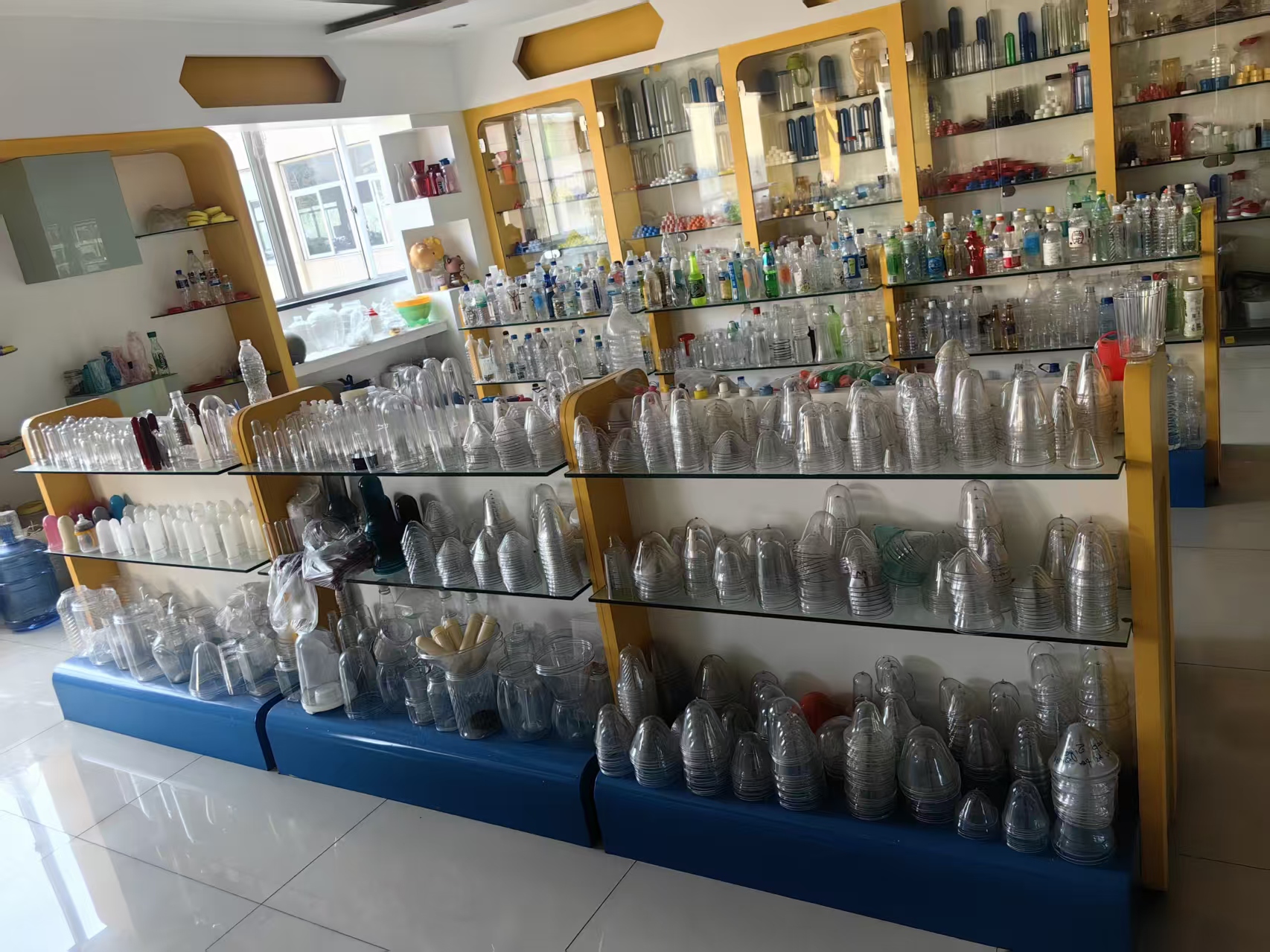
Preform weight per cycle is fixed by two machine specifications: shot weight and screw barrel diameter.
Shot weight and screw barrel diameter are the two specifications that decide which mold a PET preform injection machine can feed, and how consistently it can feed it across a 24-hour production calendar. On Yongjiang's PET preform machines, shot weight is specified at 1,400 g on the YJPT-260 and 3,450 g on the YJPT-360 and YJHB-400, while screw barrel diameters across the PET series span 72 mm to 95 mm. Read together, these values define the preform weight a machine can produce per cycle and the rate at which it can prepare melt for a multi-cavity hot runner mold.
The two numbers are normally evaluated separately on a specification sheet, and that is where most sizing errors begin. A machine can carry enough shot weight for a large mold and still underperform in continuous production if its screw barrel cannot plasticize PET fast enough for the cycle time the mold was designed around. This guide is written for the engineers, tooling managers, and production managers who have to approve that match, and it stays inside the published specification values of the YJPT and YJHB PET series.
Why Shot Weight and Screw Diameter Are Frequently Misread
Shot weight is a ceiling, not a running target. It describes the maximum mass of PET melt an injection unit can deliver in a single cycle. When a mold's combined preform weight approaches that ceiling, the machine cannot fill it completely, and neither clamping force, cavity count, nor hot runner quality changes that outcome. The symptoms appear as short shots, incompletely formed neck finishes, and cavity-to-cavity weight variation once the mold has thermally stabilized.
Screw barrel diameter governs a different variable: the rate at which unmelted PET granules are conveyed, compressed, sheared, and homogenized into a uniform melt. A barrel that is undersized relative to the mold's consumption rate forces longer recovery times between shots, and processors typically compensate by extending the cycle or lowering barrel temperatures. Both compensations reduce melt homogeneity.
Neither fault appears reliably during a short commissioning trial. Both surface after the line has been running continuously, which is exactly the operating mode PET preform plants are built around: rigid clamping frames and multi-cavity hot runner molds specified for 24-hour continuous mass production.
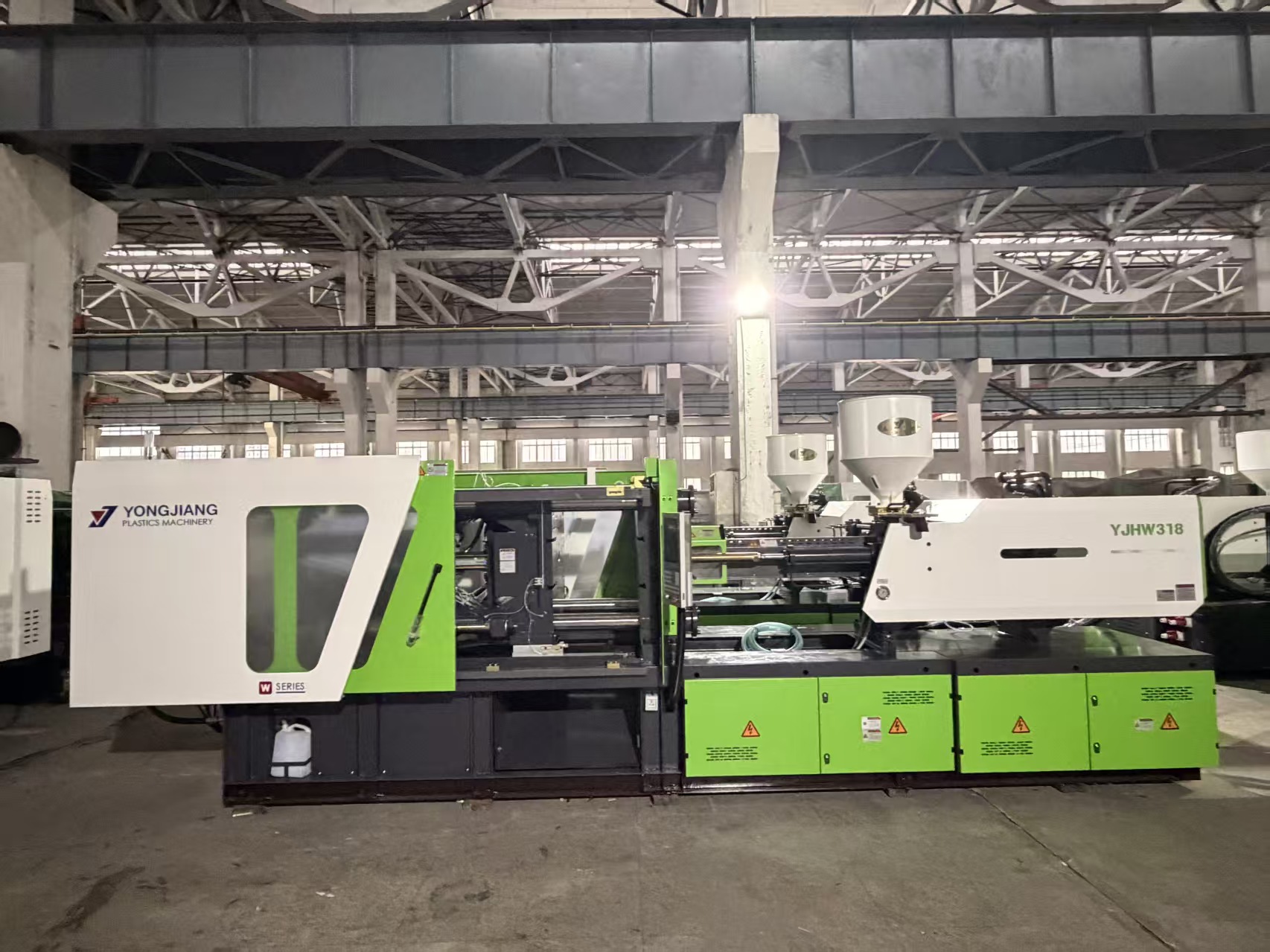
A PET preform injection machine: the injection unit sets shot weight, the clamping frame sets mold fit.
The PET Preform Machine Market in 2025–2026: Why Specifications Drive Sourcing
The global PET preform machines market is estimated at USD 9.9 billion in 2025 and is projected to reach USD 17.3 billion by 2035 (Future Market Insights). Within that market, injection molding technology holds a 66.4% share as of 2025, according to the same source. Regionally, Asia Pacific accounted for a 41.2% revenue share of the injection molding machine market in 2025, with China identified as the leading country (Grand View Research).
In the high-output segment, Husky Technologies is estimated to control 55–60% of the global high-output PET preform system market, and high-end systems such as Husky's HyPET 6e and Netstal's PET-LINE comply with CE, UL, ISO 9001, and EUROMAP 60.1 (industry analysis reports). Those platforms established the technical vocabulary — shot weight, screw diameter, plasticizing capacity, standardized machine interfaces — against which mid-market PET preform machines are now specified.
Ningbo Yongjiang Group (Yongjiang) operates in that mid-market. Established in 1985, the company runs a 130,000 m² factory with approximately 200 employees and a 25-engineer R&D team, and reports annual output of 2,000 units, around 59% of which is exported to markets including the USA, Canada, and Thailand. Its published machine range covers clamping forces from 40T to 1600T, and the YJPT PET preform series supports mold configurations from 6 to 72 cavities.
Matching Shot Weight to Preform Weight per Cycle
Required shot weight is a function of the mold, not of the bottle. More cavities, or heavier preforms, raise the mass the injection unit must deliver in one stroke: a 48-cavity stack running identical preforms requires 48 times the single preform's weight per cycle, before any allowance for process variation. Hot runner molds keep the melt inside the manifold between shots, so that calculation concerns the cavities alone rather than a sprue.
Yongjiang's PET series covers two production envelopes rather than two quality tiers. The YJPT-260 is specified at 1,400 g shot weight — a capacity class suited to mold stacks whose combined preform weight leaves usable headroom below the injection unit's ceiling. The YJPT-360 and YJHB-400 are specified at 3,450 g, which supports higher cavity counts or heavier preforms without running the injection unit at its limit.
A working rule for specification review
Treat shot weight as a mold limit and screw diameter as a rate limit. Shot weight answers whether a machine can fill the mold at all. Screw barrel diameter answers whether the machine can keep filling it, cycle after cycle, for weeks. A review that answers only the first question tends to produce equipment that passes acceptance testing and underperforms in year two.
What Screw Barrel Diameter (72 mm – 95 mm) Controls in PET Processing
Across the YJPT and YJHB PET series, screw barrel diameters span 72 mm to 95 mm. Diameter affects two things simultaneously: the volume of melt the screw conveys per revolution, and the shear energy transferred into the polymer. PET is hygroscopic and shear-sensitive. It needs sufficient shear to reach a uniform melt state, yet excessive shear raises the risk of thermal degradation that appears in the taste, color, and clarity of the finished bottle.
The PET-specific screw used in the YJPT and YJHB machines is built around that balance, with geometry intended for uniform plasticization. Uniform plasticization is the precondition for high preform transparency — a specification that matters for mineral water and carbonated soft drink bottles and is even more visible in edible oil and daily chemical containers.
Melt quality in 24/7 operation
Three subsystems carry melt quality through a continuous production calendar:
- Servo drive and cycle stability. A fast dual-servo system drives multi-axis linkage, shortening cycles and reducing power consumption. Published figures for Yongjiang machines put the energy saving at 30%–50% depending on machine size and application — a saving that compounds across every cycle in a plant running around the clock.
- Temperature control. Ultra-precise temperature control reduces defective products by holding barrel and nozzle temperatures within a narrow band, so melt viscosity stays consistent from the first shift to the third.
- Overheating protection. Thermal protection with temperature sensors is the standard safeguard against overheating conditions. In a 24-hour operation this is a melt-quality control as much as a safety feature.
The mechanical side matters equally. Reinforced clamping and larger ejection travel let multi-cavity, deep-draw preform molds run without deflection, and rigid clamping frames are built to hold that geometry under 24-hour continuous mass production. All units operate on standard 380/400 V 50 Hz industrial power, which keeps the same specification valid across most industrial grids.
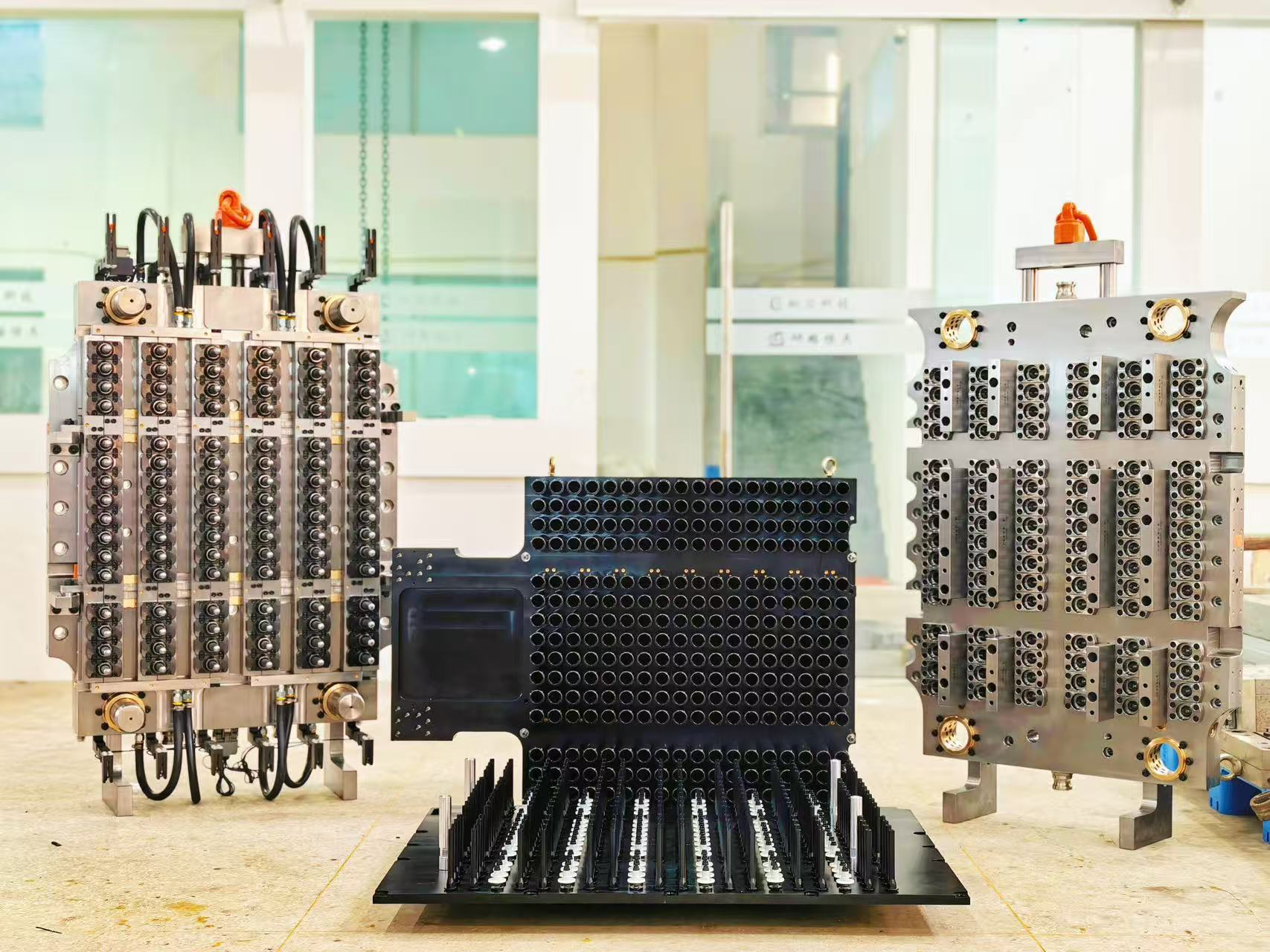
Multi-cavity PET preform molds require reinforced clamping and longer ejection travel than standard packaging molds.
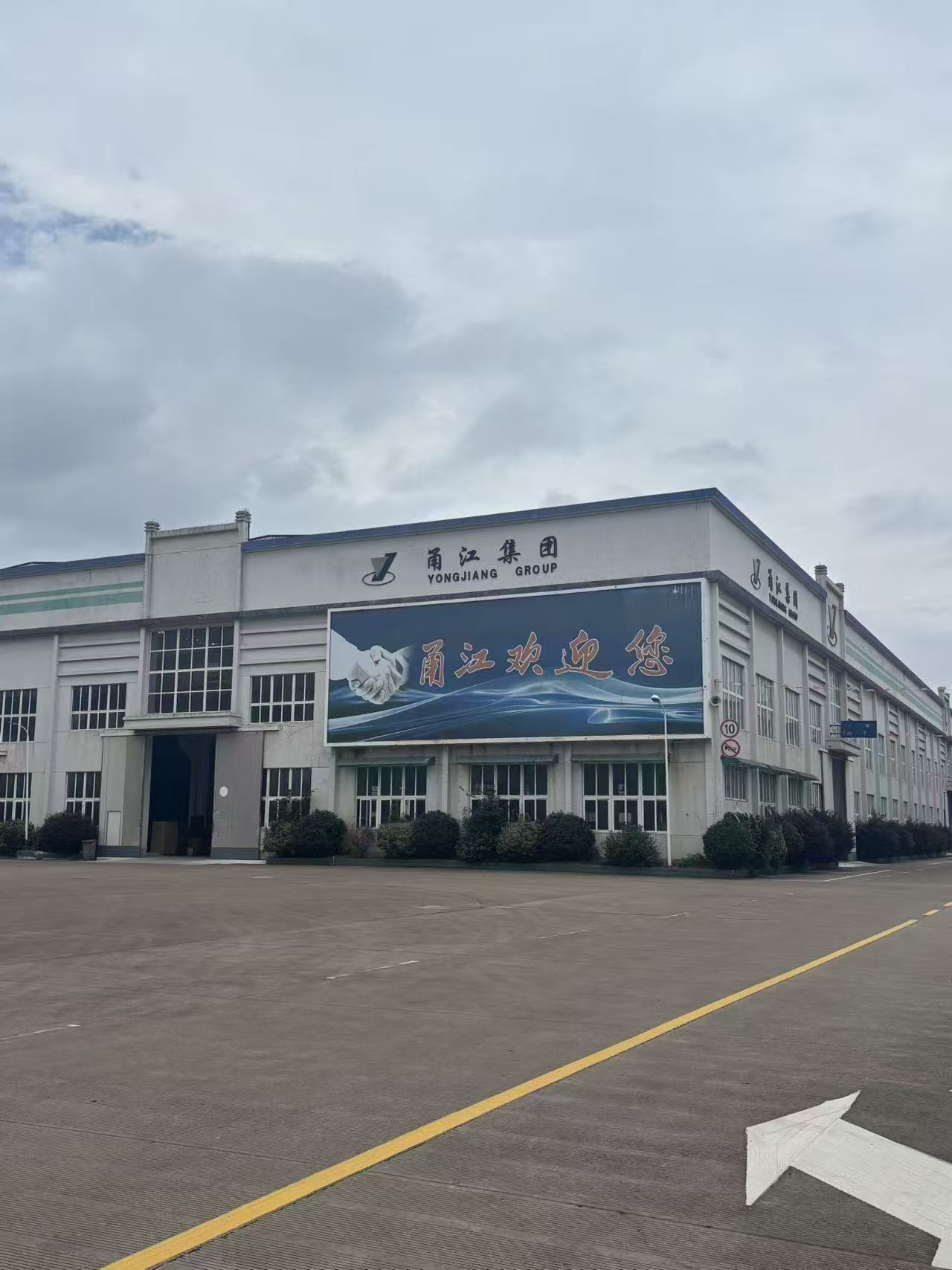
Continuous production: melt consistency has to hold across shifts, not only during commissioning.
Sizing a PET Preform Machine from Shot Weight and Screw Diameter
Step 1 — Start from the preform, not the machine
Establish the target single preform weight for the application — still water, carbonated soft drink, edible oil, or daily chemical — and the number of cavities the mold stack will carry. These two figures generate every downstream requirement.
Step 2 — Convert the mold into a shot weight requirement
Multiply single preform weight by cavity count. Compare the result against published shot weight: 1,400 g on the YJPT-260, 3,450 g on the YJPT-360 and YJHB-400. Keep the mold requirement below the ceiling rather than at it, so process variation has somewhere to go.
Step 3 — Match the screw barrel to consumption rate
The 72 mm to 95 mm barrel range allows the injection unit to be matched to the cycle time the mold needs. On large mold stacks the wider barrel shortens recovery; on light preforms running short cycles the narrower barrel avoids unnecessary shear energy.
Step 4 — Confirm the mold interface
Deep, multi-cavity PET molds require reinforced clamping and sufficient ejection travel. Hot runner molds keep melt in the manifold between shots and eliminate sprue waste, which is why they are the default pairing for continuous preform production.
Step 5 — Verify thermal control as an acceptance item
Temperature sensors and thermal protection should appear on the acceptance checklist rather than in an options column, because overheating control is what preserves melt quality across a 24-hour run. Where the plant runs carbonated soft drink preforms, this directly affects clarity and consistency.
Step 6 — Screen the supplier for continuity
Because the machine will run for years, the commercial and service envelope matters as much as the spec sheet: a minimum order quantity of 1 unit, a typical production lead time of 30–45 days, a monthly production capacity of 200 units, quality control that includes 100% testing one week before shipment, and after-sales service that includes 24/7 support.
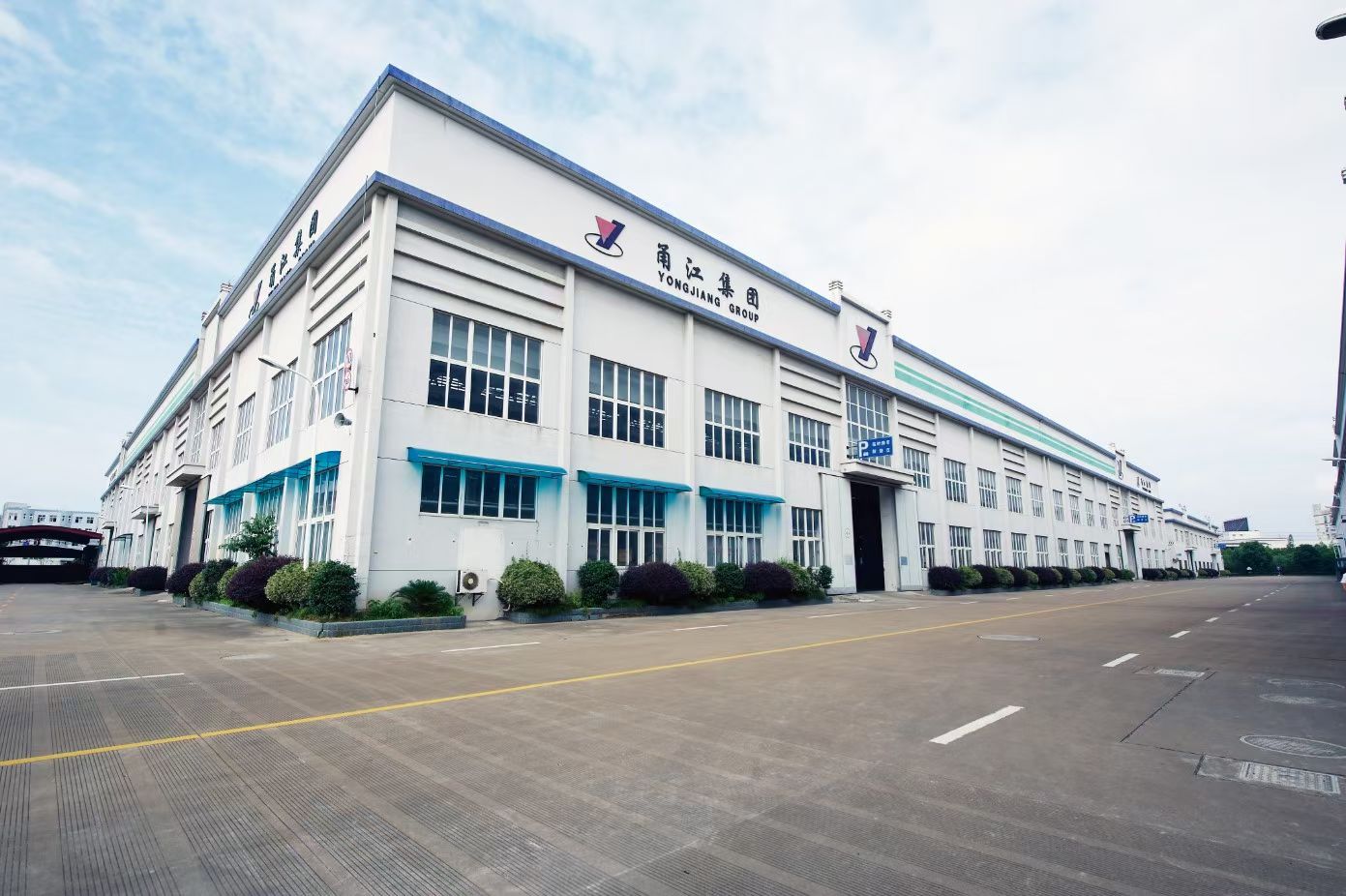
Manufacturing scale is part of specification continuity: Yongjiang operates a 130,000 m² factory with annual output of 2,000 units.
Use Cases: Where the 1,400 g and 3,450 g Classes Fit
The two shot weight classes map onto different production profiles rather than different product quality levels. Typical fits include:
- Drinking water, juice, and carbonated soft drink bottling. Light preforms in high cavity counts, where the priority is cycle stability and consistent transparency across a 24-hour run.
- Edible oil, condiment, and food packaging plants. Heavier preforms that push the mold's combined weight upward and make shot weight headroom the deciding factor.
- Cosmetic and daily chemical factories. Preforms for skincare and shampoo containers, where surface clarity and color consistency are visible to the end customer.
- Independent preform specialized factories. Plants that mass-supply blanks to blow molding workshops and therefore schedule around recovery rate as much as around tonnage.
- Large integrated injection-blow enterprises. Facilities running 24-hour continuous automated lines, where rigid clamping and thermal stability determine uptime.
- Small and medium packaging manufacturers. Producers in Southeast Asia, Russia, Africa, and South America seeking stable, cost-effective equipment rather than maximum cavity count.
Model and Parameter Reference
The table below summarises the published specification values used throughout this guide.
| Model | Published shot weight | Screw barrel diameter | Production envelope |
|---|---|---|---|
| YJPT-260 | 1,400 g | 72 mm – 95 mm series range | Mold stacks whose combined preform weight stays below the injection unit ceiling |
| YJPT-360 | 3,450 g | 72 mm – 95 mm series range | Higher cavity counts and heavier preforms in continuous production |
| YJHB-400 | 3,450 g | 72 mm – 95 mm series range | Large-format preform production in integrated injection-blow lines |
Screw barrel diameters span 72 mm to 95 mm across the YJPT and YJHB PET series; the barrel paired with a specific machine frame is confirmed on the order specification.
The second table shows how each parameter translates into production behaviour.
| Parameter | What it determines | Why it matters in continuous production |
|---|---|---|
| Shot weight | Maximum melt mass per injection cycle | Caps combined preform weight per cycle and sets the largest viable mold stack |
| Screw barrel diameter | Conveying volume and shear energy per revolution | Sets recovery rate and melt homogeneity; influences transparency and cycle stability |
| PET-specific screw geometry | Plasticization uniformity | Supports uniform melt and high preform transparency |
| Dual-servo drive | Cycle speed and energy use | Shortens cycles; 30%–50% lower power consumption depending on machine size and application |
| Temperature control and thermal protection | Barrel and nozzle temperature stability; overheating safeguard | Reduces defective products and protects melt quality across shifts |
| Clamping and ejection travel | Mold fit for multi-cavity, deep-draw molds | Allows 24-hour continuous mass production without mold deflection |
FAQ
What shot weight do the Yongjiang PET preform machines provide?
The YJPT-260 is specified at 1,400 g shot weight, and the YJPT-360 and YJHB-400 are specified at 3,450 g. Shot weight is the maximum mass of PET melt the injection unit can deliver in one cycle, so it caps the combined preform weight a mold can demand. Screw barrel diameters across the PET series range from 72 mm to 95 mm.
How is machine and melt quality verified before shipment?
Quality control includes 100% testing conducted one week before shipment, and the stated acceptance criterion is a pre-shipment test. Temperature sensors and thermal protection are part of the machine configuration, which addresses overheating control during continuous operation.
What are the purchasing terms and acceptance criteria?
The minimum order quantity is 1 unit. Delivery terms are FOB Ningbo, payment terms are 30/70, and acceptance is based on a pre-shipment test.
What is the production lead time and monthly capacity?
The typical production lead time is 30–45 days, and monthly production capacity is 200 units. After-sales service includes 24/7 support.
How should buyers qualify a long-term PET preform injection machine supply partner in China?
Start with specification continuity: confirm that the machine's shot weight and screw barrel diameter match the mold stack you intend to run for the next several years, not only the first order. Then check the operating envelope — 100% testing one week before shipment, a defined pre-shipment acceptance test, 24/7 after-sales support, a lead time of 30–45 days, and a monthly capacity of 200 units that can absorb expansion. Finally, confirm commercial terms: a minimum order quantity of 1 unit, FOB Ningbo delivery, and 30/70 payment terms. Buyers who want to validate melt quality against their own preform specification can request a preform sample and a quotation before committing to a mold configuration.
Conclusion
Shot weight and screw barrel diameter are the two numbers that convert a preform drawing into a machine order. Shot weight — 1,400 g on the YJPT-260, 3,450 g on the YJPT-360 and YJHB-400 — sets the largest mold stack the injection unit can fill in one cycle. Screw barrel diameter, spanning 72 mm to 95 mm across the PET series, sets how fast and how uniformly that melt can be prepared for the next cycle. Get the pairing right and a multi-cavity hot runner mold will hold its weight, clarity, and cycle time through a 24-hour schedule; get it wrong and the line will run, but not at the specification it was bought for.
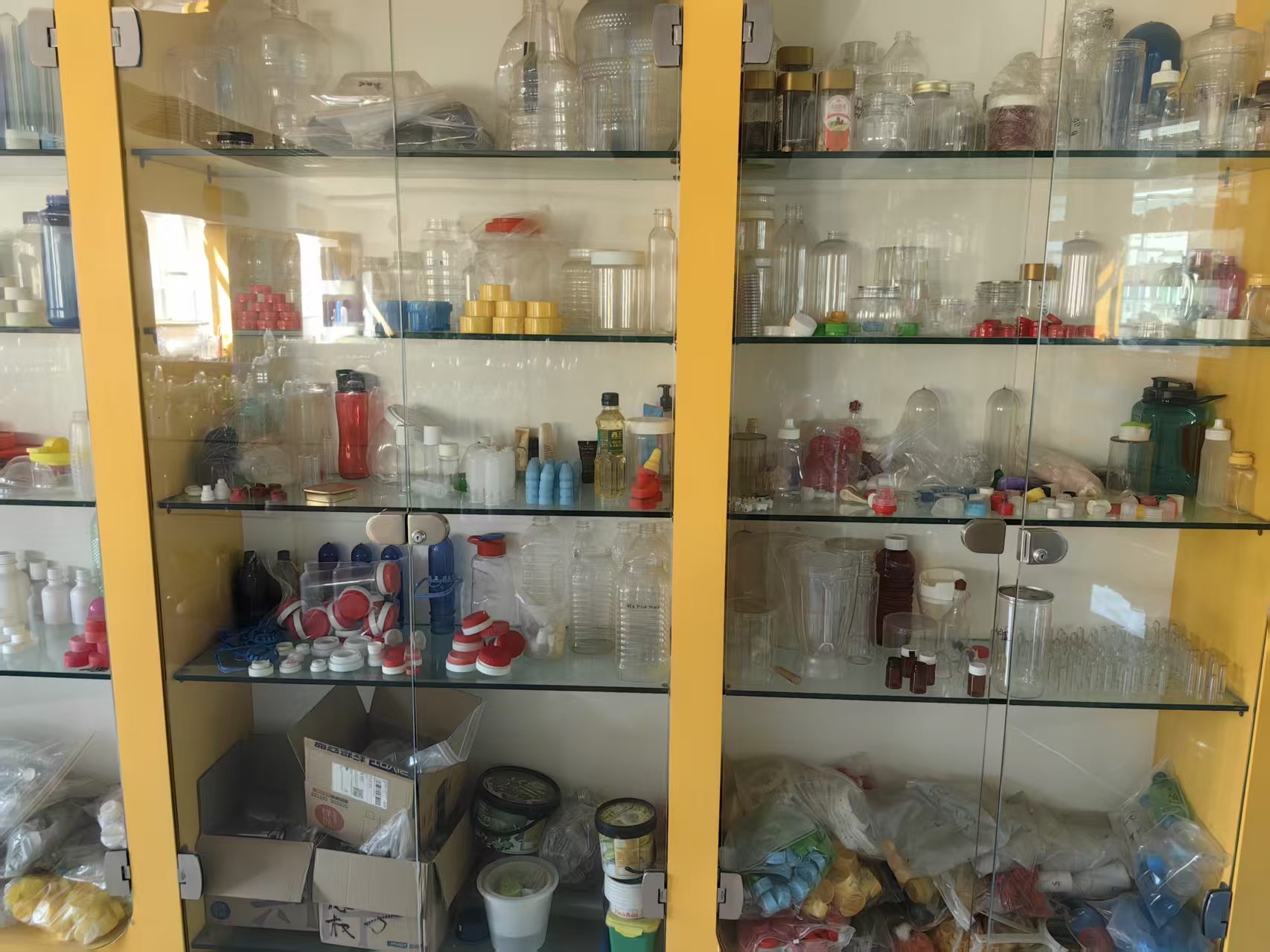
Validate shot weight and melt quality against your own preform specification before fixing a mold configuration.
To check how the YJPT-260, YJPT-360, or YJHB-400 fits a specific cavity count and preform weight, request a preform sample and a quotation, or download the machine catalogue for full configuration details.
Catalogue download: Yongjiang injection molding machine catalogue
Official website: www.yongjiangimm.com
Email: yongjiangimm@gmail.com | Tel / WhatsApp: +86 18958305290
Ningbo Yong Jiang machine co.,Ltd — Jiangbei 88 avane, Ningbo City, Zhejiang Province, China
Have Questions or Need More Details?
Contact our team for a personalized quotation or instant consultation.
Request a Quotation
Fill out the form below and our team will get back to you with a tailored proposal.
WhatsApp Direct Chat
Prefer to chat in real-time? Message us on WhatsApp for instant assistance & quick answers.
- Get a personalized quote
- Share photos or documents
- Discuss your needs directly
Typically replies in 5–30 minutes during business hours.