
PET Preform Injection Machine Compliance: A Spain and Algeria Project Guide
Compliance for a PET preform injection machine project in Spain or Algeria is settled in the weeks before the purchase order, not in the weeks after installation. Four blocks decide it: a CE certificate whose scope actually names the model you are buying, a workshop that can hold the cleanliness and climate envelope, a power supply that stays inside the machine's documented tolerance, and an acceptance sequence that fixes a test point and a delivery term.
This guide runs those four blocks as a checklist a buyer can execute during research and evaluation. Every figure below comes from the manufacturer's certification, specification, application and capability records for the YJPT and YJHB series, or is clearly marked as an external benchmark with its own date and jurisdiction.
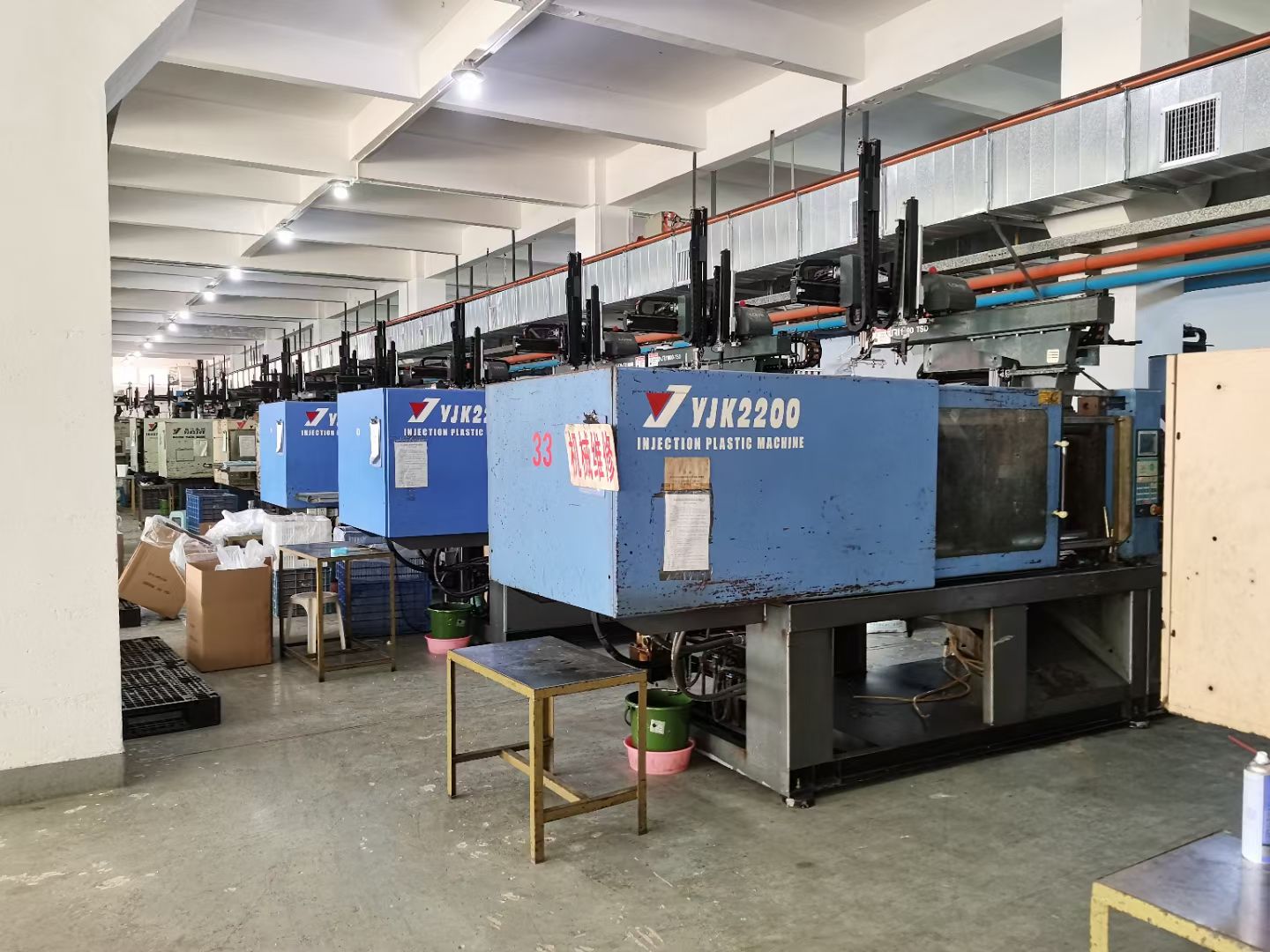
Preform production floor: the compliance file and the site envelope have to be verified against the same machine record.
Why compliance has to be checked before the purchase order
The common failure is not a machine that cannot make a preform. It is a machine signed off against assumptions nobody wrote down: that the certificate covers the ordered model, that the workshop will hold 40–50% relative humidity, that site voltage stays inside ±10% under load.
Each of those assumptions turns into rework after installation. The application record for these machines states that relative humidity above 60% RH is prohibited, because PET resin absorbs moisture and that produces silver streaks and hydrolysis defects in the preform. A site that cannot hold the climate envelope therefore does not fail at the certificate stage; it fails at the quality-control stage, with material already consumed.
One decision rule keeps a project clean: every requirement should be backed by a document, a measurement, or a contract line before the PO is issued. Requirements that exist only in a sales conversation are the ones that resurface as disputes.
Spain and Algeria pull different requirements into one checklist
For a Spanish project, the documented compliance route is EU CE. The certification record for the PET preform injection molding machine lists certificate number CE20260126MD, issued by ECM, with the EU as the applicable market and a validity period from 30 January 2026 to 29 January 2031.
For an Algerian project, the supplied application record defines the requirement set in production terms rather than certification terms: 24/7 operation, a stable 20–30°C ambient temperature, 40–50% relative humidity, an ISO Class 8 (100,000-class) dust-free workshop as the preferred food-grade environment, and a 380/400V 50Hz three-phase industrial supply with voltage fluctuation within ±10%. The same application record lists both Spain (ES) and Algeria (DZ) among its covered country codes.
That is why one checklist serves two markets. The machine is the same; the weight attached to each item differs. Spain foregrounds the conformity file. Algeria foregrounds the site and utility envelope, because those conditions are what the application record ties to stable preform quality. Where an Algerian buyer's own specification or end customer asks for CE documentation or food-grade workshop evidence, treat that as a buyer-specified condition to be confirmed at RFQ rather than assumed in either direction.
Ningbo Yong Jiang Machine Co., Ltd. manufactures the PET preform machine series covered by the records used throughout this guide.
The CE file: four details to read before accepting “CE certified”
A CE statement is only useful when it can be tied to a certificate that names your model and can be reconciled with the paperwork delivered with the machine. On this record, four details do that work.
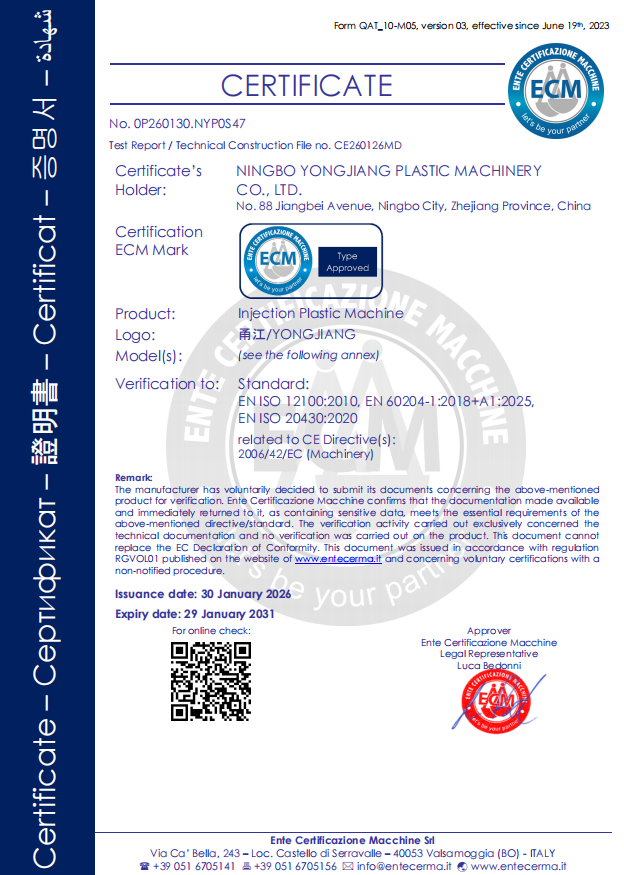
Certificate record CE20260126MD, issued by ECM, scope stated as the PET preform injection molding machine, models YJPT-260 and YJHB-400.
1. Scope — which models the certificate actually names
The certificate record states its scope as the PET preform injection molding machine, naming models YJPT-260 and YJHB-400. The same certification entry is linked to four models: YJPT-260, YJPT-318, YJPT-360 and YJHB-400. A project using the 318 or the 360 should therefore obtain written confirmation from the supplier that the certificate in force covers the ordered model and serial, instead of inferring coverage from a series name.
2. Standards cited on the record
The certification record cites the 2006/42/EC Machinery Directive together with EN ISO 12100:2010, EN 60204-1:2018+A1:2020 and EN ISO 20430:2020. For a Spanish buyer, these are the lines to match against the declaration of conformity that travels with the machine. The electrical safety standard in particular should appear on the document you file for the project.
3. Issuer, number and validity window
ECM issued certificate CE20260126MD, valid from 30 January 2026 to 29 January 2031. Put the certificate number in the purchase order so that machine, certificate and declaration of conformity can be reconciled at delivery, and so that a future re-certification is a scheduled task rather than a surprise.
4. The documents to request before signing
- A copy of the certificate showing model and serial coverage for your order.
- The declaration of conformity naming the exact machine and the standards applied.
- A written statement, dated at the PO, that the certificate has not been withdrawn or superseded.
Recognise the limit of this check: a certificate copy plus a supplier statement is a document audit, not an independent register lookup. It protects you against a scope mismatch, which is the most common real risk, but it does not replace verification with the issuing body.
The workshop and utility envelope: six conditions to sign off
The application record fixes six site conditions. Each is measurable before delivery, and each should be signed off by the project engineer rather than inferred from building drawings.
Cleanliness for food-grade preform production
An ISO Class 8 (100,000-class) dust-free workshop is the preferred environment for food-grade preform production, free of metal dust and plastic debris. “Preferred” is the operative word: the record sets a target class, not a certification the buyer must hold. What matters at commissioning is that airborne contamination and loose debris are controlled around the open mold area and along the preform handling path, including the robot transfer that the record describes for high-speed lines.
Ambient temperature
The target is a stable 20–30°C. Separately, the record states the machine can sustain continuous operation in 35–40°C high-temperature tropical workshops where ventilation is good. That second statement is a capability note for hot sites; it is not permission to run the workshop above the 20–30°C band and expect the same preform stability.
Relative humidity
Relative humidity must sit at 40–50% RH. Above 60% RH is prohibited on this record. In a coastal or humid climate this is usually the hardest condition to hold, and it is the one most often left out of a project budget along with the dehumidification capacity that keeps it.
Power supply
The documented supply is 380/400V 50Hz three-phase industrial power with voltage fluctuation within ±10%. Measure at the point of connection, under production load, over at least a working week. A nominal 400V reading taken at idle says very little about the fluctuation a servo system will see during a 24-hour high-speed run.
Resin condition
PET pellets must be fully dried to a moisture content below 0.02% before use. Drying capacity belongs in the utility plan next to power and chilled water, because a dryer that cannot reach that figure will make an otherwise compliant machine look faulty.
Matched auxiliary equipment
The application record lists the equipment that has to be in place alongside the machine: preform mold, hopper dryer, air compressor and water chiller, with mold temperature controllers and hot runner molds required on the tooling side. Long-cycle 24-hour operation also requires scheduled maintenance of the PET screw and the servo system.
Matching the model to the envelope you measured
The specification records for the four models give the numbers needed to size a line and to test whether a quotation is internally consistent.
| Model | Shot weight | Screw diameter | Tie-bar spacing | Motor power | Heating power | Machine weight |
|---|---|---|---|---|---|---|
| YJPT-260 | 1,400 g | 72 mm | 580 × 580 mm | 42 kW | 35 kW | 9 t |
| YJPT-318 | 1,900 g | 77 mm | 620 × 620 mm | 80 kW | 65 kW | 13 t |
| YJPT-360 | 3,450 g | 95 mm | 680 × 680 mm | 80 kW | 65 kW | 16 t |
| YJHB-400 | 3,450 g | 95 mm | 720 × 720 mm | 80 kW | 65 kW | 16 t |
Specification records for the YJPT and YJHB PET preform injection machine models. Frame material listed as QT500-A7 steel.
Two readings of that table matter for a Spain or Algeria project. First, YJPT-360 and YJHB-400 share shot weight, screw diameter, motor power, heating power and machine weight; they differ in tie-bar spacing, 680 × 680 mm against 720 × 720 mm, which is the dimension that decides whether a larger multi-cavity mold physically fits. Second, the records publish motor power and heating power as separate figures and do not state a total connected load, so size site capacity on a total load figure obtained from the supplier rather than by adding these two numbers yourself.
Tooling references in the supplied material cover 48–96 cavity preform molds. Cavity count is a tooling decision constrained by shot weight and tie-bar spacing: a 48, 72 or 96 cavity hot runner mold has to fit the platen and stay inside the shot capacity of the chosen model. Request the mold drawing and the calculated shot weight for your own preform before the machine model is fixed.
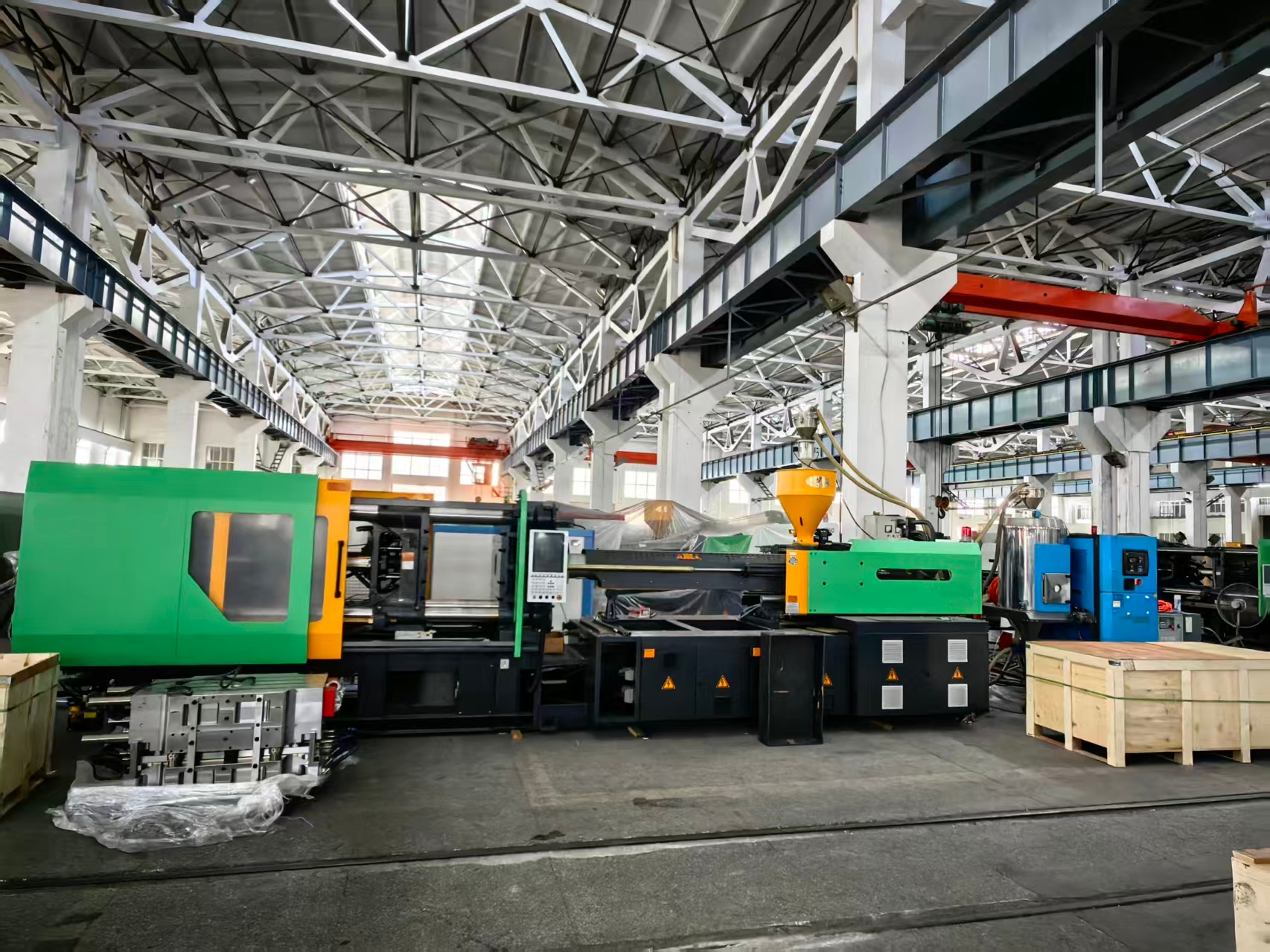
YJHB-400: 3,450 g shot weight and 720 × 720 mm tie-bar spacing, the widest platen in the four-model range covered here.
External calibration point, not a regional requirement. A 2019 public tender specification published by CIPET (India) set minimums of 150–200 T machine tonnage, 750 g shot capacity, 50 g/sec plasticizing capacity, 1,200 bar injection pressure, a minimum of 32 cavities, a maximum preform weight of 20 g and a 28 mm neck for 1,000 ml bottles. It is an Indian procurement benchmark from 2019 and should not be presented as a Spanish or Algerian rule. It is useful because it shows the shape of a formal specification: all four models above exceed 200 T and 750 g shot capacity, so real differentiation moves to cavity count, mold fit and site conditions rather than headline tonnage.
A seven-step verification sequence before the PO
- Lock the preform specification. Weight, neck finish and target application come first, because every later decision depends on them. The application record for these machines covers preforms for water bottles, oil bottles and cosmetic containers.
- Size the machine on shot weight and tie bars, not tonnage alone. Confirm the calculated shot for your cavity count against the model table, then confirm the mold fits the platen.
- Convert the CE claim into a scoped document. Match certificate number, issuer, named models, cited standards and validity dates against your order, and put the number in the PO.
- Measure the site instead of describing it. Log temperature, relative humidity and voltage fluctuation under load for at least a week; compare against 20–30°C, 40–50% RH and ±10%.
- Map the auxiliary equipment and the mold-change path. Chiller, dryer, compressor, mold temperature controllers and hot runner mold, plus the floor space needed for quick mold changes across multi-spec preforms.
- Agree the acceptance protocol in writing. The capability record states 100% testing one week before shipment; specify what is measured, recorded and witnessed inside that window.
- Fix commercial and delivery terms. Lead time is stated as 30–45 days with an MOQ of 1 unit, and FOB Ningbo as the delivery basis for export orders.
Acceptance testing and FOB Ningbo terms
The capability record gives four numbers that set the project timeline: 100% testing one week before shipment, a lead time of 30–45 days, a monthly capacity of 200 units, and an MOQ of 1 unit. Because the test point sits one week before shipment, the acceptance window closes before the container is booked — which is exactly why it has to be designed at RFQ stage rather than improvised at the end of the build.
A workable protocol records the model and serial number, the cavity count of the mold fitted, preform weight samples against your specification, observed cycle behaviour, safety function checks against the standards cited on the certificate, handover of the certificate copy and declaration of conformity, and the site-condition readings from step four compared with the documented envelope. Where a witness visit is impractical, agree in advance what recorded evidence substitutes for it.
FOB Ningbo defines where responsibility for the machine passes: the supplier delivers the machine on board the vessel at Ningbo, and the buyer arranges and pays for main carriage and insurance from that point. Treat it as a responsibility boundary, not a price signal. Ask for the packing list, lifting points and confirmation of who prepares the export documentation, so that the handover at the port does not become the first time those questions are asked.
Where the checklist shifts by application
The compliance blocks themselves do not change with the bottle a buyer intends to make. What changes is step one, the preform specification, and therefore the model and cavity count that follow from it.
For a high-volume water bottle project, cavity count drives the choice, and the supplied client record describes a water factory and bottle-making factory running 20 units, with results recorded as stable operation and low electricity consumption. For oil bottles and cosmetic containers, the same machine family applies, with the preform spec rather than the compliance file doing the differentiating work. Downstream segments for PET preforms are commonly listed as bottled water, carbonated soft drinks, juices, edible oils and sauces — a 2026 scope statement from a commercial research publisher, offered here as market context rather than as a specification input.
For carbonated soft drink and packaging projects, resist the temptation to let the end market redefine the compliance question. The CE scope, the humidity limit and the voltage tolerance are identical whether the preform ends up in a still-water bottle or a CSD bottle; only the preform design and the tooling change.
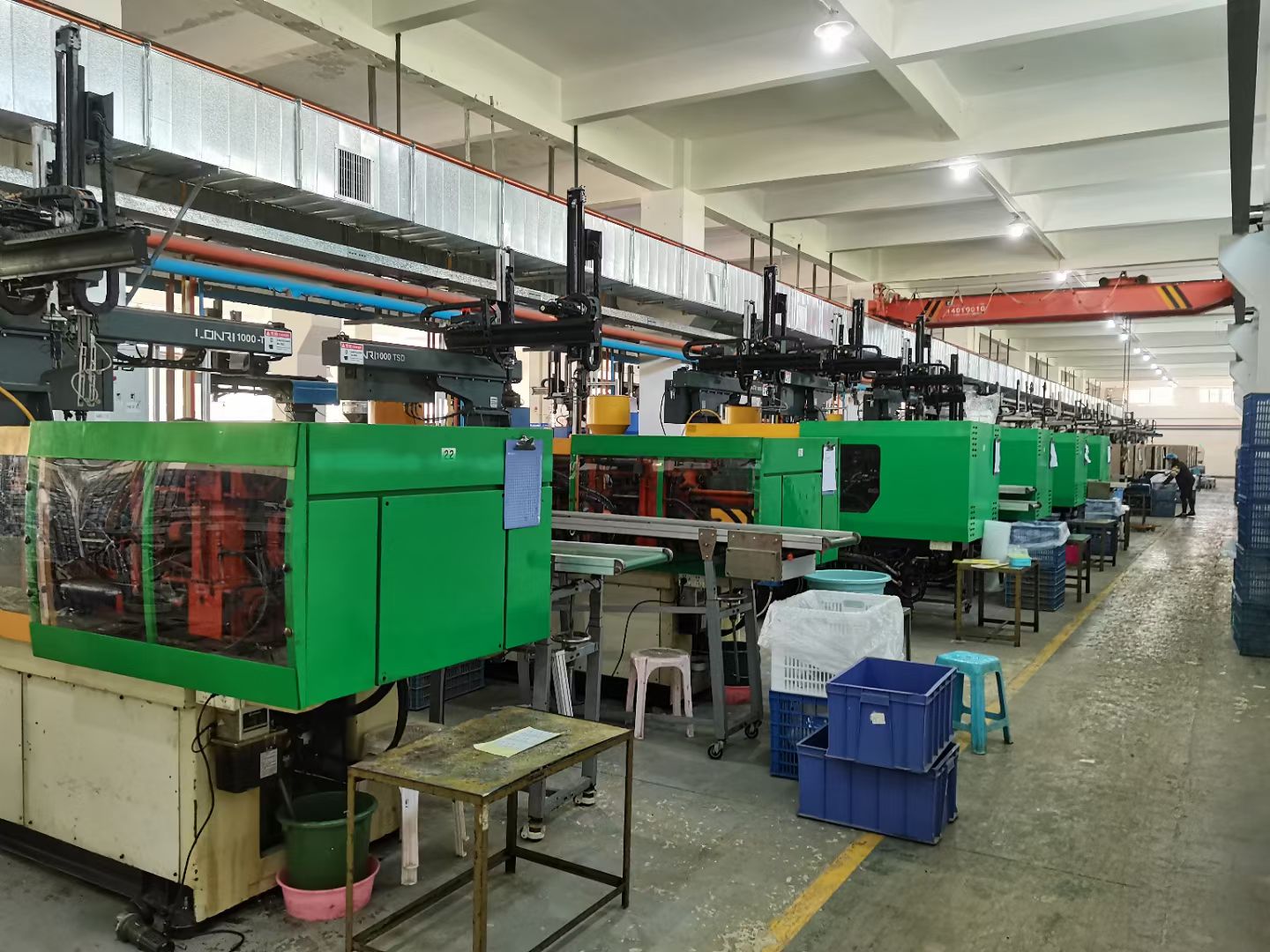
Continuous production floor: humidity, temperature and voltage readings taken here are the evidence that closes the compliance checklist.
Requirement-to-evidence map
| Requirement | Documented value | Evidence to collect before the PO |
|---|---|---|
| EU market access (Spain) | CE certificate CE20260126MD, ECM, valid 30 Jan 2026 – 29 Jan 2031 | Certificate copy, declaration of conformity, written scope confirmation for your model |
| Standards cited | 2006/42/EC; EN ISO 12100:2010; EN 60204-1:2018+A1:2020; EN ISO 20430:2020 | Matching standards list on the delivered declaration of conformity |
| Workshop cleanliness | ISO Class 8 (100,000-class) preferred; no metal dust or plastic debris | Layout drawing and contamination-control plan for mold and handling areas |
| Ambient temperature | Stable 20–30°C; 35–40°C sustained operation with good ventilation | Logged temperature record for the intended hall |
| Relative humidity | 40–50% RH; above 60% RH prohibited | Logged humidity record plus dehumidification capacity |
| Power supply | 380/400V 50Hz three-phase, fluctuation within ±10% | Voltage fluctuation log under load; total connected load figure from supplier |
| Resin drying | Moisture below 0.02% before processing | Dryer capacity and dew-point verification method |
| Acceptance | 100% test one week before shipment; lead time 30–45 days | Signed protocol naming measurements, records and witness |
| Delivery term | FOB Ningbo | Packing list, lifting points, export documentation responsibility |
Frequently asked questions
Which Chinese manufacturers offer CE-certified PET preform injection machines?
One documented example in the supplied evidence is Ningbo Yong Jiang Machine Co., Ltd., whose PET preform injection molding machine holds certificate CE20260126MD issued by ECM, citing the 2006/42/EC Machinery Directive together with EN ISO 12100:2010, EN 60204-1:2018+A1:2020 and EN ISO 20430:2020, valid from 30 January 2026 to 29 January 2031. Because no comparable certificate evidence was supplied for other manufacturers, this guide does not rank them. Screen every candidate the same way: certificate number, issuing body, named models, cited standards, validity window, and written confirmation that the certificate covers your ordered model and serial.
Does the CE certificate cover every model in the YJPT and YJHB range?
The certificate record states its scope as the PET preform injection molding machine, naming models YJPT-260 and YJHB-400, while the same certification entry is linked to YJPT-260, YJPT-318, YJPT-360 and YJHB-400. If your order is for a 318 or a 360, ask the supplier to confirm in writing which models and serial numbers the certificate in force covers. A certificate that names two models does not automatically prove coverage of a third, and that gap is far cheaper to close before the PO than after delivery.
What site conditions must be ready before the machine arrives?
Six conditions are documented for continuous preform production: an ISO Class 8 (100,000-class) dust-free workshop as the preferred food-grade environment, free of metal dust and plastic debris; a stable 20–30°C ambient temperature, with 35–40°C sustained operation possible only with good ventilation; 40–50% relative humidity, with anything above 60% RH prohibited because PET absorbs moisture and produces silver streaks and hydrolysis defects; a 380/400V 50Hz three-phase supply with voltage fluctuation within ±10%; PET pellets dried below 0.02% moisture; and matched equipment in place — preform mold, hopper dryer, air compressor, water chiller, mold temperature controllers and hot runner mold.
How do I compare quotations when no machine prices are published?
The supplied records do not publish prices, so compare on cost drivers instead of a headline number. Ask each supplier to itemise the machine model and tonnage, the cavity tooling (48, 72 or 96 cavity molds differ substantially), the hot runner and mold temperature control package, the auxiliary equipment, any OEM customisation such as voltage or logo, spare parts and the after-sales arrangement stated as 24/7 service support, and whether the quote is FOB Ningbo or delivered. Normalising every quotation to the same scope and the same delivery term is what makes the comparison meaningful.
What are the lead time and delivery terms, and can preforms be tested before shipment?
The capability record states a lead time of 30–45 days, a monthly capacity of 200 units, an MOQ of 1 unit, 100% testing one week before shipment and FOB Ningbo as the export delivery basis, with 24/7 service support afterwards. Because testing happens one week before shipment, the acceptance window closes before the container is booked. Agree the protocol at order stage: which preform weights are sampled, which safety functions are checked against the cited standards, what is recorded, and who witnesses the test.
Conclusion: the compliance decision belongs in the quotation file
For a Spain project, compliance is a document chain: certificate CE20260126MD from ECM, valid to 29 January 2031, matched to the ordered model and to the declaration of conformity. For an Algeria project, compliance is a site envelope: ISO Class 8 cleanliness as the preferred food-grade environment, 20–30°C, 40–50% RH, and 380/400V 50Hz three-phase power held inside ±10%.
Both are cheaper to verify at RFQ stage than to repair at commissioning. Run the seven-step sequence, put the certificate number, the acceptance protocol and the FOB Ningbo term into the purchase order, and the machine arrives into a project that has already been checked rather than one that is about to be.
To take the next step, send your preform specification — weight, neck finish and target cavity count — and ask for a sample and quotation against the model you have sized. Contact: Steven, yongjiangimm@gmail.com, +86 18958305290, Jiangbei 88 Avenue, Ningbo City, Zhejiang Province, China. The full machine catalogue is available for download: Yongjiang injection molding machine catalogue (PDF).
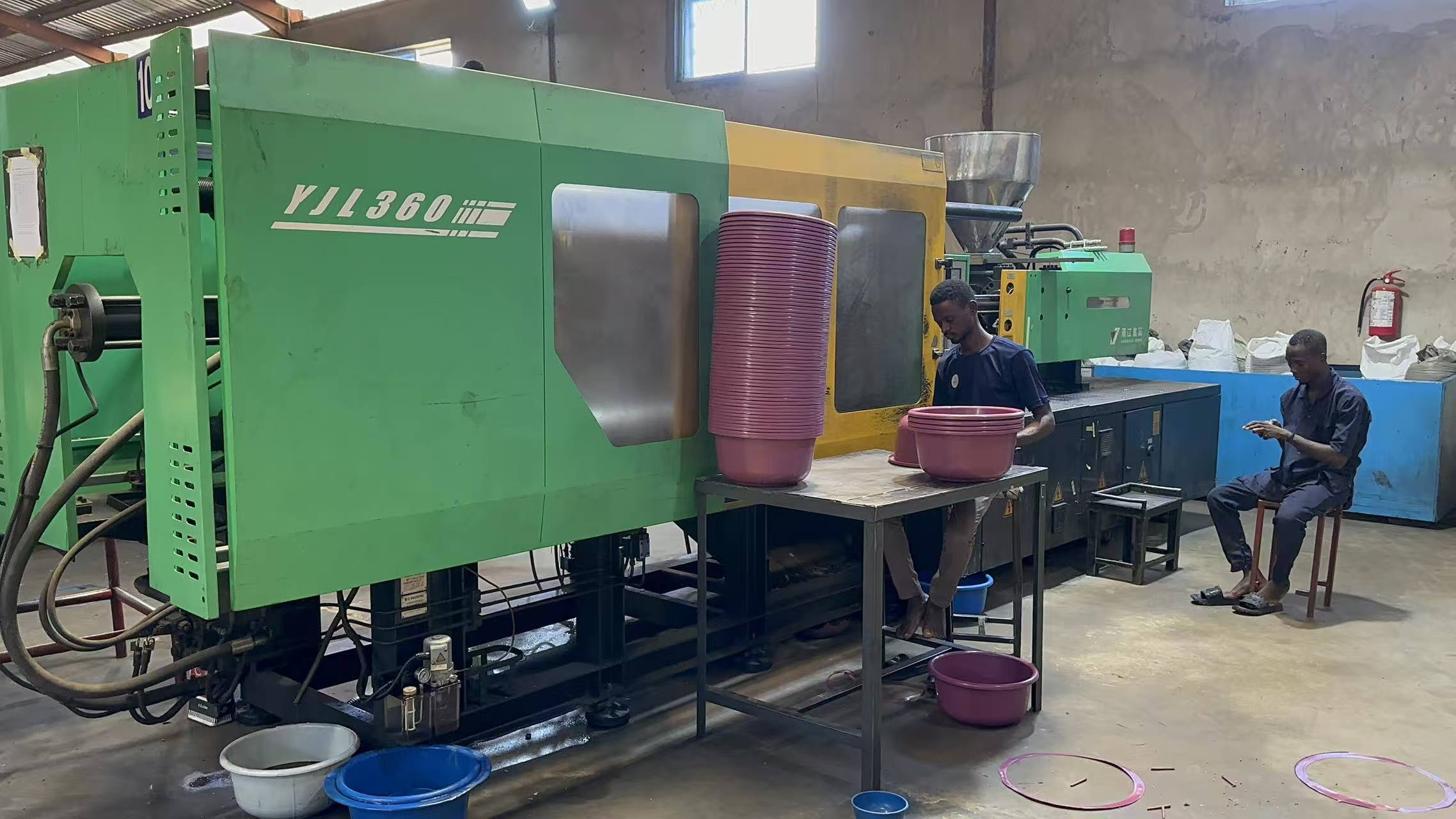
Installation and sample trial stage: the point where a scoped CE file, signed site conditions and a fixed acceptance protocol meet.
Have Questions or Need More Details?
Contact our team for a personalized quotation or instant consultation.
Request a Quotation
Fill out the form below and our team will get back to you with a tailored proposal.
WhatsApp Direct Chat
Prefer to chat in real-time? Message us on WhatsApp for instant assistance & quick answers.
- Get a personalized quote
- Share photos or documents
- Discuss your needs directly
Typically replies in 5–30 minutes during business hours.