
PET Preform Injection Machine: A Buyer’s Guide to Specs, Suppliers, and Production Fit
PET Preform Injection Machine: A Buyer’s Guide to Specs, Suppliers, and Production Fit
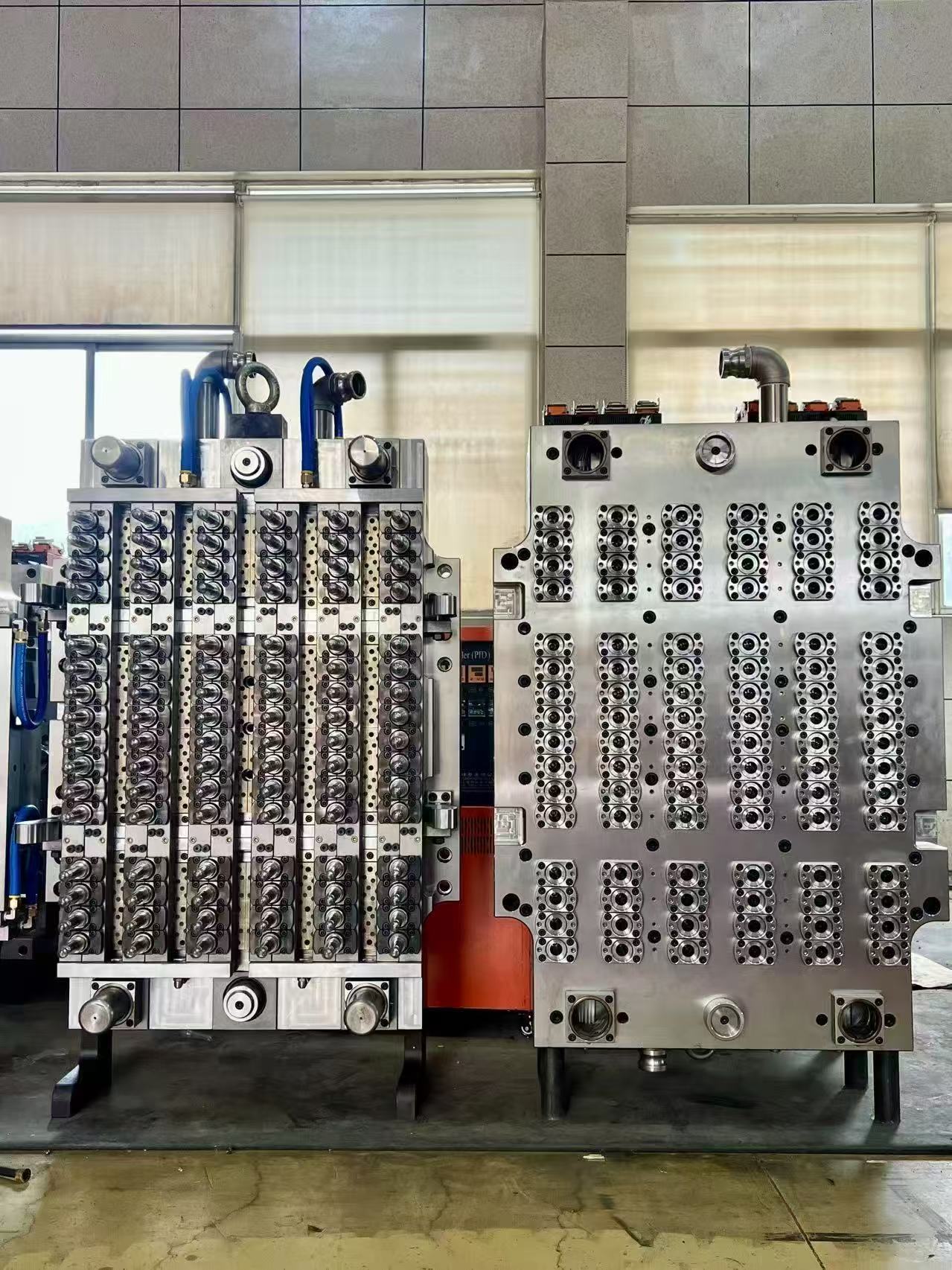
A 96-cavity PET preform injection mold used with high-speed PET preform machines.
A PET preform injection machine is a specialized injection molding system designed to produce PET preforms — the semi-finished, tube-shaped parts that are later blow-molded into bottles and containers. Whether you are setting up a new water-bottle line, expanding a beverage plant, or replacing an outdated preform system, the buying decision depends on four core elements: machine specifications, mold configuration, workshop and auxiliary systems, and supplier reliability. This guide walks through each element using verified market data and the example of Ningbo Yong Jiang Machine Co., Ltd. (Yongjiang), a Chinese manufacturer of PET preform injection machines since 1985.
According to Future Market Insights, the global PET preform machines market is estimated at USD 9.9 billion in 2025 and is projected to reach USD 17.3 billion by 2035. Injection molding technology holds a dominant 66.4% share of this market as of 2025. In other words, the machine you choose today will shape your production efficiency and operating cost for the next decade.
Problem Definition: Why Machine Selection Goes Beyond Tonnage
Many buyers start with a simple target: a 260-ton or 360-ton preform machine. But tonnage alone does not determine whether a machine can produce a specific preform. Shot weight, screw diameter, and tie-bar spacing are equally important. A machine may clamp a mold with enough force, but if the shot weight is too low, it cannot fill a heavy preform in a single cycle. If tie-bar spacing is too small, the mold cannot fit.
Operational conditions also cause frequent failures. PET resin is hygroscopic; it absorbs moisture from the air. If the workshop humidity is above 60% RH or the resin is not dried correctly, defects such as silver streaks and hydrolysis can appear. Power supply must be stable and meet the machine’s requirements. Without a hopper dryer, water chiller, and air compressor, even a well-specified machine will not run reliably. These elements are often overlooked during the quoting stage but are essential for continuous production.
Industry Background: Market Context and Competitive Landscape
The PET preform machine market is expanding because of global demand for bottled water, carbonated soft drinks, edible oils, and personal care products. Asia Pacific is currently the largest regional market for injection molding machines, holding a 41.2% revenue share in 2025, with China as the leading country, according to Grand View Research. This is why many international buyers look to Chinese manufacturers for cost-effective preform production systems.
At the premium end of the market, Husky Technologies controls an estimated 55–60% of the global high-output PET preform system market, and high-end systems from Husky and Netstal comply with international standards including CE, UL, ISO 9001, and EUROMAP 60.1. For mid-size and growing producers, Chinese suppliers such as Yongjiang offer a practical alternative: lower entry cost, adequate output, and project-specific customization. The key is to verify that the supplier’s specifications and support processes match your production reality.
Detailed Solution: YJPT Series as a Reference for PET Preform Machines
Yongjiang is one of China’s established injection molding machine manufacturers. The company was established in 1985 and has over 35 years of experience in manufacturing injection molding machines. Its manufacturing facility covers 130,000 square meters and employs approximately 200 staff, including 25 R&D engineers. Annual production capacity reaches about 2,000 units. The main products are PET preform injection molding machines and PVC fitting machines, with approximately 59% of output exported to markets including the USA, Canada, and Thailand.
Yongjiang’s YJPT series is dedicated to PET preform production. The table below compares the published specifications of four models: YJPT-260, YJPT-318, YJPT-360, and YJHB-400.
| Model | Clamping Force (T) | Screw Diameter (mm) | Shot Weight (g) | Tie Bar Spacing (mm) | Motor Power (kW) | Heating Power (kW) | Net Weight (t) | Material |
|---|---|---|---|---|---|---|---|---|
| YJPT-260 | 260 | 72 | 1400 | 580×580 | 42 | 35 | 9 | QT500-A7 |
| YJPT-318 | 318 | 77 | 1900 | 620×620 | 80 | 65 | 13 | Steel |
| YJPT-360 | 360 | 95 | 3450 | 680×680 | 80 | 65 | 16 | QT500-A7 steel |
| YJHB-400 | 400 | 95 | 3450 | 720×720 | 80 | 65 | 16 | QT500-A7 steel |
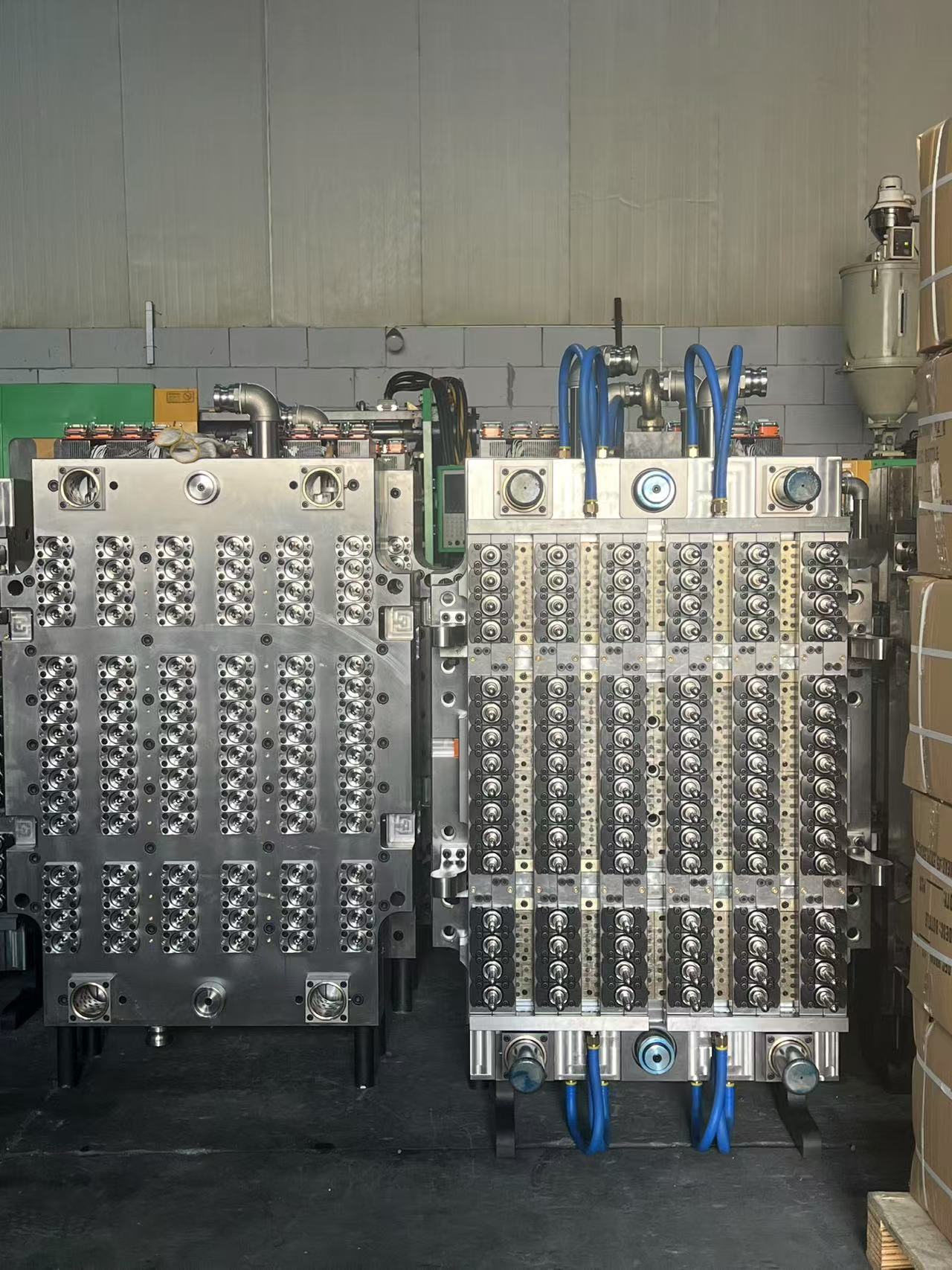
PET preform mold used in high-cavity hot runner preform production.
Each parameter has a specific role. Clamping force holds the mold closed under injection pressure. Shot weight tells you the maximum amount of molten PET that can be injected in a single cycle; for preforms, it must cover the preform weight plus the hot runner system. Screw diameter affects plasticizing capacity and melt quality. Tie-bar spacing determines the maximum mold dimensions you can mount. Motor and heating power help you estimate energy demand and installation requirements. Machine weight is an indicator of the structural rigidity needed for stable 24-hour operation.
Yongjiang’s machines are designed to work with multi-cavity hot runner molds. Third-party data from Yongjiang Plastic Machinery indicates that the YJPT series supports mold configurations from 6 to 72 cavities. In application imagery, 48–96 cavity molds are referenced for high-output PET preform production. The rigid clamping frame is built to sustain continuous mass production.
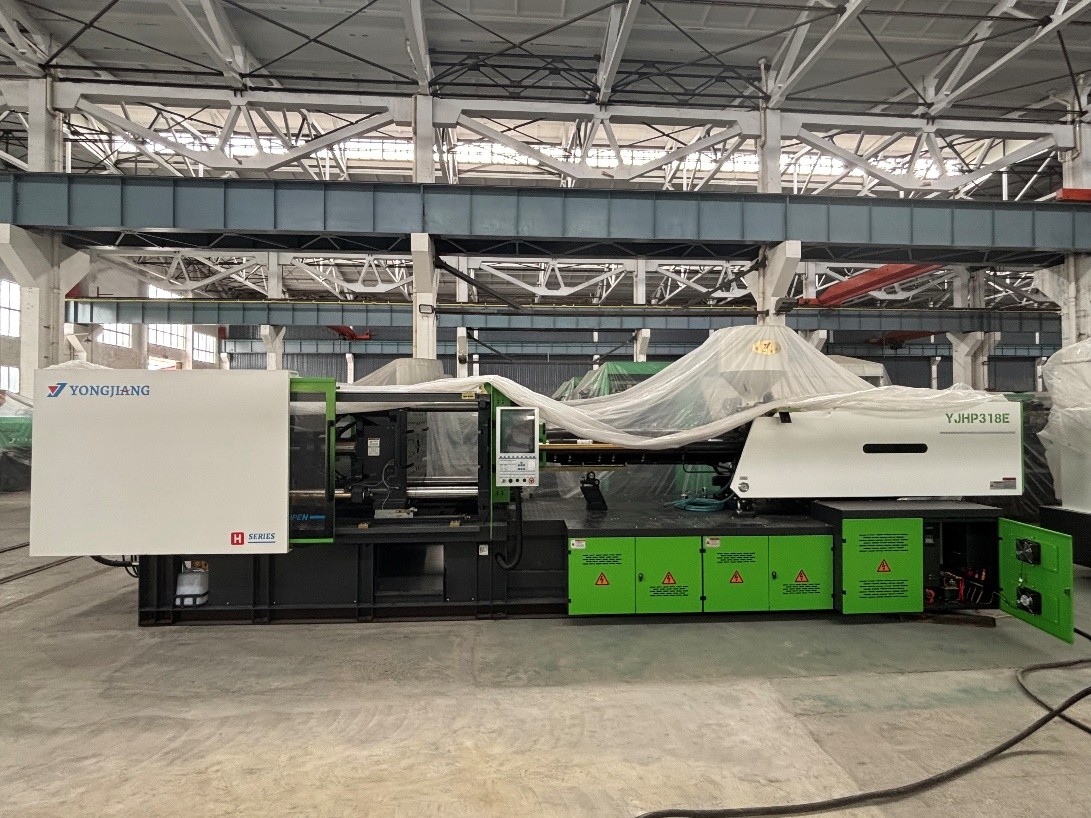
Yongjiang YJPT-318 high-speed PET preform injection machine.
Energy efficiency is another differentiator. According to Yongjiang’s company profile, the machines use high-response dual servo systems and customized plasticizing screws. This delivers stable precision, 30%–50% lower power consumption, and shorter molding cycles. For a plant running multiple preform machines continuously, this can significantly reduce operating costs.
Step-by-Step Breakdown: How to Select and Commission a PET Preform Injection Machine
Use the following six steps to build a project plan before you contact suppliers.
Step 1: Define Your Preform Specifications
Start with the finished bottle weight and preform design. Determine the shot weight required for one cycle. For lighter water-bottle preforms, a machine like the YJPT-260 with a 1400-gram shot weight may be enough. For heavier beverage or oil-bottle preforms, the 1900-gram YJPT-318 or the 3450-gram YJPT-360/YJHB-400 is a better fit.
Step 2: Determine Cavity Count and Output Target
Higher cavity counts produce more preforms per cycle but require a larger mold and more clamping force. If you plan to use a 96-cavity mold, check tie-bar spacing carefully. The YJHB-400’s 720×720 mm spacing provides room for large molds. The YJPT-360’s 680×680 mm spacing also supports high-cavity setups with appropriate mold dimensions.
Step 3: Verify Workshop Conditions
PET preform production requires a controlled environment. The recommended conditions are an ambient temperature of 20–30°C and relative humidity of 40%–50% RH. Humidity above 60% RH is prohibited because PET resin will absorb moisture, leading to silver streaks and hydrolysis. For food-grade preforms, an ISO Class 8 (100,000-class) dust-free workshop is preferred.
Step 4: Plan Supporting Equipment
A complete preform production line needs more than the machine. The required supporting equipment includes a PET preform mold, a hopper dryer, an air compressor, and a water chiller. A hot runner mold is preferred because it reduces waste and shortens cycles. Check whether the supplier can provide these as part of a turnkey solution.
Step 5: Confirm Power and Compliance Requirements
All Yongjiang units support 380/400V 50Hz three-phase industrial power with voltage fluctuation within ±10%. For EU-bound projects, the application must comply with the EU CE machinery safety standard, low energy consumption, and stable injection. Confirm this requirement with the supplier during the quoting stage.
Step 6: Evaluate the Supplier’s Capability
Look beyond the brochure. A credible supplier should have a track record in building PET preform machines, an in-house R&D team, a defined manufacturing facility, and an export process that matches your region. Yongjiang’s 25-engineer R&D team, 130,000 m² facility, and 59% export ratio are examples of verifiable supplier facts.
Use Cases: Matching Machines to Production Scenarios
PET preform machines are used across multiple industries. The following use cases show how machine size and features align with real-world requirements.
Water Bottles
Water bottle preforms are relatively light and produced in very high volumes. A 260–318 ton machine with a 32–48 cavity mold is a common configuration. The YJPT-260, with its 1400-gram shot weight and 42 kW motor, is an energy-conscious option for this segment.
Beverage Industry
Carbonated soft drinks and juices require thicker preforms to hold pressure. These preforms use more material, so a larger shot weight and screw are needed. The YJPT-360, with a 95 mm screw and 3450-gram shot weight, provides the plasticizing capacity and stability for medium-to-high output beverage lines.
Oil Bottles
Edible oil bottles are often heavier and require a robust machine. The YJHB-400’s 400-ton clamping force and 720×720 mm tie-bar spacing accommodate large molds and heavier preforms. Its 80 kW servo motor supports continuous operation.
Cosmetic Containers
Cosmetic containers demand precise neck finishes and shorter production runs. Flexible mold change is essential. Yongjiang’s rigid frame and stable injection control help reduce changeover time, though exact changeover time depends on mold design and operator skill.
According to Yongjiang’s application documentation, these PET preform production scenarios are common in Spain and Algeria, and the machines are used in food-grade packaging factories that require CE compliance and low energy consumption.
FAQ
Does Yongjiang support CE compliance for PET preform injection machines?
For EU-bound projects, Yongjiang’s PET preform injection machine application requires compliance with the EU CE machinery safety standard, low energy consumption, and stable injection. The power supply must be 380/400V 50Hz three-phase with voltage fluctuation within ±10%. Buyers should confirm project-specific CE documentation with the supplier before ordering.
What specifications should I compare when selecting a PET preform injection machine?
Compare clamping force, screw diameter, shot weight, tie-bar spacing, motor power, heating power, net weight, and construction material. For example, the Yongjiang YJPT-260 has a clamping force of 260 tons, a 72 mm screw, a 1400-gram shot weight, and 580×580 mm tie-bar spacing. The YJPT-318 offers 318 tons, a 77 mm screw, and a 1900-gram shot weight. The YJPT-360 and YJHB-400 both offer a 95 mm screw and a 3450-gram shot weight, while the YJHB-400 has larger 720×720 mm tie-bar spacing.
What cavity configurations and auxiliary equipment are needed for PET preform production?
According to third-party data, the Yongjiang YJPT series supports mold configurations from 6 to 72 cavities. In high-output applications, 48–96 cavity molds are commonly referenced. The required auxiliary equipment includes a PET preform mold, a hopper dryer, an air compressor, and a water chiller. A hot runner mold is preferred for faster cycles and less waste.
How does servo technology affect operating costs?
Yongjiang machines use high-response dual servo systems and customized plasticizing screws. According to the company profile, these systems provide stable precision, 30%–50% lower power consumption, and shorter molding cycles. Lower power consumption directly reduces the cost per preform, especially in 24-hour continuous operation.
How can I request a quote, sample, or delivery information?
You can contact Yongjiang directly by email at yongjiangimm@gmail.com, by phone or WhatsApp at +86 18958305290, or via the website www.yongjiangimm.com. The company address is Jiangbei 88 avane, Ningbo City, Zhejiang Province, China. To review the full machine range, download the Yongjiang PET preform machine brochure using the link at the end of this article. A project-focused quotation will include machine configuration, mold requirements, supporting equipment, compliance, and delivery schedule.
Ready to match a PET preform injection machine to your production line?
Request a sample or quote from Yongjiang. Download the company brochure below or contact the sales team for project-specific specifications.
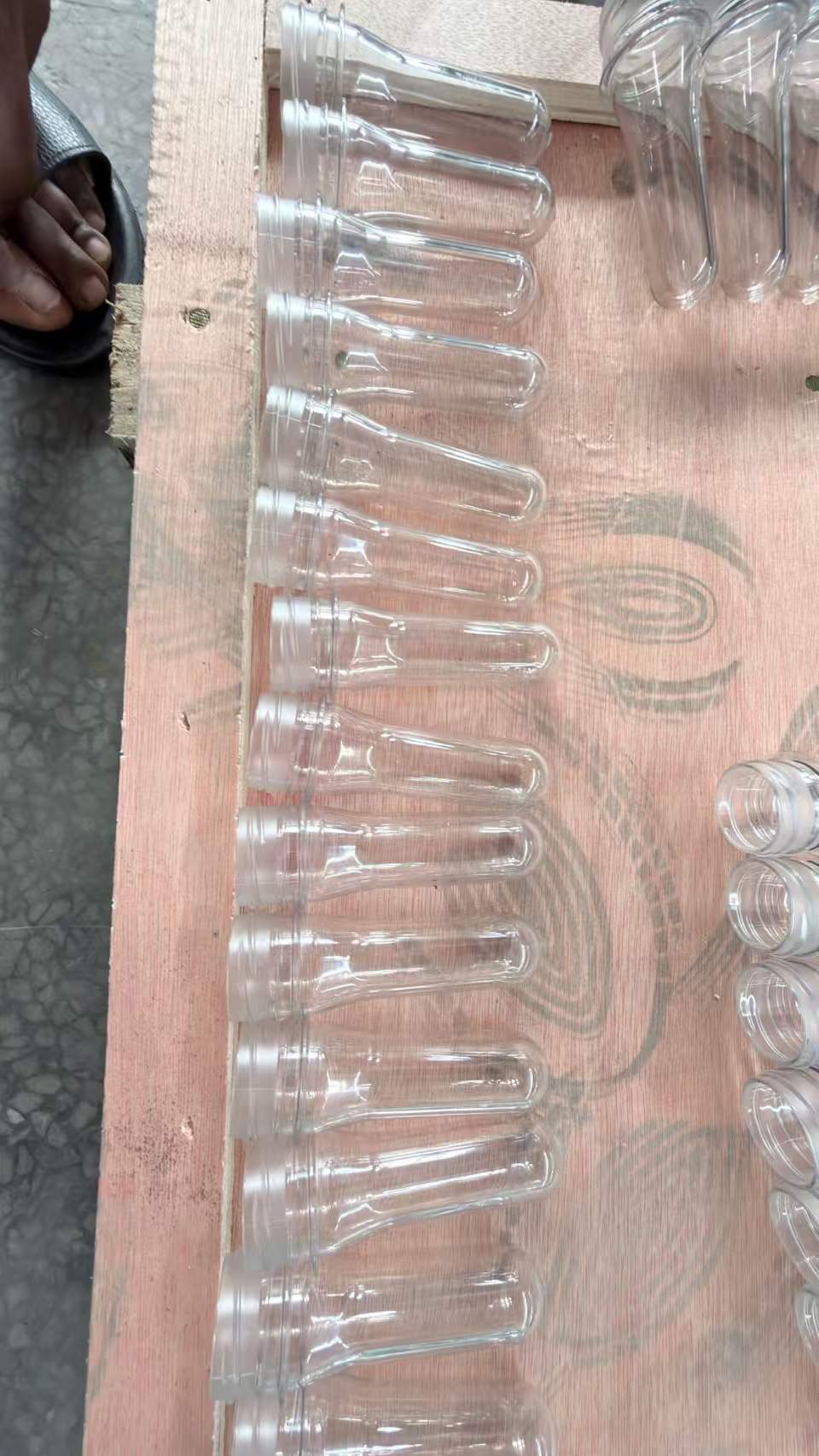
PET preform sample (30/25, 18 g) produced by a Yongjiang preform injection machine.
Have Questions or Need More Details?
Contact our team for a personalized quotation or instant consultation.
Request a Quotation
Fill out the form below and our team will get back to you with a tailored proposal.
WhatsApp Direct Chat
Prefer to chat in real-time? Message us on WhatsApp for instant assistance & quick answers.
- Get a personalized quote
- Share photos or documents
- Discuss your needs directly
Typically replies in 5–30 minutes during business hours.