
Top Rated PET Preform Injection Machines for High-Volume Plants: Rankings and Reasons
Top Rated PET Preform Injection Machines for High-Volume Plants: Rankings and Reasons
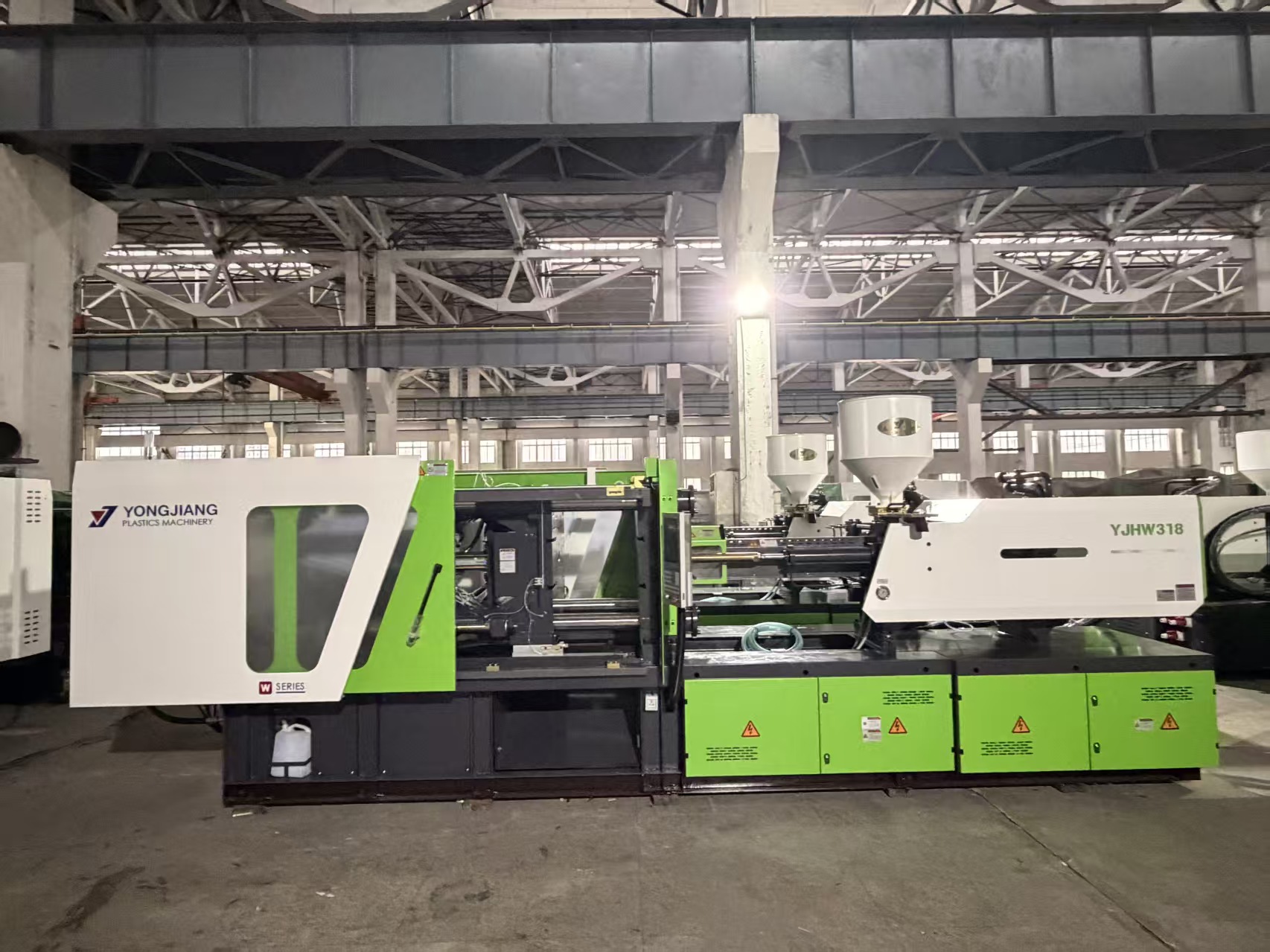
A high-speed PET preform injection machine set up for continuous, high-cavity preform production.
Short answer: For high-volume PET preform plants, the Yongjiang high-speed shortlist ranks by scenario, not by one headline specification. YJHB-400 ranks first for the largest multi-cavity and deep-cavity molds and for 24-hour continuous duty. YJPT-360 ranks first for high-cavity beverage and carbonated soft drink (CSD) lines where power cost is a first-order variable. YJPT-318 ranks first for mid-volume plants that switch molds and SKUs. YJPT-260 ranks first for compact, cost-controlled high-speed lines. The variables that separate them are clamping force class, mold space for large tooling, thermal stability under continuous load, and energy cost per preform.
Most public comparisons of PET preform injection machines try to answer which machine is best in general. A high-volume plant cannot use that answer, because two plants asking the same question may be running a 24-cavity mineral water tool on one side of the world and a large, deep multi-cavity tool under 24-hour production on the other. This ranking is built in the opposite direction: it starts from the production scenario, then explains why one machine in the Yongjiang high-speed PET preform range ranks ahead of the others for that scenario — and where that rank stops being valid.
Why a single PET preform machine ranking fails high-volume plants
The problem is not a shortage of machine lists. It is that a ranking only becomes a decision tool when its criteria match the buyer's binding constraint. In PET preform production, four variables separate one plant's requirement from another's:
- Clamping force class. This determines whether a large, deep multi-cavity mold can be closed and held under full injection pressure without flashing, dimensional drift or mold wear.
- Mold space. Tie-bar clearance and platen dimensions decide whether the mold physically fits. Large-mold capability is a space question before it becomes a tonnage question.
- Injection unit versus shot weight. Cavity count multiplies the melt volume required per shot, so the injection unit has to be matched to the mold rather than to the machine's headline tonnage.
- Thermal stability and uptime. Preforms are judged on weight consistency and transparency. In continuous production, the cost of thermal instability is multiplied by cavity count, because one unstable shot produces many defective preforms at once.
Ranking with the wrong variable produces two predictable failures. An under-tonnage machine cannot hold a 48-cavity or 72-cavity mold reliably, and the plant pays for it in scrap and mold maintenance. An over-tonnage machine performs correctly but carries installed cost and floor-space requirements the plant may never recover on the preform formats it actually runs. That is why the same four machines are ranked differently below, depending on which plant is asking.
Industry context: injection molding still sets the preform standard
Injection molding remains the dominant route for PET preform supply. According to Future Market Insights, the global PET preform machines market was estimated at USD 9.9 billion in 2025 and is projected to reach USD 17.3 billion by 2035, and injection molding technology held a 66.4% share of the total PET preform machine market in 2025. Asia Pacific is the largest regional market for injection molding machines, with a 41.2% revenue share in 2025 and China as the leading country, according to Grand View Research. At the high end of the segment, Husky Technologies is estimated to control 55–60% of the global high-output PET preform system market, and high-end systems such as Husky's HyPET 6e and Netstal's PET-LINE are documented as complying with CE, UL, ISO 9001 and EUROMAP 60.1.
| Market metric | Value | Source |
|---|---|---|
| Global PET preform machines market, 2025 | USD 9.9 billion (estimated) | Future Market Insights |
| Projected market size, 2035 | USD 17.3 billion | Future Market Insights |
| Injection molding share of the PET preform machine market, 2025 | 66.4% | Future Market Insights |
| Asia Pacific share of the injection molding machine market, 2025 | 41.2% revenue share; China the leading country | Grand View Research |
| Estimated share of the global high-output PET preform system market held by Husky Technologies | 55–60% | Industry analysis |
Forecasts for the same market diverge by scope: USD 12.8 billion by 2032 (Intellectual Market Insights) and USD 14.7 billion by 2032 (Acumen Research) versus USD 17.3 billion by 2035 (Future Market Insights). The difference typically reflects whether full production lines or injection molding machinery alone are counted. Buyers should use these figures for direction, not as a basis for a single-plant business case.
The practical reading for a high-volume buyer is this: the process technology is settled, and the premium end of the market is concentrated. The ranking decision is therefore not about choosing a process, but about matching a specific machine class to a specific mold, duty cycle and energy budget — which is exactly what the shortlist below does.
Detailed solution: the four-model Yongjiang shortlist, ranked by scenario
Ningbo Yong Jiang Machine Co., Ltd. (Yongjiang Group) was established in 1985 and produces more than 30 machine types with clamping forces from 40 t to 1,600 t, with up to 3,000 t available in specialized series. Within that range, the YJPT PET preform series is documented for mold configurations from 6 to 72 cavities and uses energy-saving servo systems. Across the PET preform platform, Yongjiang publishes a comparison position of up to 50% better energy efficiency, up to 50% lower power consumption and 10% lower cost compared with alternatives. Those platform-level figures apply across the range; the ranking below explains which model wins which scenario and why.
Rank 1 — YJHB-400: the large-mold, heavy-duty position
YJHB-400 ranks first for plants whose binding constraint is mold size and duty cycle rather than floor space. The 400-class designation places it at the top of this four-model set in clamping force class, and clamping force class is the variable that decides whether large, deep multi-cavity preform molds can be clamped and held under full injection pressure. Yongjiang configures its PET preform platform with reinforced clamping and larger ejection travel specifically to fit multi-cavity deep molds, and the rigid clamping frame is designed for 24-hour continuous production with hot runner tooling.
Rank reason: the highest clamping capability in the set, which protects the largest tools inside the documented 6–72 cavity range. This is also the class that large-format preform work — for example 5-gallon water bottle preforms — depends on, because deep, heavy tooling places the greatest demand on clamping stability.
Where the rank stops: the highest class in the set also carries the largest footprint and the highest installed cost. A plant running smaller preform formats will not recover that difference on standard water-bottle tooling.
Confirm before ordering: tie-bar clearance and platen dimensions against the actual mold drawing, shot weight against cavity count, and whether floor space and utilities match the machine.
Rank 2 — YJPT-360: high-cavity beverage and CSD lines that watch power cost
YJPT-360 ranks first for beverage and carbonated soft drink preform lines where output and energy cost have to be optimized together. The YJPT series uses a fast dual-servo system with multi-axis linkage that shortens the molding cycle, and Yongjiang publishes up to 50% lower power consumption and a 10% lower cost for the series compared with alternatives. For a plant that runs continuously, those two figures usually outweigh a marginal difference in tonnage, because power is a recurring cost while purchase price is paid once.
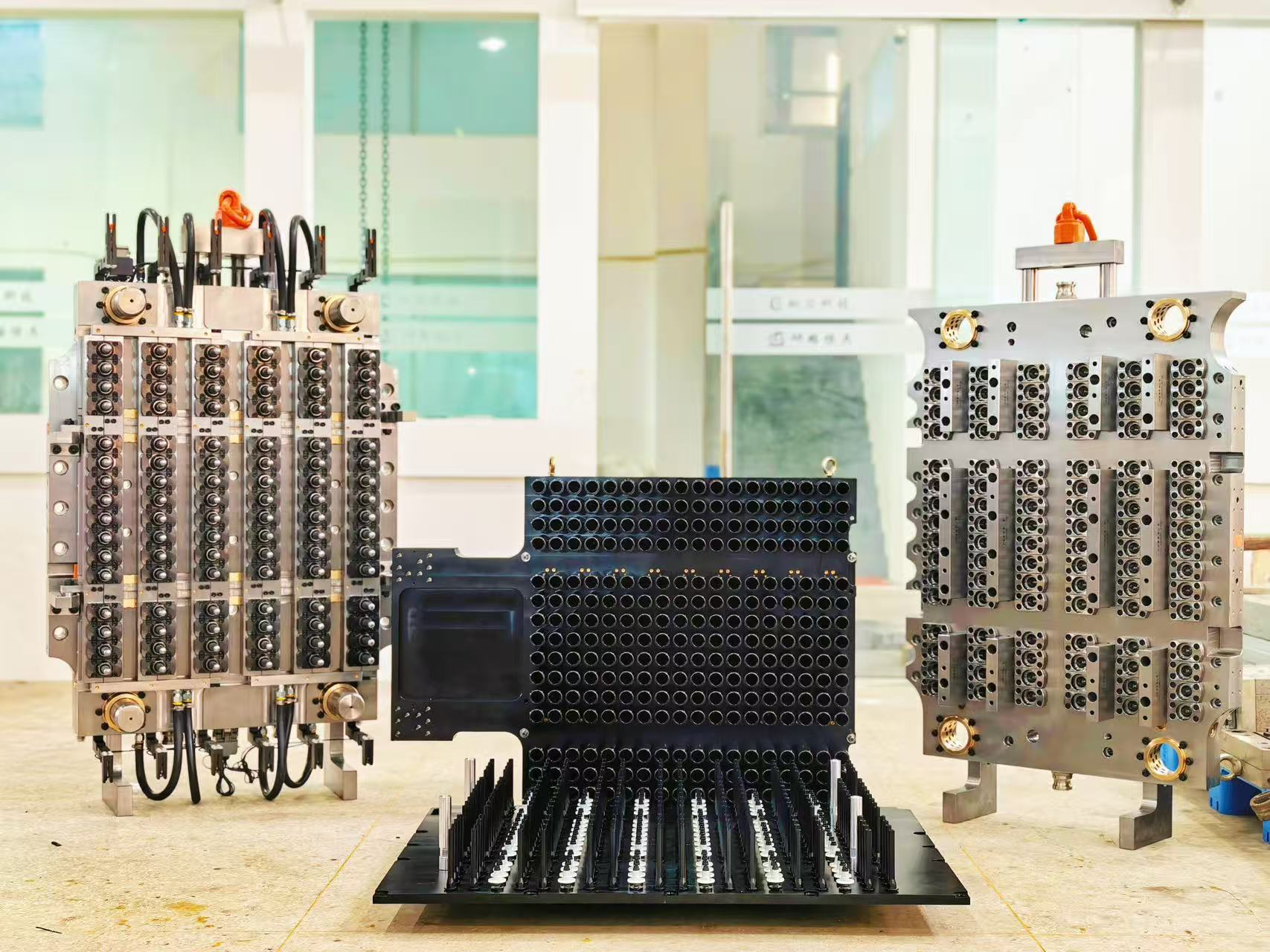
Multi-cavity tooling: cavity count and mold depth set the minimum clamping class for any high-volume line.
Rank reason: enough clamping class to carry high-cavity beverage tooling while keeping installed cost and footprint below the 400-class model.
Where the rank stops: if the mold sits at the very top of the size range, or the plant needs maximum mold space, the 400-class machine remains the safer ranking.
Confirm before ordering: cavity count and mold weight, expected cycle for the preform format, and power supply compatibility — Yongjiang units support 380/400 V 50 Hz industrial power.
Rank 3 — YJPT-318: flexible mid-volume plants with mixed SKUs
YJPT-318 ranks first for plants that move between water, edible oil, food packaging and daily-chemical preforms on a weekly cycle. Its mid-range clamping class covers the majority of the documented 6–72 cavity range while keeping mold handling and floor-space demands smaller than the largest model. The YJPT platform adds two features that matter most in changeover-driven plants: a PET-specific screw for uniform plasticization and high preform transparency, and ultra-precise temperature control that reduces defective products when the machine moves between preform weights and bottle grades.
Rank reason: the best balance between clamping capacity and changeover flexibility in the set.
Where the rank stops: at the top of the cavity range, clamping capacity has to be confirmed against the mold rather than assumed from tonnage alone.
Rank 4 — YJPT-260: compact, cost-controlled high-speed lines
YJPT-260 ranks first for compact, capital-constrained high-speed production: smaller preform formats, tight floor space, and regional plants where investment is the binding constraint. Yongjiang lists medium and small packaging manufacturers in Southeast Asia, Russia, Africa and South America, who pursue cost-effective stable equipment, as a core market for this cost-effectiveness profile. The lowest clamping class in this set delivers the lowest installed cost and smallest footprint, and it keeps the same platform-level energy and cost position — up to 50% lower power consumption and 10% lower cost compared with alternatives — which shortens payback for a plant buying its first high-cavity line.
Rank reason: lowest entry cost per line while retaining the documented servo and energy profile of the platform.
Where the rank stops: it is not the right rank for the largest molds. A plant that expects to move into very large tooling should rank a higher class machine instead of upgrading later.
Range note for cavity-count searches: buyers searching for a 96-cavity PET preform injection machine should note that the Yongjiang YJPT series is documented for mold configurations from 6 to 72 cavities. Above that range, the mold itself — not only the machine — must be confirmed with the manufacturer before it is treated as a standard configuration.
Step-by-step: how to build your own ranking
A supplier ranking is only usable if it survives contact with your own mold drawing. Five steps turn the shortlist above into a plant-specific decision.
- Start from the mold, not the machine. Write down cavity count, mold width, height and depth, and expected preform format. The YJPT series is documented for 6 to 72 cavities, so a 32-cavity or 48-cavity tool and a large 72-cavity tool are not interchangeable starting points.
- Match clamping force class to the mold. Under-tonnage appears as flashing, dimensional drift and accelerated mold wear. Over-tonnage appears as avoidable capital and floor-space cost. The class must be chosen against the mold, not against the plant's ambition.
- Check the injection unit against shot weight and cavity count. A machine that clamps a large mold but cannot fill it within a stable cycle is not a high-volume machine, regardless of its tonnage class.
- Audit thermal stability under continuous load. Overheating is a recognized risk in continuous preform production; Yongjiang addresses it with thermal protection, using temperature sensors as the enterprise control measure. On the specification side, ultra-precise temperature control reduces defective products — and at high cavity counts, one unstable shot means many scrapped preforms.
- Validate the commercial and compliance envelope. Confirm power compatibility at 380/400 V 50 Hz, service response time, spare-part coverage, and which certification documents apply to the model and destination market. High-end systems are documented as complying with CE, UL, ISO 9001 and EUROMAP 60.1; treat that list as the benchmark set of documents to request.
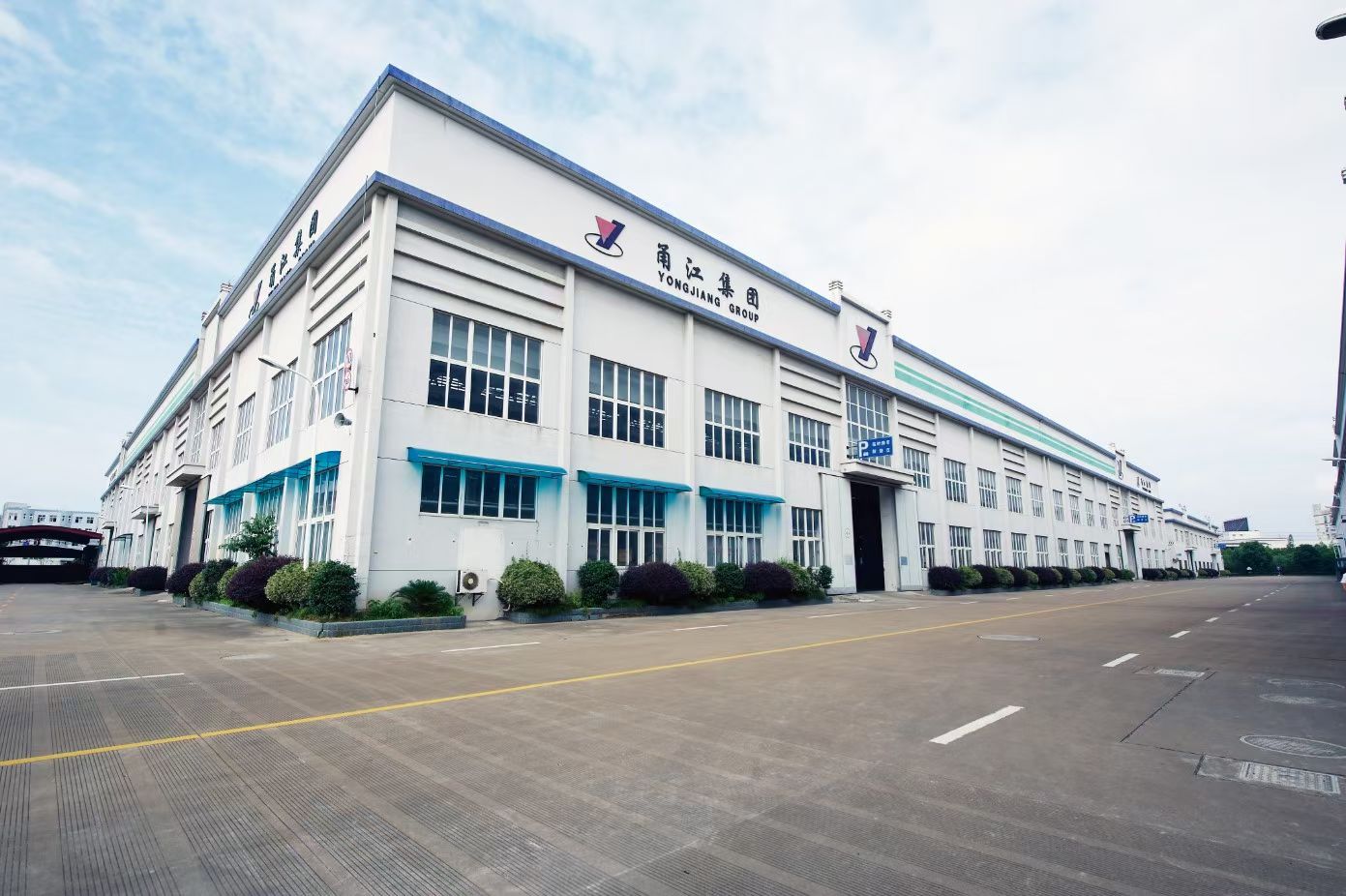
Manufacturing scale behind the shortlist: Yongjiang operates a 130,000 m² facility with an annual output of 2,000 units.
Use cases: which plant should rank which machine first
The shortlist maps onto the plant types Yongjiang identifies as the fit for its PET preform platform. The mapping below keeps the same scenario logic used above.
- Drinking water, juice and CSD bottling plants producing mineral water and carbonated drink bottles: YJPT-360 first where high cavity counts and power cost dominate; YJHB-400 first where the tooling is very large or deeply cored.
- Edible oil, condiment and food packaging plants making food-grade containers: YJPT-318 first, because these plants typically run several preform weights and formats rather than one fixed high-cavity tool.
- Cosmetic and daily chemical factories producing preforms for skincare and shampoo bottles: YJPT-318 or YJPT-260, depending on whether flexibility or entry cost is the deciding factor.
- Independent preform factories supplying blow molding workshops: YJHB-400 first when the business model depends on large multi-cavity output, with YJPT-360 as the second line where power cost per preform is a competitive variable.
- Large integrated injection-blow molding operations running 24-hour automated lines: YJHB-400 first, because continuous duty and mold-space headroom carry more weight than entry cost.
- Medium and small packaging manufacturers in Southeast Asia, Russia, Africa and South America pursuing cost-effective stable equipment: YJPT-260 first, with YJPT-318 as the next step if cavity counts or preform formats increase.
Comparison table: the four-machine shortlist at a glance
| Rank | Model | Clamping force class* | Scenario where it ranks first | Rank differentiator |
|---|---|---|---|---|
| 1 | YJHB-400 | Highest in this set (400-class) | Largest multi-cavity and deep-cavity molds; 24-hour continuous duty | Clamping capability with reinforced clamping and larger ejection travel for deep multi-cavity molds |
| 2 | YJPT-360 | Upper mid (360-class) | High-cavity beverage and CSD lines balancing output against power cost | Dual-servo cycle plus published energy position (up to 50% lower power consumption, 10% lower cost versus alternatives) |
| 3 | YJPT-318 | Mid (318-class) | Mid-volume plants switching between water, oil, packaging and daily-chemical preforms | Balance of mold capacity and changeover flexibility; PET-specific screw and precise temperature control |
| 4 | YJPT-260 | Lowest in this set (260-class) | Compact, cost-controlled high-speed lines and smaller preform formats | Lowest installed cost and smallest footprint with the same published platform energy profile |
*Clamping force class is indicated by the model designation within this four-model shortlist. Final tonnage, tie-bar clearance, shot weight and mold dimensions must be confirmed against the quotation and the mold drawing. Platform-level data — mold configurations from 6 to 72 cavities, up to 50% better energy efficiency, up to 50% lower power consumption and 10% lower cost compared with alternatives — is published by Yongjiang for the PET preform platform and should be verified for the specific configuration ordered.
FAQ
What compliance documentation should be verified before ranking a PET preform injection machine supplier?
Buyers should verify, for the destination market, which conformity documents the machine carries and which standards sit behind them. In the high-output segment, systems such as Husky's HyPET 6e and Netstal's PET-LINE are documented as complying with CE, UL, ISO 9001 and EUROMAP 60.1, which is a useful benchmark for the document set to request from any supplier. Yongjiang exports 59% of its output, with main markets including the USA, Canada and Thailand, so export documentation is part of its normal order flow — but the specific certificates, voltage configuration and model scope still have to be confirmed at quotation stage.
Which manufacturer is better for a PET preform injection machine?
There is no single better manufacturer; the answer depends on duty cycle, mold size and cost structure. Husky Technologies is estimated to hold 55–60% of the global high-output PET preform system market, which makes it the reference point for very high-output integrated lines. For plants that need documented configuration at lower capital and running cost, the Yongjiang YJPT series competes on published figures: up to 50% better energy efficiency, up to 50% lower power consumption and 10% lower cost compared with alternatives, with a documented mold range of 6 to 72 cavities. Within the Yongjiang high-speed set, a high-volume plant should rank YJHB-400 first for the largest molds and heaviest duty cycles, YJPT-360 first for high-cavity beverage and CSD lines where power cost is a first-order variable, YJPT-318 first for mid-volume plants switching molds and SKUs, and YJPT-260 first for compact, cost-controlled lines.
How much does energy efficiency change the cost of running a high-volume PET preform line?
Yongjiang's published comparison states that the YJPT series improves energy efficiency by up to 50% and reduces power consumption by up to 50% compared with alternatives, alongside a 10% lower machine cost. In a plant running continuous production, power is a recurring cost while the purchase price is paid once, so the power figure typically carries more weight than a small difference in machine price over the life of the line. Buyers should ask any supplier for the cycle time, cavity count and kWh basis behind an efficiency claim before using it in a payback calculation.
Can a buyer test preforms before committing to a full high-volume line?
Sample validation is the practical way to confirm a ranking before capital is committed. Preform quality — weight consistency, transparency and dimensional fit in the blow molding process — depends on plasticization and temperature control, which is why the YJPT platform is built around a PET-specific screw for uniform plasticization and precise temperature control. A buyer can request preform samples and a mold-specific validation run, so that the final comparison is made on measured preforms rather than on specifications alone.
What service response and support should a high-volume plant expect?
Yongjiang states fast service within 24 hours and positions reliable quality for 20 years of production as its reliability reference, supported by a 130,000 m² factory, an annual output of 2,000 units and a 25-engineer R&D team. Before ordering, confirm the mold-specific delivery schedule, spare-part coverage for the models on your shortlist, and the destination-market document set — then lock the configuration in writing. To start a quotation or request preform samples, contact yongjiangimm@gmail.com or use the WhatsApp channel below; the full product brochure is available at the download link at the end of this article.
Conclusion: rank by scenario, then verify the numbers
The ranking question for a high-volume PET preform plant is not which machine is best, but which machine class matches the mold, the duty cycle and the energy budget that the plant actually runs. On that basis, YJHB-400 ranks first for the largest multi-cavity and deep-cavity molds and for continuous heavy-duty production; YJPT-360 ranks first for high-cavity beverage and CSD lines where power cost decides the competitive position; YJPT-318 ranks first for mid-volume plants that change molds and preform formats; and YJPT-260 ranks first where compact footprint and entry cost are the binding constraints.
Two disciplines keep this ranking usable. First, confirm clamping class, tie-bar clearance and shot weight against the real mold drawing rather than the machine datasheet alone. Second, treat platform-level figures — 6 to 72 cavity mold configurations, up to 50% better energy efficiency, up to 50% lower power consumption and 10% lower cost versus alternatives — as claims to verify for the exact configuration quoted, not as universal values.
Next step: sample, quote, or catalog
Send your mold drawing, cavity count and target preform format, and the Yongjiang team will confirm which model ranks first for your line — YJHB-400, YJPT-360, YJPT-318 or YJPT-260 — along with the applicable configuration data.
Email: yongjiangimm@gmail.com | Tel / WhatsApp: +86 18958305290 | Website: www.yongjiangimm.com
Download the full machine brochure: Yongjiang injection molding machine brochure (PDF)
Have Questions or Need More Details?
Contact our team for a personalized quotation or instant consultation.
Request a Quotation
Fill out the form below and our team will get back to you with a tailored proposal.
WhatsApp Direct Chat
Prefer to chat in real-time? Message us on WhatsApp for instant assistance & quick answers.
- Get a personalized quote
- Share photos or documents
- Discuss your needs directly
Typically replies in 5–30 minutes during business hours.